Royal jelly is the pearly substance that worker bees secrete to feed their queen exclusively, and it is now one of the most sought-after dietary supplements in Morocco. Rich in B vitamins, amino acids and a fatty acid found nowhere else in nature, it is traditionally associated with vitality, immune defences and healthy-looking skin. Composition, benefits, dosage and contraindications: here is the complete guide.
What is royal jelly?
Royal jelly is a secretion produced by the hypopharyngeal glands of young worker bees. All the larvae in the hive receive it during their first days of life, but only the future queen is fed on it throughout her entire existence. This exclusive diet explains her larger size, her fertility and her far longer lifespan compared with the workers.
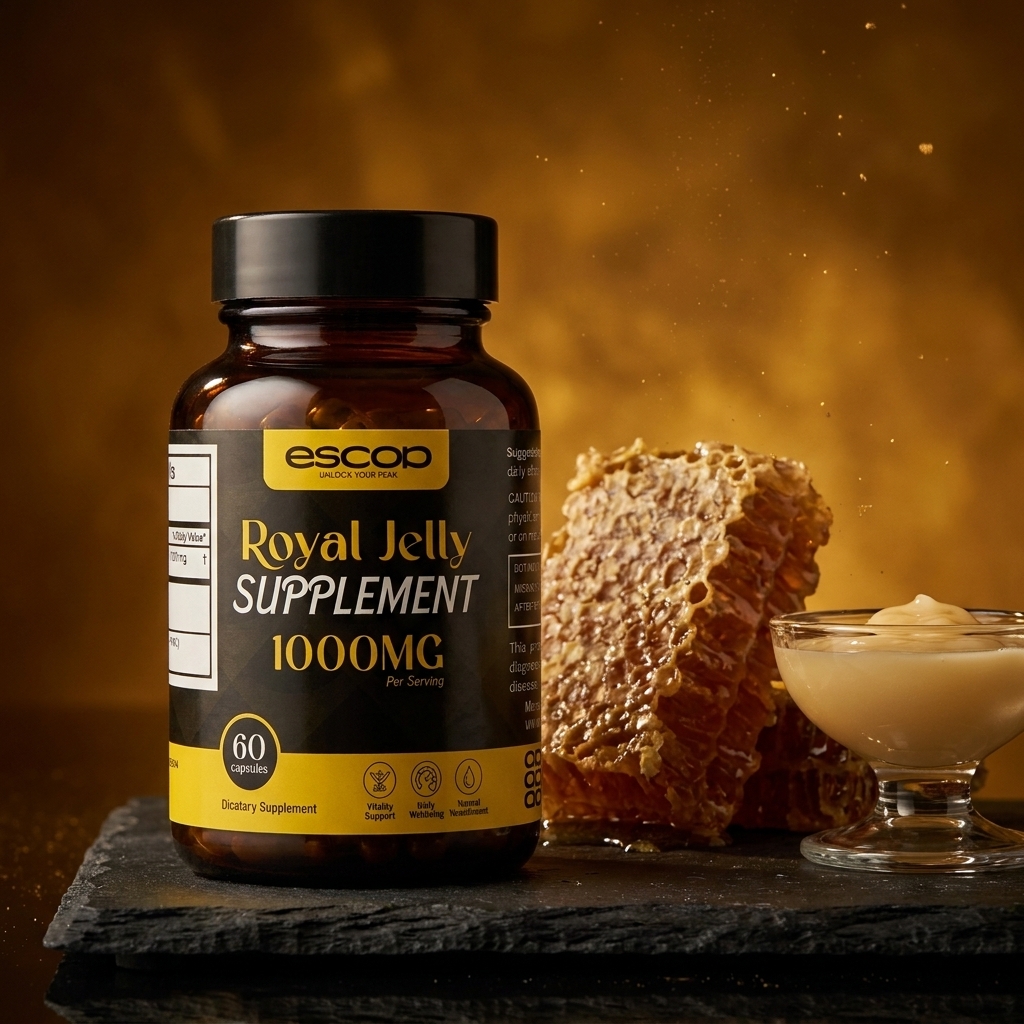
Visually, it is an ivory-white paste with a creamy texture and a tangy, slightly sharp taste. It is distinct from the other hive products: honey is a food reserve, propolis a protective material, pollen a source of protein, while royal jelly is a true nourishing food intended for reproduction.
Composition and active compounds of royal jelly
It is a living substance, made up mostly of water (around 60 to 70%), in which a dense nutritional cocktail is concentrated:
- Proteins and amino acids (about 12 to 15% of the fresh product), including royalisins and MRJPs, proteins specific to royal jelly.
- 10-HDA (10-hydroxy-2-decenoic acid): this fatty acid is the product’s quality marker. It is generally found at between 1.4% and 2% in good-quality fresh royal jelly; it does not exist in any other known food.
- B vitamins: royal jelly is one of the richest natural sources of vitamin B5 (pantothenic acid), and also provides B1, B2, B3, B6 and B8.
- Minerals and trace elements: zinc, iron, copper, calcium, magnesium, potassium.
- Sugars and lipids: glucose and fructose for immediate energy, specific fatty acids for biological activity.
It is this combination — rare proteins, B vitamins and 10-HDA — that makes this hive product unique, and that explains why it sells at a much higher price than honey or pollen.
The 7 benefits of royal jelly
1. Supporting immune defences
This is its best-documented use. Available research suggests that 10-HDA and the antimicrobial peptides in royal jelly stimulate macrophage activity and lymphocyte production. This is why courses are traditionally recommended at the start of winter and when the seasons change.
2. Fighting temporary fatigue
Its richness in vitamin B5 and simple sugars makes it a classic ally during periods of overwork, convalescence or a return to activity. It is often taken in the morning on an empty stomach to help with a temporary dip in energy.
3. Supporting concentration and nervous balance
Vitamins B1, B6 and B8 contribute to the normal functioning of the nervous system. This is why this supplement is popular with students during exam periods and with people under heavy mental strain.
4. Caring for skin, hair and nails
Zinc, copper and sulphur-containing amino acids are involved in the synthesis of keratin and collagen. Both taken internally and in cosmetics, royal jelly is used for dull or tired skin and for weakened hair and nails.
5. Support during menopause
It is often suggested to ease the discomfort of perimenopause, particularly fatigue and mood swings. This activity, described as weakly oestrogenic, also explains some of its contraindications detailed below.
6. Supporting overall vitality and fertility
Traditional use associates royal jelly with fertility, by analogy with the role it plays for the queen. Scientific data in humans remain limited; for now, this use belongs more to beekeeping tradition than to proven efficacy.
7. An antioxidant contribution
MRJP proteins and phenolic compounds give it an antioxidant activity measured in vitro, which helps combat cellular oxidative stress.
How to use royal jelly and dosage
The fresh form
This is the reference form. The usual dose is between 300 and 500 mg per day for maintenance, and can go up to 1,000 mg during periods of marked fatigue. It is taken in the morning, on an empty stomach, half an hour before breakfast, letting it melt under the tongue for better absorption. A small wooden, plastic or ceramic spoon is preferable to metal.
Ampoules, capsules and freeze-dried powder
More convenient to carry, these forms are concentrated: 100 mg of freeze-dried powder corresponds to about 300 mg of fresh product. Always check the 10-HDA content shown on the label — it is the only reliable quality indicator — as well as the origin and traceability.
Length of the course and storage
- Duration: a standard course lasts 3 to 6 weeks and can be repeated two or three times a year (autumn, winter, spring).
- Storage: fresh royal jelly must be kept in the fridge, between 2 and 5 °C, in an opaque, airtight jar, away from light and air. Avoid repeated freezing and thawing.
- Combinations: it pairs well with honey, pollen or propolis as part of a holistic approach to hive products.
Precautions and contraindications
Natural does not mean harmless. Several situations call for caution:
- Allergy to hive products (honey, pollen, propolis, venom): absolute contraindication. Severe allergic reactions, including anaphylactic shock, have been reported.
- Allergic asthma and atopic tendency: not recommended without medical advice, as the risk of bronchospasm is real.
- Hormone-dependent cancers (breast, uterus, prostate): to be avoided because of its reported oestrogenic activity.
- Pregnancy, breastfeeding and young children: as a precaution, ask a healthcare professional for advice.
- Immunocompromised people or those on immunosuppressive treatment: medical advice is essential.
- Ongoing treatment (anticoagulants, diabetes medication, blood pressure medication): tell your doctor or pharmacist that you are taking it.
Good practice: always start a course with a reduced dose for two to three days to spot any sign of intolerance — itching, hives, runny nose, breathing discomfort. At the slightest symptom, stop and see a doctor.
Royal jelly FAQ
What is the difference between royal jelly and propolis?
They are two very different hive products. Propolis is a resin collected from tree buds, used by bees to clean and seal the hive: it is mainly used for ear, nose and throat issues. Royal jelly is a nourishing glandular secretion, used for vitality and overall immunity.
Can you take it all year round?
This is not the recommended use. The course approach — 3 to 6 weeks, two or three times a year — remains preferable to continuous use, which has no proven additional benefit.
How can you recognise good-quality royal jelly?
Three markers: a stated 10-HDA content (at least 1.4%), a clearly indicated origin and harvest date, and a cold chain maintained from harvest to sale. A product kept at room temperature on the shelf should raise suspicion.
In summary
Royal jelly remains the most precious product of the hive: a dense nutritional profile, a unique compound (10-HDA) and a well-established traditional use for energy and immunity. To get the most out of it, remember the essentials: a fresh form or a freeze-dried powder standardised in 10-HDA, taken in the morning on an empty stomach, a course of 3 to 6 weeks, cold storage — and absolute vigilance if you are allergic to hive products.
Further reading
- Royal jelly — Wikipedia encyclopaedia entry
- Propolis: benefits, dosage and precautions
- Spirulina: benefits, dosage and precautions
- Ginseng: benefits, dosage and precautions
This article is provided for information only and does not replace medical advice. Ask your doctor or pharmacist before starting any course, especially if you are taking medication, are pregnant or breastfeeding, or have a history of allergies.