Black seed, known in Morocco and across the Arab world as Habba Sawda (الحبة السوداء), “the black seed,” is one of the most celebrated natural remedies in traditional medicine. Used for thousands of years, this small black seed with a peppery taste is renowned for boosting immunity, supporting digestion, and caring for the skin. In this complete guide, we cover the benefits of black seed, how to use it, the right dosage, and the essential precautions to know.
What is black seed (Habba Sawda)?
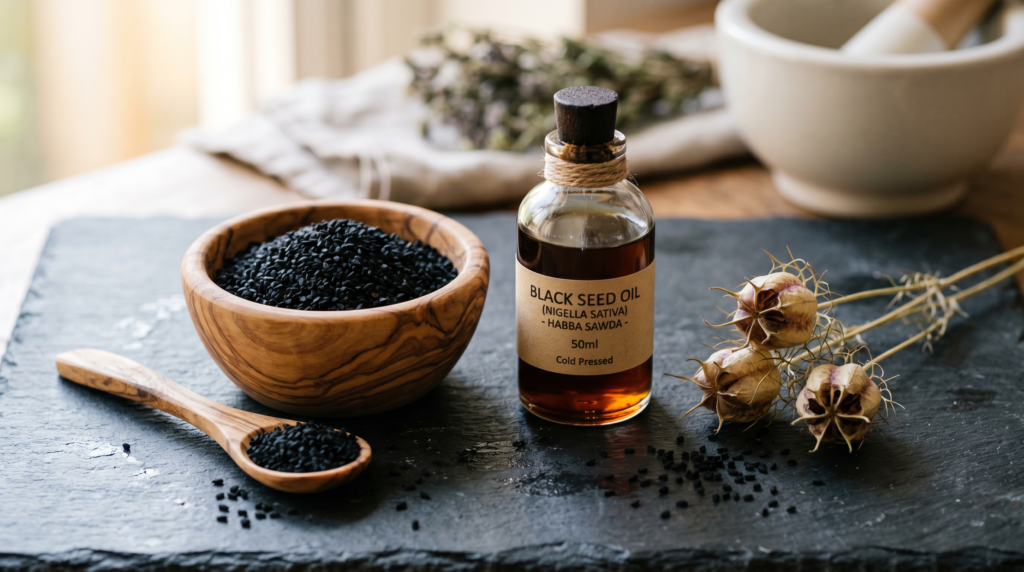
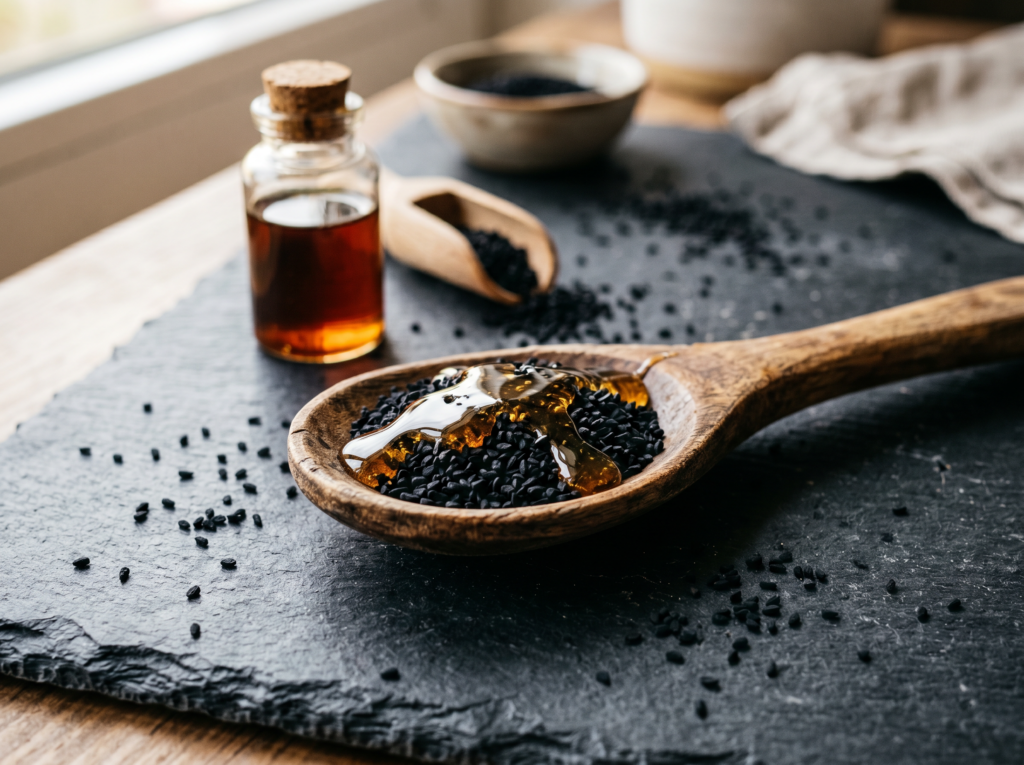
Black seed, scientifically known as Nigella sativa, is an annual herbaceous plant of the Ranunculaceae family. Its small, black, triangular seeds with a distinctive aroma are used in both cooking and herbal medicine. In Morocco, Habba Sawda is grown and hand-harvested by cooperatives, then sold as whole seeds, powder, or as cold-pressed black seed oil.
Deeply rooted in Moroccan culture, the black seed is regarded as a true treasure of nature, so much so that a well-known traditional saying credits it with the ability to “cure everything except death.” While this saying belongs to tradition, science today is taking a serious interest in its active compounds.
Composition and active compounds
Black seeds are remarkably rich nutritionally. They contain proteins, essential fatty acids (notably omega-6), carbohydrates, amino acids, vitamins, and minerals. But their reputation rests mainly on their secondary metabolites, in particular thymoquinone, the plant’s most extensively studied active compound, with antioxidant, anti-inflammatory, and immunomodulatory properties. This richness explains the wide range of traditional uses of Habba Sawda.
The health benefits of black seed
Boosting the immune system
This is the most popular use of black seed. It is traditionally consumed to stimulate the body’s natural defenses and help prevent common winter infections such as colds and respiratory ailments. Its antioxidant compounds help the body better withstand external stressors.
Digestive support
Habba Sawda is valued for soothing digestive troubles. It helps reduce bloating, stomach discomfort, and gastrointestinal upset, while supporting balanced transit.
Anti-inflammatory action
Thanks to thymoquinone, black seed has anti-inflammatory properties traditionally used to relieve joint pain, rheumatism, and the discomfort associated with osteoarthritis.
Benefits for the skin
Whether used internally or externally, black seed oil is known for its purifying properties. It is traditionally used to help ease acne, eczema, and skin irritation, and to nourish the skin and hair.
Detoxifying effect
The black seed is also regarded as a natural support for eliminating toxins, contributing to the body’s overall proper functioning.
How to use black seed, and at what dosage?
Black seed can be consumed in several ways: whole seeds sprinkled over dishes, ground seeds as a powder, or as an oil. A traditional method widely used in Morocco is mixing black seed powder with honey and lemon.
- As a powder: about half a teaspoon, 1 to 3 times a day, mixed with honey (and lemon if desired), preferably before meals.
- As an oil: generally one to two teaspoons a day for an adult, or applied locally to the skin.
- As seeds: added to bread, salads, soups, and dishes to enjoy their flavor and benefits daily.
It is advisable to start with small amounts to assess tolerance, then gradually increase. Consistency is key to benefiting from the effects of black seed.
Precautions and contraindications
Although natural, black seed remains an active product that calls for a few precautions:
- Pregnancy: black seed is not recommended for pregnant women, as it may promote uterine contractions.
- Young children: its use should be avoided or supervised by a professional.
- High doses: excessive consumption can be mildly toxic to the liver and kidneys; usual amounts should be respected.
- Medical treatments: if taking medication (anticoagulants, antidiabetics, antihypertensives), ask your doctor’s advice, as black seed may alter their effects.
Frequently asked questions about black seed (Habba Sawda)
Can black seed be taken every day?
Yes, at usual doses, black seed can be consumed daily as a cure or over the long term by a healthy adult. However, it is best to stick to small amounts and listen to your body’s reactions.
What is the difference between black seeds and black seed oil?
The seeds (whole or ground) provide the full range of nutrients and fiber, while cold-pressed oil is more concentrated in fatty acids and thymoquinone, making it convenient for internal use as well as cosmetic use.
Where can you buy quality black seed in Morocco?
Choose clean, well-dried seeds, or a cold-pressed virgin oil from a reliable source, ideally from a Moroccan cooperative that guarantees traceability and product quality.
Conclusion
Black seed (Habba Sawda) embodies the wisdom of traditional herbal medicine: a modest seed with multiple uses, from immune support to digestive comfort to skin beauty. Consumed regularly and in moderation, it can become an everyday wellness ally. As with any active natural product, the advice of a healthcare professional is recommended, particularly in cases of pregnancy, medical treatment, or uncertainty.
To learn more
To learn more, see the entry for black seed (Nigella sativa) on Wikipedia. Also discover our guides on white wormwood (Chih), spirulina, and ginseng.
This article is provided for informational purposes only and does not constitute medical advice. Consult a healthcare professional before any therapeutic use of plants, particularly in cases of chronic illness, pregnancy, or medication use.