Passionflower (Passiflora incarnata) is now one of the most sought-after plants for people looking to regain calm and restful sleep without morning grogginess. Long confined to ornamental gardens for its spectacular flower, it has made its way into Moroccan herbalist shops and food supplement aisles as a gentle alternative to conventional sedatives. Recognised by European health authorities for its traditional use, it holds a prime place in evening herbal teas, alongside chamomile and valerian. Here is what is actually known about its composition, benefits, dosage and limits.
What is passionflower?
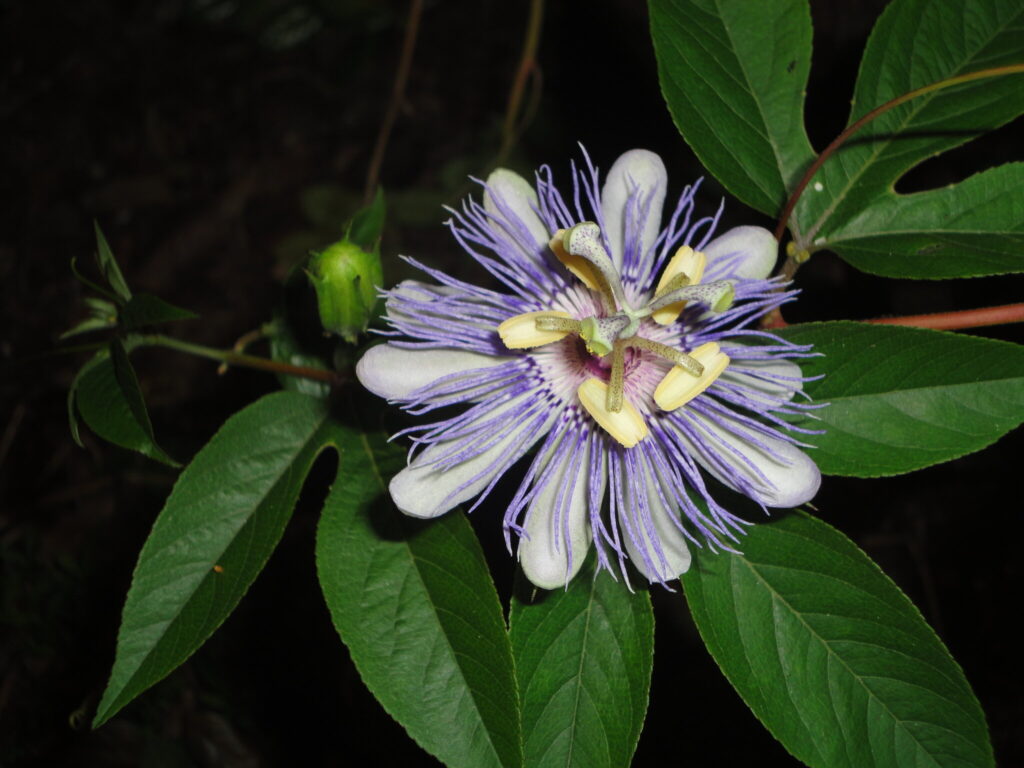
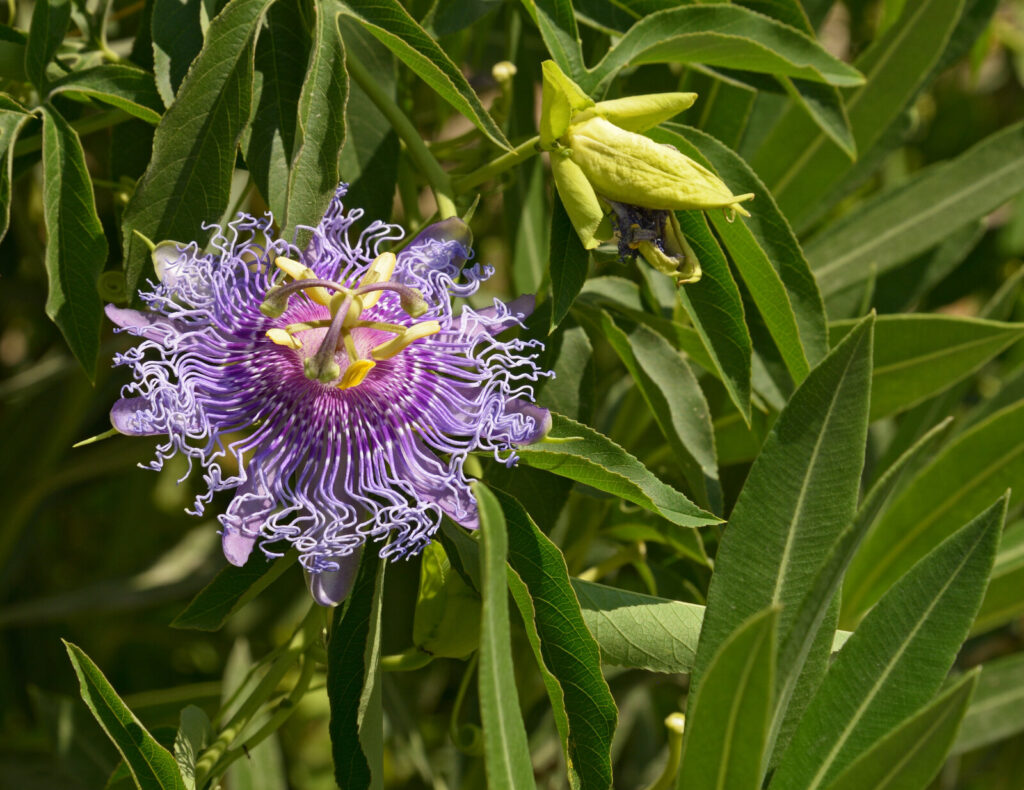
Medicinal passionflower, or Passiflora incarnata, is a climbing plant in the Passifloraceae family, native to the south-eastern United States, Mexico and Central America. It is also known as “maypop” or “passion vine”, and is instantly recognisable by its flower, made up of a crown of purple and white filaments arranged like rays around the pistil. It was 16th-century Spanish missionaries who gave it its name, seeing in it an evocation of the Passion of Christ.
In herbal medicine, it is not the fruit that is used but the dried aerial parts: stems, leaves, tendrils and flowers. These are where the active compounds are concentrated. The plant adapts well to temperate and Mediterranean climates, and in Morocco it is found both as an ornamental plant and as a dried herb at herbalists, often sold blended with lemon verbena, linden or lemon balm for evening teas.
Composition and active compounds of passionflower
Passionflower’s activity does not rest on a single molecule but on a synergy of compounds, which is why whole-plant extracts are generally preferred to isolates. The main groups identified are as follows:
- Flavonoids: the main group and the plant’s quality marker. They include vitexin, isovitexin, orientin, isoorientin and schaftoside, as well as apigenin, chrysin and kaempferol, to which its calming properties are attributed.
- Indole alkaloids of the harmane type (beta-carbolines), present in trace amounts, whose chemical structure is close to that of tryptophan, the precursor of serotonin.
- Cyanogenic glycosides, notably gynocardin, present in very small amounts.
- Maltol, phytosterols and sugars, as well as traces of essential oil.
The European Pharmacopoeia sets a clear requirement for aerial parts intended for medicinal use: they must contain at least 1.5% total flavonoids expressed as vitexin. This is the figure to look for on the label of a serious supplement, because poorly harvested or old passionflower loses much of its value.
The benefits of passionflower
The European Medicines Agency (EMA) and ESCOP recognise the traditional use of passionflower to relieve mild symptoms of mental stress and the sleep problems that result from it. Here are the main documented benefits.
1. Easing nervousness and mild anxiety
This is its main indication. Preliminary clinical studies have observed a reduction in non-specific anxiety symptoms with doses of 90 mg to 400 mg of extract, twice a day. The plant’s appeal lies in its profile: it calms mental agitation without causing the numbing sensation associated with some treatments. It is therefore often chosen during the day by people who need to stay functional.
2. Helping you fall asleep
The plant’s sedative action translates into a shorter time to fall asleep and longer deep slow-wave sleep, the most restorative phase of the night. This sets it apart from sleeping pills, which lengthen sleep time without necessarily improving its structure. It is particularly suited to sleep-onset insomnia, when the mind keeps racing once the lights are out.
3. Calming the physical signs of stress
Stress does not only show up in the mind. Palpitations, a knot in the stomach, digestive spasms, muscle tension and clenching are its common physical expressions. Passionflower is traditionally used for these functional disorders of nervous origin, particularly digestive spasms and emotional tachycardia with no identified cardiac cause.
4. Support during periods of overwork and transition
Back to school, exams, work overload, quitting smoking, menopause: the plant is often recommended as a short course during these periods when nervous strain increases. It is frequently combined with other complementary plants — hawthorn for the heart, lemon balm for digestion, valerian for deep sleep — rather than used on its own.
How to use passionflower and dosage
As an infusion
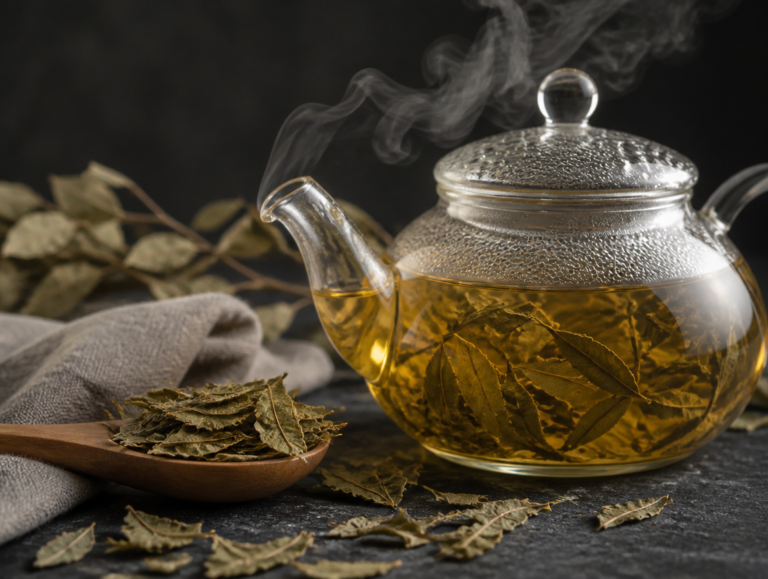
This is the most accessible form. Use 1 to 2 g of dried aerial parts (about one teaspoon) per 150 ml of boiling water. Cover and leave to steep for about ten minutes before straining. You can drink 1 to 3 cups a day, between meals, ideally including one 30 minutes before bedtime if you have trouble falling asleep. The taste is subtle and slightly herbaceous; it pairs well with lemon verbena or orange blossom.
As capsules and extracts
Dry extract capsules allow more precise dosing and better consistency. Clinical studies have used doses of 90 to 400 mg of extract, once or twice a day. It is best to choose a product that states its flavonoid content expressed as vitexin. Mother tincture and fluid extract are also available, and are taken diluted in a little water according to the manufacturer’s recommendations.
Length of the course
Courses are generally limited to four weeks maximum, followed by a break. If sleep problems or anxiety persist beyond two weeks of use without improvement, medical advice is essential: chronic insomnia may hide a cause that no plant will resolve.
Precautions and contraindications
Passionflower is well tolerated at usual doses, but that does not make it harmless.
- Pregnancy and breastfeeding: not recommended. Animal studies have shown a possible stimulating effect on uterine contractions.
- Children: for adults and adolescents only, unless on medical advice.
- Drug interactions: the plant can increase drowsiness caused by sleeping pills, anxiolytics, antidepressants, antiepileptics and antipsychotics. Never combine it with these treatments without talking to a doctor or pharmacist.
- Driving: alertness may be reduced, especially at the start of a course. Take care when driving or operating machinery.
- Allergy: a known allergy to the plant rules out its use.
- Side effects: rare, and usually limited to nausea, digestive upset, vomiting or allergic skin reactions.
- Surgery: it is wise to stop taking it at least two weeks before any procedure requiring anaesthesia.
Passionflower FAQ
How long does passionflower take to work?
For falling asleep, the effect of an infusion taken 30 minutes before bedtime can be felt from the very first dose. For underlying anxiety, it generally takes one to two weeks of regular use before a clear benefit is seen. It is not an emergency treatment for an acute attack.
Can passionflower be combined with valerian?
This is a classic combination in herbal sleep remedies and appears in many commercial formulas: passionflower acts mainly on anxiety and falling asleep, valerian on the depth of sleep. Since the sedative effect is cumulative, however, you should not take a full dose of each, and avoid driving after taking them.
Is passionflower addictive?
No physical dependence or withdrawal syndrome has been reported with this plant, unlike benzodiazepines. This is in fact one of the reasons for its success. That is no reason to skip time-limited courses or to settle into long-term daily use instead of looking for the cause of the problem.
Conclusion
Passionflower has a firm place among calming plants: a traditional use recognised by the EMA and ESCOP, a well-characterised flavonoid composition, good tolerance and no dependence. It is not a sleeping pill and does not claim to replace medical care, but it is a relevant support during periods of temporary nervousness and difficulty falling asleep. As with any plant, the quality of the raw material — aerial parts titrated in vitexin, a recent harvest, storage away from light — makes all the difference between a pleasant tea and a genuinely active product.
Further reading
- Full botanical profile of the species on Wikipedia: Passiflora incarnata
- Valerian: benefits, dosage and precautions
- Lemon balm: benefits, dosage and precautions
- Chamomile: benefits, dosage and precautions
- Linden: benefits, dosage and precautions
This article is provided for information only and in no way replaces medical advice. If sleep problems or anxiety persist, or if you are pregnant, breastfeeding or taking medication, consult a doctor or pharmacist before taking passionflower.