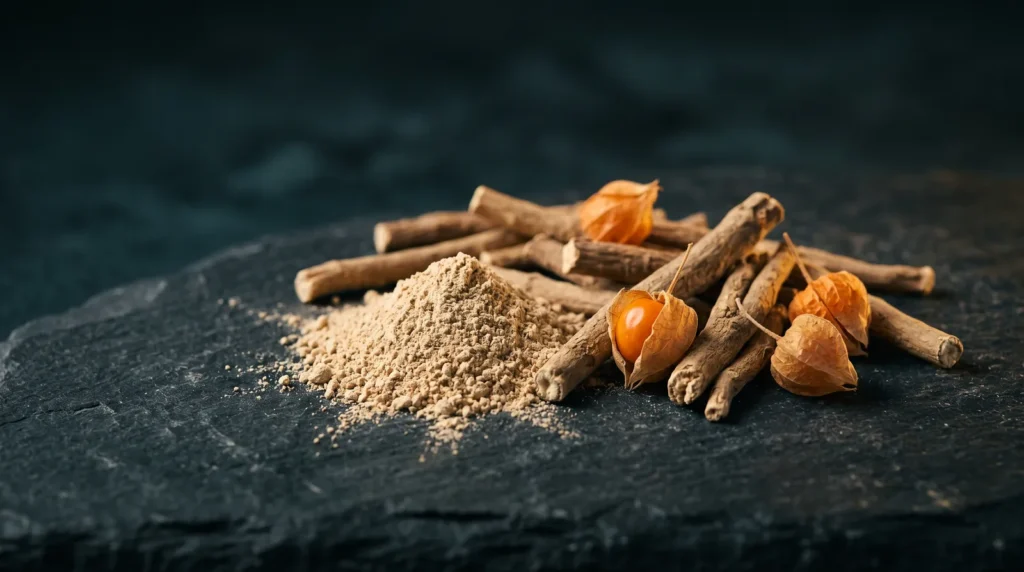
The benefits of ashwagandha — on stress, sleep and vitality — explain its growing popularity.
Ashwagandha has become one of the most popular adaptogenic plants in the world, driven by a growing body of clinical research. Renowned for helping the body cope better with stress, it now features in countless wellness routines. But what does the research actually say, and how should you use it? Here is a clear, evidence-based guide.
Contents
What is ashwagandha?
Ashwagandha (Withania somnifera) is a plant that has been used for centuries in the Indian Ayurvedic tradition, where it is nicknamed the “strength of the horse.” It is mainly the root that is used, rich in active compounds known as withanolides. It is classed among the adaptogens: plants reputed to help the body adapt to physical and mental stress. Our Ashwagandha 1000 mg capsules are made from a concentrated root extract.
The benefits of ashwagandha
- Managing stress and anxiety. This is the best-documented benefit: several meta-analyses of clinical trials show a reduction in perceived stress, anxiety and cortisol levels (the stress hormone) compared with a placebo.
- Sleep quality. Its Latin name somnifera means “sleep-bringing”: studies suggest an improvement in sleep quality and in falling asleep, especially under stress.
- Mood and energy. By easing the burden of stress, it may contribute to a better mood and a sense of everyday vitality.
- Strength and recovery (in men). Some research reports effects on muscle strength and recovery in healthy adults.
Please note: effects are generally seen after several weeks of regular use. Most studies use a duration of 8 to 12 weeks.
How to take ashwagandha: dosage
In studies, doses of standardised root extract are most often between 300 and 600 mg per day. A few practical tips:
- Take it preferably in the evening if your goal is sleep, or in two doses (morning and evening) for stress.
- The capsule form makes for simple, consistent dosing — our Ashwagandha 1000 mg is taken at a rate of 2 to 3 capsules per day after meals.
- Consistency is key: the benefits build over time, not from a single dose.
Precautions and contraindications
- Not recommended during pregnancy and breastfeeding.
- If you have a thyroid disorder, an autoimmune disease or are on medication (particularly sedatives), seek medical advice before taking it.
- Some people may experience mild digestive upset or drowsiness.
This content is provided for informational purposes and is not a substitute for the advice of a healthcare professional. Ashwagandha is a food supplement, not a medicine: it does not treat or cure any disease.
The origins of ashwagandha
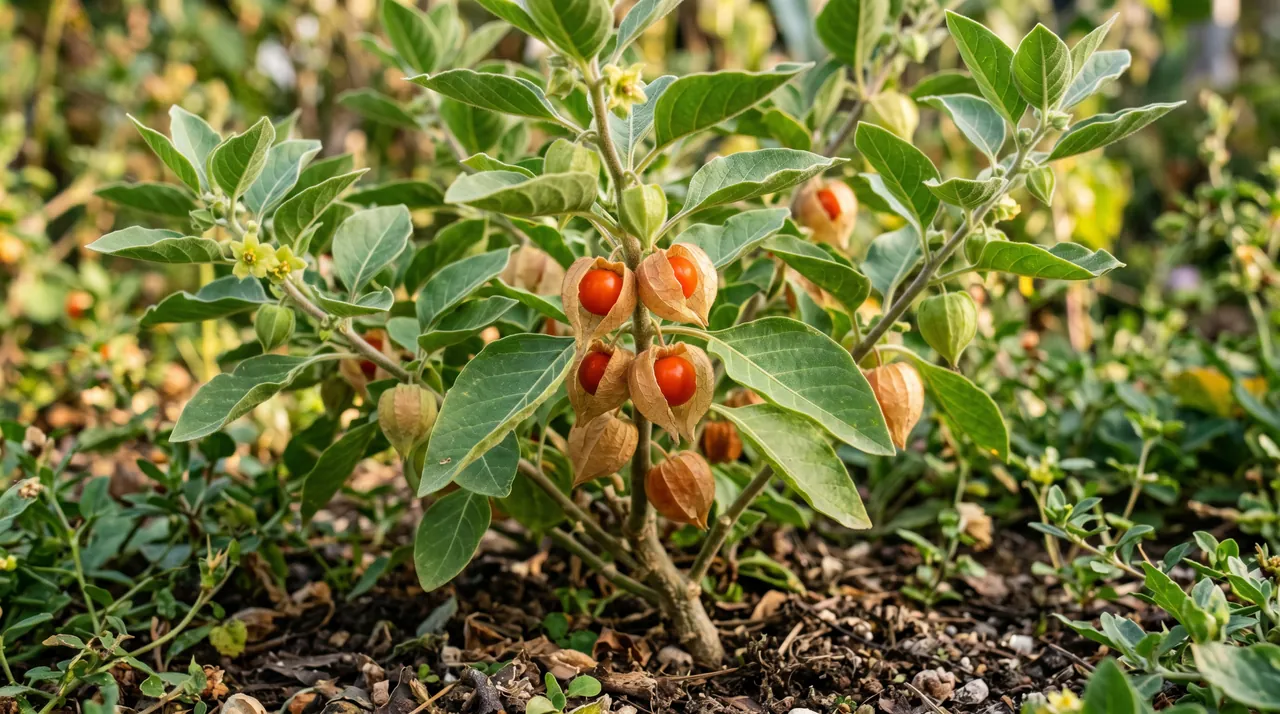
Ashwagandha (Withania somnifera), sometimes called “winter cherry” or “Indian ginseng,” is one of the most widely used plants in Ayurvedic medicine. In India it has been used for more than 3,000 years for its revitalising properties. Its Sanskrit name literally means “smell of the horse,” a reference to the aroma of its root and to the vigour it was said to bestow. It is this root, rather than the berries, that concentrates most of the sought-after active compounds.
Classed among the adaptogenic plants, ashwagandha is thought to help the body adapt better to the various forms of stress — physical, mental or emotional. It is this versatile profile that explains its current worldwide success.
What does the research say?
Ashwagandha is today one of the most extensively studied adaptogenic plants. Several clinical trials have looked at its effect on stress and cortisol, the hormone associated with the stress response: some work reports a reduction in cortisol and an improvement in participants’ feelings of anxiety. Other studies have explored its influence on sleep quality, recovery and physical performance.
These effects are attributed to specific compounds, the withanolides, steroidal lactones found in the root. The results are promising but need to be confirmed by larger studies. As with any supplement, this data does not constitute medical advice: if in doubt, consult a healthcare professional.
Ashwagandha, stress and sleep
It is through stress management that ashwagandha built its reputation. By helping the body moderate its stress response, it is thought to promote a state of calm without causing daytime drowsiness. Many users take it in the evening, since better control of stress often comes with easier sleep onset and more restorative rest. The species name “somnifera” indeed evokes this tradition of use linked to rest.
Strength, recovery and vitality
Beyond stress, ashwagandha is valued by active people for supporting energy and recovery. Some studies have observed an improvement in strength and body composition in athletes when combined with resistance training. This plant fits into a holistic approach: it replaces neither training, nor a balanced diet, nor quality sleep, but it can complement them.
How to choose a quality ashwagandha
- The part used: favour a product made from the root, the part richest in withanolides.
- The standardised extract: an extract standardised for withanolides guarantees a consistent level of active compounds.
- Purity: an ashwagandha free of unnecessary additives and lab-tested.
- Dosage: a clear concentration per capsule so you can manage your intake.
- Certification: in Morocco, compliance with ONSSA standards is a mark of seriousness.
How to fit it into your routine
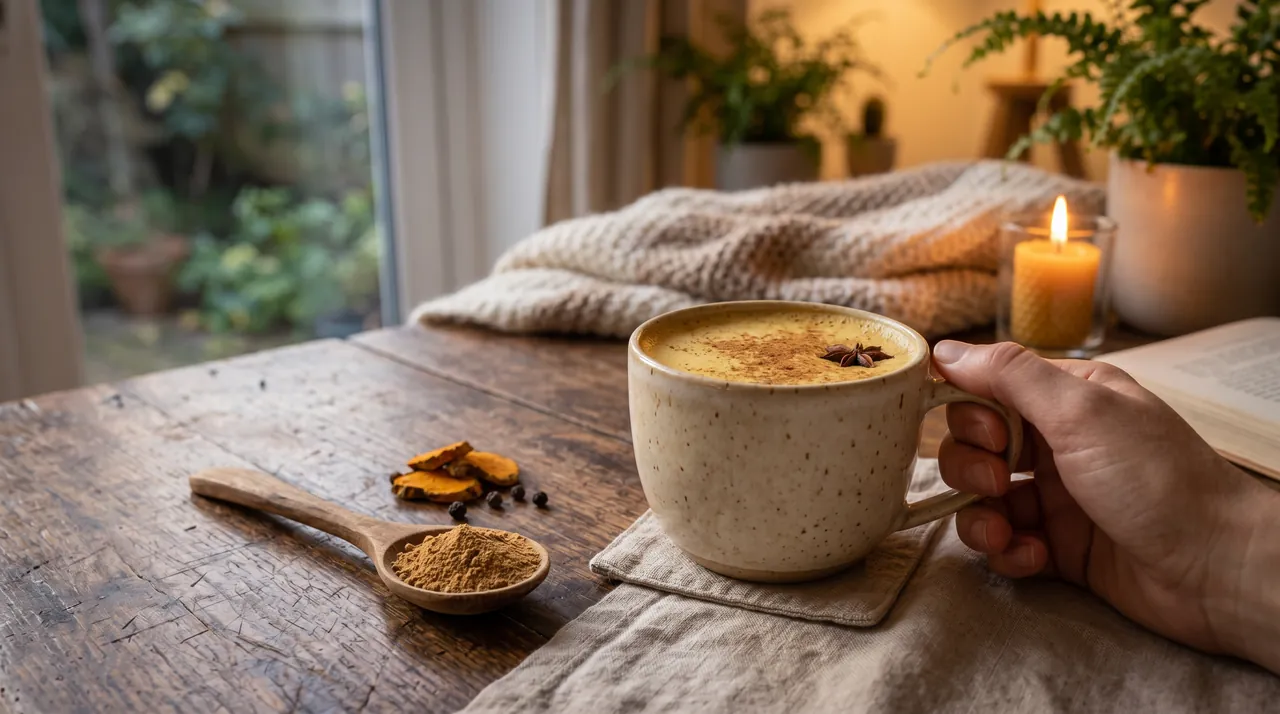
In capsule form, ashwagandha is simply taken with a glass of water, often in the evening after dinner to enjoy its soothing effect. As a powder, it is traditionally stirred into a warm drink, such as the famous “golden milk” made with plant-based milk and turmeric. Its earthy, slightly bitter taste pairs well with a touch of honey. As with all adaptogenic plants, consistency is essential: a course of 4 to 12 weeks lets you assess the benefits.
Precautions and side effects
Ashwagandha is generally well tolerated. At high doses, it may cause mild digestive upset or drowsiness. It is not recommended for pregnant or breastfeeding women, nor for people with autoimmune diseases or thyroid disorders without medical advice, as it can influence the immune system and the thyroid. If you are on any medication, particularly sedatives or thyroid treatments, ask your doctor for advice before starting a course.
Common myths about ashwagandha
- “It works immediately”: no — its effects build over several weeks of regular use.
- “It’s a sleeping pill”: it promotes calm, but does not have the direct action of a sleeping pill.
- “All powders are the same”: withanolide content varies widely from one product to another.
Well chosen and used consistently, ashwagandha is a valuable natural ally to support you through stressful periods — provided it is part of a balanced lifestyle.
The different forms available
Not all preparations are equal, and it helps to know how to tell them apart. Raw root powder, the most traditional form, preserves the whole plant but offers a variable concentration of active compounds. Standardised extracts, on the other hand, are calibrated for withanolides to guarantee a consistent level from one batch to the next: there are, in particular, patented extracts obtained solely from the root and recognised for their reproducibility. For targeted use and controlled dosing, a standardised extract is generally preferable to a simple powder, whose potency depends heavily on origin and growing conditions. Always check that the product states the part used, the withanolide content and the absence of superfluous additives.
This transparency is all the more important because global demand has led to products of uneven quality. Detailed labelling — stating origin, extraction method and the tests carried out — remains the best indicator of a brand’s seriousness.
A calm that doesn’t send you to sleep
One of the prized paradoxes of this root is its ability to promote relaxation without causing daytime drowsiness. Where some calming plants slow you down, it seems to work instead by helping the body manage pressure better, which often translates into a sense of active serenity. Many users describe a clearer mind and days that feel less “on edge,” without feeling slowed down. It is this particular quality that explains why it fits just as well into evening routines, to prepare for restorative rest, as into busy days when you want to keep your composure.
For women and men alike
This adaptogenic plant is traditionally used by both sexes, sometimes for different purposes. In women, it supports periods of fatigue, overwork or hormonal transition, when stress feels more burdensome. In men, it is reputed to support vitality, energy and physical recovery. In both cases, its action is not to supply hormones, but to help the body regain its own balance in the face of everyday demands. That said, people undergoing hormonal treatment or living with a thyroid disorder should defer to their doctor’s advice before starting a course.
How long before you feel the effects?
Patience is called for: the benefits of an adaptogenic plant build over time. Most studies assess courses of eight to twelve weeks, and many users begin to notice a sense of wellbeing after two to three weeks of regular daily use. Consistency matters more than the dose: a moderate, regular intake, always at the same time of day, is better than irregular, excessive consumption. It is also advisable to take breaks between courses rather than continuing indefinitely.
What to pair it with
For stress management and sleep quality, ashwagandha is often combined with magnesium, whose deficiency is common and heightens sensitivity to stress. Some formulas also pair it with soothing plants such as valerian or passionflower for the evening. The key is restraint: a simple, well-dosed and coherent formula is worth more than a stack of active ingredients. If you are already taking other supplements or medicines, ask a healthcare professional for advice to avoid any interaction.
Further questions
Morning or evening? Either works; many prefer the evening to enjoy the soothing effect. Can you take it continuously? It is better to alternate courses and breaks. Is it suitable for children? No, it is for adults only, excluding pregnancy and breastfeeding. Does it cause dependence? No dependence has been described, but sensible use remains the rule. If in doubt, the advice of a healthcare professional can help tailor its use to your situation.
Quality and regulation in Morocco
In Morocco, food supplements must meet quality and safety standards. Certification by ONSSA, the National Office for the Health Safety of Food Products, offers a valuable guarantee: it attests to manufacturing and controls that comply with strict requirements. When buying, check the origin, dosage, active-compound content, expiry date and the brand’s transparency. A serious manufacturer is happy to share information about its supply chain and quality controls. These simple habits let you enjoy a course with peace of mind.
Key takeaways
A pillar of Ayurveda, this root has established itself as one of the most valued adaptogenic plants for supporting stress, sleep and vitality. Its benefits, backed by a growing body of studies, are felt over time, as part of a regular course and a balanced lifestyle. Choose a standardised, certified extract, follow the usage precautions and, if you are on any treatment or in doubt, seek the advice of a healthcare professional. Used wisely, it is a valuable natural support in our often too-hurried lives.
A special place in the Ayurvedic tradition
In ancestral Indian medicine, this root holds a place of choice among the plants known as “rasayana,” a Sanskrit term for remedies reputed to promote longevity, vigour and overall balance. It was traditionally prescribed to weakened people, convalescents and the elderly to restore their strength, as well as to anxious individuals to calm the mind. This dual reputation — both fortifying and calming — sums up the singularity of this plant, which refuses to be confined to a single category. It is precisely this subtle balance that contemporary science is now trying to understand better, by studying the mechanisms through which it may act on the stress response.
Far from being a passing fad, its use is therefore rooted in a continuity spanning several millennia. This heritage does not, of course, dispense with the need for caution or a critical eye, but it does testify to a long human familiarity with this root and to a patient handing-down of knowledge from one generation to the next.
Mental wellbeing and clarity of mind
When stress diminishes, mental functioning as a whole often benefits. Over the course of a cure, many users report a sense of a more settled mind, a better ability to concentrate and a more stable mood. By helping the body absorb everyday pressure more effectively, this root is thought to indirectly free up mental resources usually taken up by tension. This is not a “boosting” effect on performance, but rather a more serene inner ground, conducive to both reflection and rest. This overall sense of wellbeing, hard to quantify but often described, is one of the reasons the plant is so appealing today.
As ever, these benefits are no substitute for appropriate care in cases of persistent distress: chronic stress or entrenched sleep problems deserve the attention of a healthcare professional, which no supplement can replace.
Interactions and caution
Although natural in origin, this root is not harmless and can interact with certain treatments. Because of its possible action on the nervous system, it may enhance the effect of sedative or anti-anxiety medicines. Its ability to influence thyroid function calls for caution in people treated for a thyroid disorder. Likewise, its interaction with the immune system makes it inadvisable in cases of autoimmune disease without medical supervision. Finally, it should be avoided during pregnancy and breastfeeding. These precautions need not cause undue worry: they simply remind us that a supplement, even a traditional one, deserves to be used with discernment. If in doubt, or if you are on regular medication, a conversation with your doctor or pharmacist can help tailor its use to your personal situation and let you enjoy a course with complete peace of mind.
Frequently asked questions
How long does ashwagandha take to work?
Most often after 4 to 8 weeks of regular use, sometimes up to 12 weeks for effects on stress and sleep.
Can you take it in the morning or the evening?
Both work. The evening is often preferred for sleep; for stress, spreading a dose across the day works well.
Does ashwagandha make you drowsy?
It promotes relaxation rather than drowsiness, but some sensitive people prefer to take it in the evening.
In summary
Ashwagandha is an adaptogenic plant whose main benefit, well supported by research, concerns managing stress, anxiety and sleep, with a measurable effect on cortisol. To get the most from it, choose a quality extract and use it regularly over several weeks.
To go further: learn more about ashwagandha (external source).
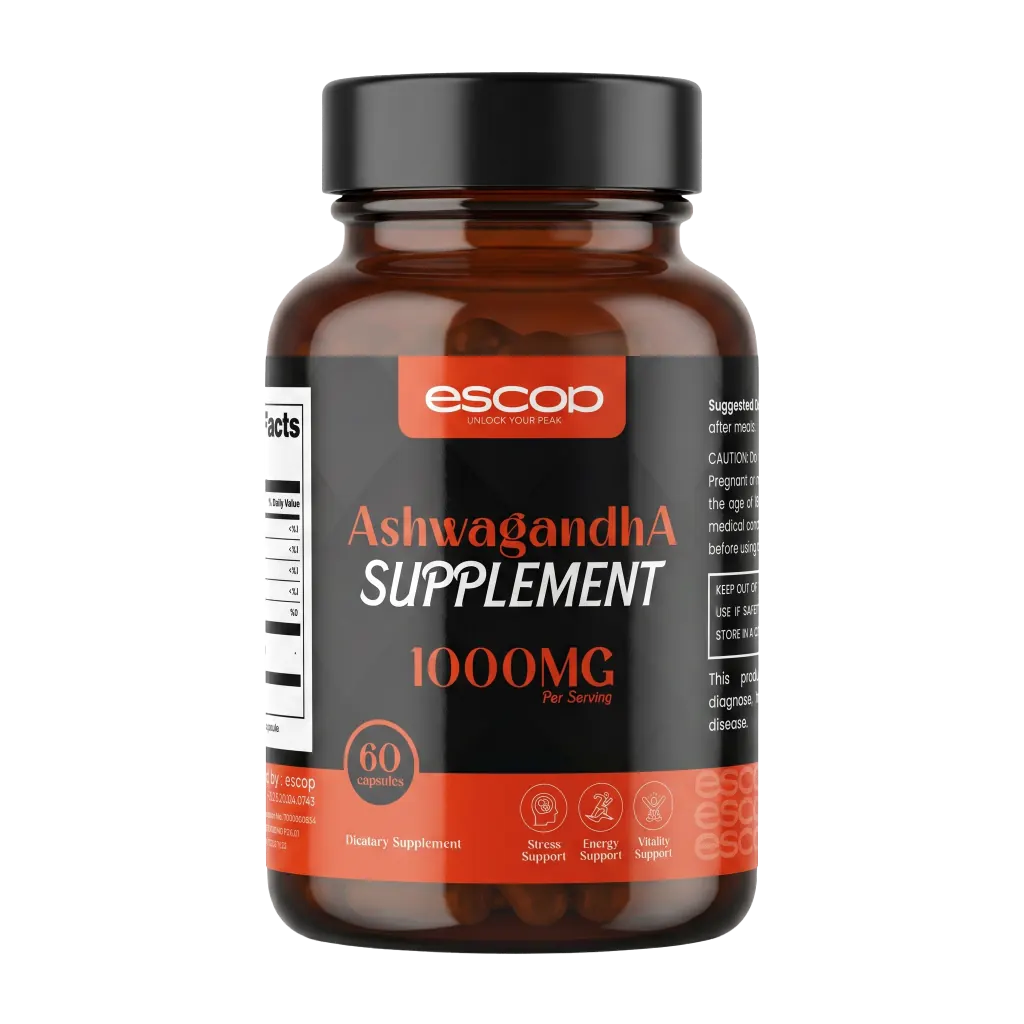
ESCOP — ONSSA Certified · Morocco
ESCOP Ashwagandha 1000 mg
To better manage stress and support restorative sleep. Dosed at 1000 mg, quality-controlled, delivered anywhere in Morocco — cash on delivery.
Discover the product →