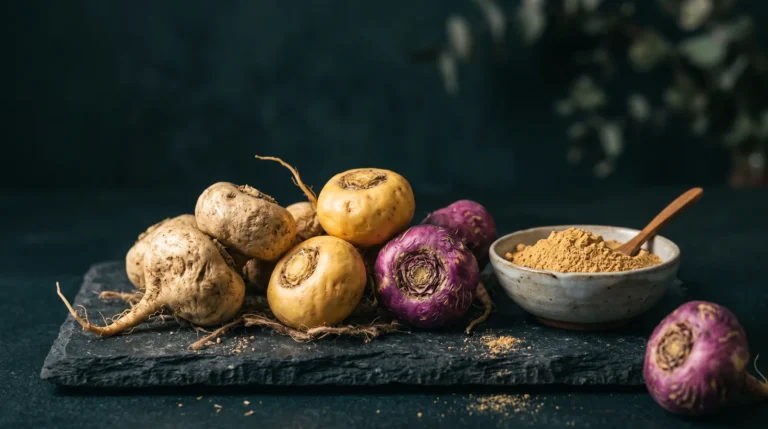
The benefits of ginseng for energy, focus, and immunity make it a benchmark tonic.
Ginseng is arguably the most famous tonic plant in the world. A pillar of traditional Asian medicine for thousands of years, it is now studied for its role in energy, concentration, and natural defenses. What does the research say, and how should you use it? Here is a clear, evidence-based guide.
Table of Contents
What is ginseng?
Ginseng (Panax ginseng, or Korean ginseng) is an iconic adaptogenic root from Asia. Its signature active compounds are ginsenosides. Like other adaptogens, it is thought to help the body better withstand fatigue and stress. Our Ginseng 1000 mg capsules are made from a concentrated root extract.
The benefits of ginseng
- Energy and fatigue relief. Several studies suggest a beneficial effect of ginseng on general fatigue, making it a popular ally during periods of low energy.
- Concentration and cognitive function. Research points to possible improvements in attention, reaction speed, and mental arithmetic, especially in middle-aged adults.
- Natural defenses. Some studies link it to better immune support, particularly during cold and flu season.
- Male sexual function. Red ginseng is traditionally used for this purpose; clinical evidence exists but remains of moderate quality.
Note: ginseng has a stimulating effect. It’s best taken earlier in the day so it doesn’t disrupt sleep.
How to take ginseng? Dosage
In studies, doses of standardized extract are often between 200 and 400 mg per day. A few practical tips:
- Take it preferably in the morning, because of its energizing effect.
- The capsule form makes regular dosing easy — our Ginseng 1000 mg is taken as 2 to 3 capsules per day after meals.
- Many people use it in cycles (a few weeks, for example), with regular breaks in between.
Precautions and contraindications
- Not recommended during pregnancy or breastfeeding.
- Avoid combining with other stimulants (excess caffeine); use caution in cases of high blood pressure, diabetes, or ongoing medication — seek medical advice.
- Taking it too late in the day or at a high dose may cause insomnia or nervousness in sensitive individuals.
This content is provided for informational purposes and does not replace the advice of a healthcare professional. Ginseng is a food supplement, not a medicine: it does not treat or cure any disease.
The origin and history of ginseng
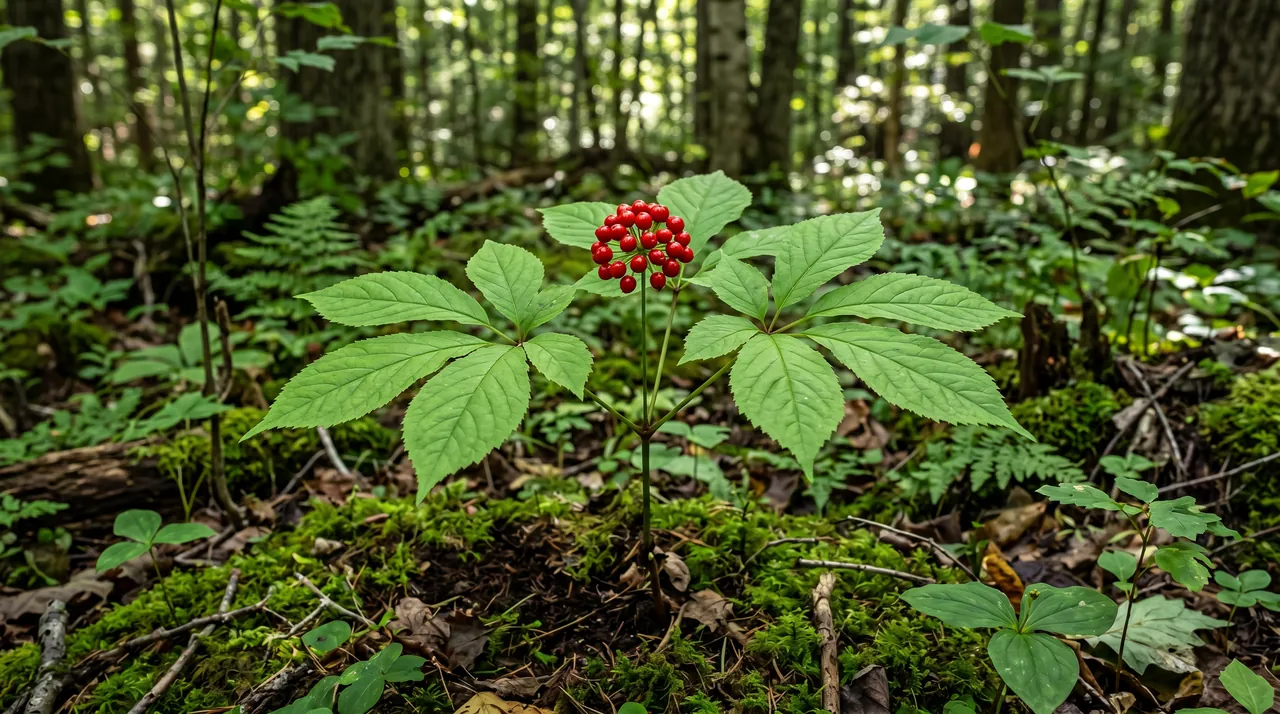
Ginseng (Panax ginseng) is one of the oldest and most respected medicinal plants in the world. Used for over two thousand years in traditional Chinese and Korean medicine, its Latin name comes from “panacea,” a reference to the ancient belief that it could cure anything. Its root, whose shape sometimes resembles a human silhouette, earned it the nickname “man root.” Once reserved for emperors, it is now one of the most popular supplements on the planet.
Ginseng belongs to the family of adaptogenic plants, believed to help the body better withstand different forms of stress. Growing it requires considerable patience: it often takes four to six years before the root reaches full maturity and its richest concentration of active compounds.
White ginseng or red ginseng?
There are mainly two forms. White ginseng is simply dried after harvest. Red ginseng is steamed and then dried: this process alters its composition and concentrates certain ginsenosides, making it the most sought-after form for vitality and stamina. The choice depends on the intended use, but red ginseng remains the reference for a pronounced tonic effect.
What does scientific research say?
The main active compounds in ginseng are ginsenosides, a family of compounds studied for their many properties. Several studies have looked at its effect on fatigue, concentration, and cognitive performance, with encouraging results in tired individuals or during periods of intense mental effort. Other research has explored its role in natural defenses and blood sugar levels.
This data, while promising, often comes from moderately sized studies and deserves further confirmation. Ginseng is not a medicine and does not replace any treatment: if you have a medical condition or any doubt, the advice of a healthcare professional remains essential.
Ginseng, energy, and fatigue
Energy is where ginseng is best known. Unlike stimulants, it doesn’t cause a spike followed by a crash — instead, it’s thought to support steadier, longer-lasting vitality. It is traditionally recommended during periods of temporary fatigue, convalescence, or heavy workloads. Many people use it as a seasonal cycle, especially at the start of winter.
Concentration and mental clarity
Ginseng is also popular among students and working professionals for supporting concentration and working memory during demanding periods. By helping the body better manage mental fatigue, it may help maintain good mental clarity throughout the day. It’s a top choice for exams, work deadlines, or long working days.
Natural defenses and vitality
The ginsenosides in ginseng are studied for their support of the body’s natural defenses. Traditionally, the root is taken as a preventive measure during seasonal changes, when the body is under more strain. It is also said to support libido and overall vitality, an age-old use that continues today.
How to choose a quality ginseng?
- The species: make sure it is indeed Panax ginseng, the benchmark Asian ginseng.
- The age of the root: a 6-year-old root is considered the richest in active compounds.
- Ginsenoside content: a standardized extract guarantees a consistent concentration.
- Purity: a product free of additives, lab-tested.
- Certification: in Morocco, ONSSA compliance is a trusted benchmark.
How to fit it into your daily routine
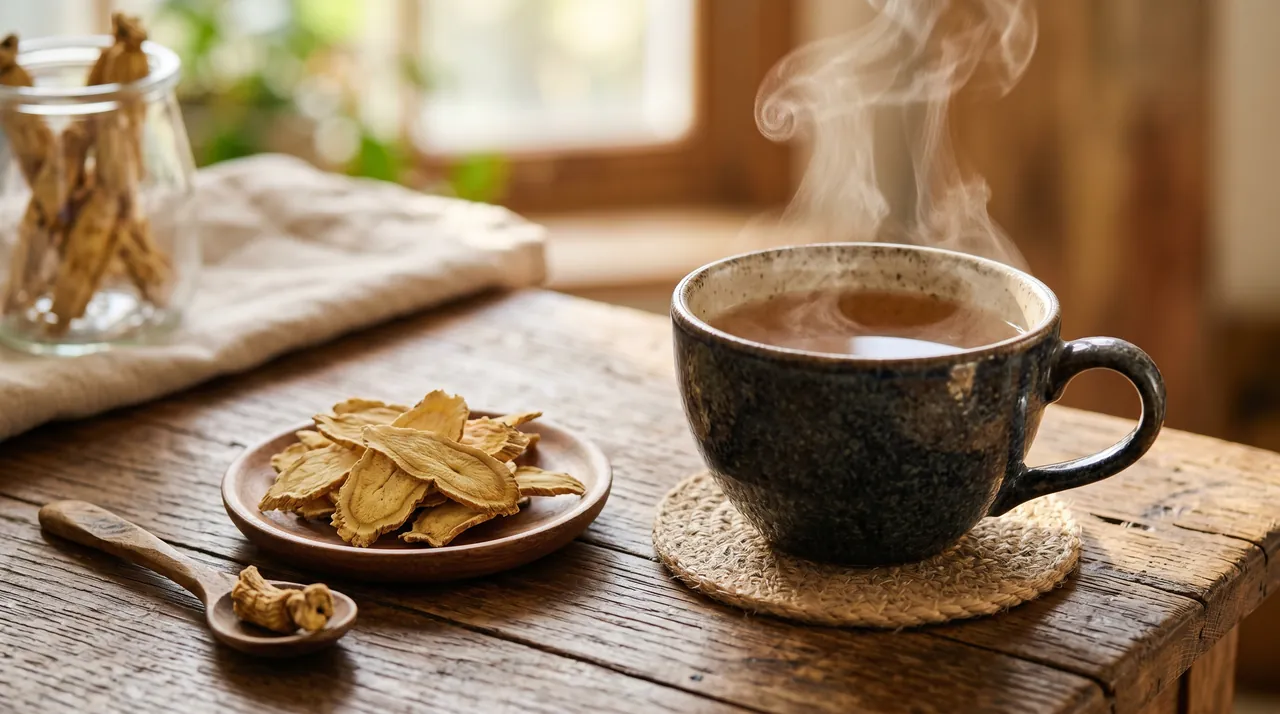
Ginseng is best taken in the morning or early in the day, since its tonic effect can make falling asleep harder if taken too late. In capsule form, simply follow the indicated dosage with a glass of water. As root or powder, it is traditionally prepared as an infusion or decoction. A cycle of a few weeks, repeated with the change of seasons, is the most common way to enjoy its benefits. Consistency matters more than quantity.
Precautions and contraindications
Ginseng is generally well tolerated, but a few precautions are needed. At high doses or in the evening, it may cause mild nervousness or sleep disturbances. It is not recommended for pregnant or breastfeeding women, or for people with uncontrolled high blood pressure. If you are on medication, especially blood thinners or diabetes medication, ask your doctor before starting a course.
Common myths about ginseng
- “It acts like coffee”: no, its energy is gradual and caffeine-free.
- “All ginsengs are the same”: false, the species, age, and preparation change everything.
- “You can take it without limit”: no, a structured cycle with breaks is preferable.
Well chosen and used with discernment, ginseng remains a great classic among tonic plants, to be included as part of a balanced lifestyle rather than treated as a miracle solution.
The different varieties to know
Behind a single name are actually several distinct plants, which are worth telling apart before buying. The Asian variety, Panax ginseng, is the most renowned and the most studied; tradition considers it the most tonic. The American variety, Panax quinquefolius, has a slightly different profile, often described as more “cooling” and calming. Finally, eleuthero, sometimes called “Siberian ginseng,” does not belong to the same botanical genus despite its nickname: its adaptogenic properties are similar, but its composition is quite different. For a benchmark tonic effect, it is the Asian root you should look for, carefully checking the Latin name on the label.
This distinction matters, since the desired benefits are not quite the same from one plant to another. Precise labeling, indicating the species, geographic origin, and preparation method, is the first sign of a serious product. Be wary of vague blends that stick to the generic term without specifying the exact variety.
A favorite support for athletes
Among active people, this tonic root is often included during intense training periods. By helping the body better cope with physical fatigue, it may support endurance and promote more comfortable recovery after exercise. Athletes generally use it in cycles, in the morning, alongside a suitable diet and adequate rest. It is not a performance-enhancing substance: its action is that of a functional food that supports the body, never replacing consistent training or a healthy lifestyle. This is, in fact, the whole logic of adaptogens: helping the body adapt rather than artificially pushing it beyond its limits.
Managing stress and the pace of daily life
Beyond physical effort, this plant is traditionally used to get through busy periods: extra workload, seasonal changes, temporary slumps. Its adaptogen status means it acts in a “non-specific” way, helping the body restore balance in the face of external demands. Many users describe a sense of greater resilience, a lower tendency to “crash” at the first signs of fatigue. This underlying effect, subtle but steady, explains why the root is so valued in modern lifestyles, where periods of tension often follow one another without real recovery.
An energy different from coffee’s
Unlike caffeinated drinks, this root contains no caffeine and therefore causes neither a sharp jolt nor a rebound effect. The energy it provides is described as more diffuse and steady, without the jitters or palpitations some people feel with classic stimulants. This is a major advantage for people sensitive to caffeine or who want support they can use over the long term. The goal isn’t an immediate “burst,” but ongoing background support for vitality, in tune with the body’s natural rhythms.
How long before you feel the effects?
Like most adaptogenic plants, its benefits build up over time rather than instantly. A cycle of four to eight weeks, taken daily and consistently, is generally needed to fully appreciate its effects. Many users report feeling better after two to three weeks, with fatigue feeling less overwhelming and better concentration. It’s advisable to alternate periods of use and rest, rather than taking the root continuously all year round, in order to preserve its benefits and respect the body’s balance.
What to pair it with?
This root pairs well with other vitality plants and nutrients. It is often combined with royal jelly, vitamin C, or magnesium in “pick-me-up” formulas for seasonal changes. For concentration, it is sometimes combined with memory-supporting plants. The key is not to pile on active ingredients without reason: a simple, well-dosed formula is better than a confusing cocktail. If in doubt about combinations, especially if you already take other supplements, the advice of a healthcare professional helps avoid unwanted interactions.
Additional questions
Can you take it all year round? It’s best to proceed in cycles, with regular breaks, rather than continuously. What time of day? Morning or midday, never too late, so as not to disrupt sleep. Is it suitable for young adults? It is mainly intended for adults; teenagers, pregnant women, and people on medication should seek medical advice. Can it be cooked with? Yes, the root lends itself to infusions, broths, and decoctions in traditional Asian cuisine, as long as it isn’t boiled for too long.
Ultimately, this great classic among tonic plants remains just as relevant today, provided it is chosen carefully, used consistently, and included as part of a healthy lifestyle built on sleep, physical activity, and a balanced diet.
A supplement, not a miracle solution
It’s essential to remember that no plant, however renowned, replaces the fundamentals of good health. Sufficient, regular sleep, suitable physical activity, a varied diet rich in fruits, vegetables, and quality protein, along with good stress management, remain the pillars of vitality. A course of supplementation has its place alongside these habits, never in place of them. It’s within this logic of complementarity that it delivers its benefits best: it supports a body already cared for by a healthy lifestyle, rather than compensating for poor habits.
Likewise, patience is a virtue: the effects of adaptogenic plants are measured in weeks, not hours. There’s no point increasing the dose hoping for a faster result; doing so mainly exposes you to unnecessary discomfort. Consistency, at a reasonable dose, always pays off more than occasional excess.
Key takeaways
An iconic plant of traditional Asian medicine, this tonic root has endured through the centuries without losing any of its popularity. Its richness in active compounds, its adaptogenic profile, and its gradual action make it a top choice for periods of fatigue, mental effort, or low energy. To make the most of it, choose a product whose species and origin are clearly stated, that is certified and properly dosed, and build your course of use over time with regular breaks. If you are undergoing medical treatment, pregnant, or in doubt, the advice of a healthcare professional remains the best precaution. Used this way, with moderation and common sense, this ancestral root has a real place in a natural approach to well-being.
Quality and regulation in Morocco
In Morocco, food supplements are regulated, and bringing them to market requires compliance with quality and safety standards. Certification by ONSSA, the National Food Safety Agency (Office National de Sécurité Sanitaire des produits Alimentaires), is a valuable benchmark for consumers: it confirms that the product has been manufactured and inspected according to strict requirements. Choosing a certified product means ensuring traceability and a composition consistent with what’s stated on the label. When purchasing, take the time to check the origin, dosage, expiry date, and the brand’s transparency about its supply chain. A serious manufacturer has nothing to hide and readily shares information about the source of its raw materials, its manufacturing methods, and its quality controls. These few simple habits help you avoid products of questionable quality and enjoy the benefits of a course of supplementation with complete peace of mind.
Frequently asked questions
When should you take ginseng?
Preferably in the morning or at midday, to enjoy its tonic effect without disrupting sleep.
Do ginseng and coffee mix well?
It’s better to avoid combining ginseng with heavy caffeine intake, to limit nervousness.
Is ginseng suitable for women?
Yes. Its effects on energy, concentration, and immunity apply to both men and women.
In summary
Ginseng is a tonic adaptogenic root, studied mainly for energy, concentration, and immune support. To get the best out of it, choose a quality ginseng, take it in the morning, and favor regular use in cycles.
To learn more: read more about ginseng (external source).
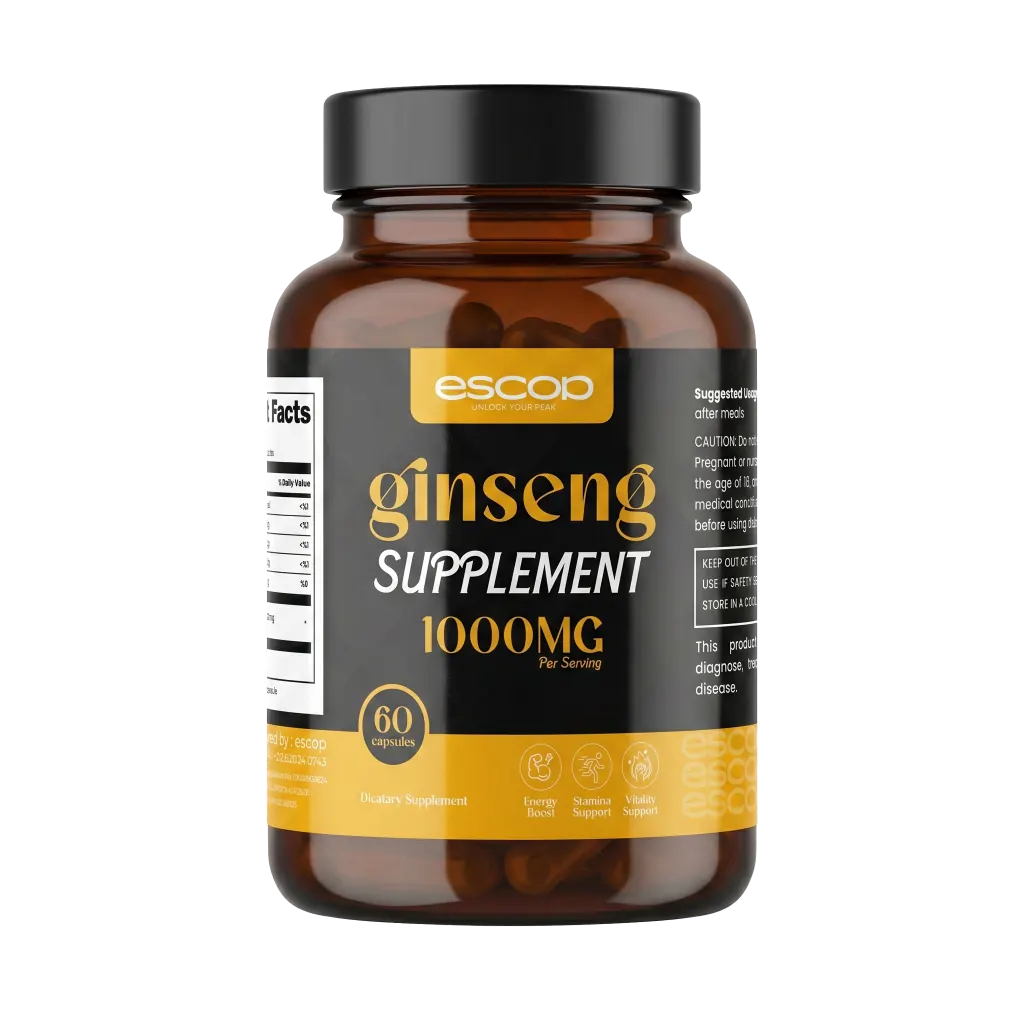
ESCOP — ONSSA Certified · Morocco
ESCOP Ginseng 1000 mg
For energy, concentration, and vitality. Dosed at 1000 mg, quality-controlled, delivered anywhere in Morocco — cash on delivery.
Discover the product →