Cardamom is one of the most prized medicinal spices in Morocco, where it is known as qa’qolla or hbahane. Found in the herbalist stalls of the souks of Marrakech, Fez and Casablanca, it flavours coffee, tea and sweet dishes, and has been used for centuries to ease digestion and freshen the breath. Behind its distinctive fragrance lies a rich aromatic composition that phytochemical research has now documented in detail. Here is what you need to know about its benefits, how to use it and its limits.
What is cardamom?
Green cardamom is the dried fruit of Elettaria cardamomum, a perennial herbaceous plant of the Zingiberaceae family — the same botanical family as ginger and turmeric. Native to the rainforests of southern India and Sri Lanka, it is now grown mainly in India and Guatemala.
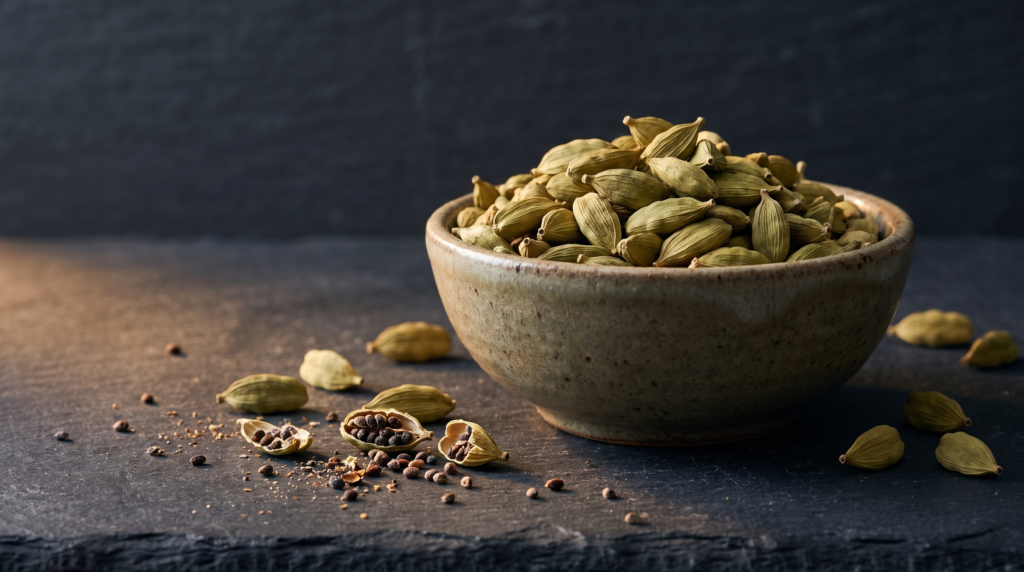
What we commonly call a “pod” is in fact a pale green, oval capsule 1 to 2 cm long, containing around fifteen small, highly aromatic black seeds. These seeds hold the essential oil responsible for the spice’s fragrance and properties. Once the capsule is opened, the aromas evaporate quickly, which is why herbalists recommend buying whole pods rather than ready-ground powder.
It should not be confused with black cardamom (Amomum subulatum), which is larger, dried over a wood fire and distinctly smoky in taste, nor with the “false cardamom” sometimes sold cheaply in markets.
Composition and active compounds of cardamom
Cardamom’s value in herbal medicine lies above all in its essential oil, obtained by distilling the fruits or crushed seeds. Chromatographic analyses identify several families of compounds:
- 1,8-cineole (eucalyptol): the main compound, making up about 27% of the essential oil. It is the same molecule that dominates in eucalyptus, known for its expectorant and respiratory antiseptic properties.
- Alpha-terpinyl acetate and alpha-terpineol: together they form the largest fraction of the oil (about 43% combined) and account for most of its antispasmodic and carminative action.
- Linalool and linalyl acetate: floral compounds present in smaller amounts (around 5% for linalyl acetate), which contribute to the spice’s delicate fragrance.
- Flavonoids and phenolic acids: more than thirty compounds with antioxidant activity have been identified in the seeds.
- Minerals and vitamins: potassium, magnesium, calcium and zinc, as well as vitamins C, B2 and B6, although the amounts consumed in cooking remain modest.
The benefits of cardamom
1. A well-known aid to digestion
This is its oldest and best-established use. Cardamom is classed among the carminative plants: it helps reduce the production and build-up of intestinal gas. Its antispasmodic action on the smooth muscle fibres of the digestive tract explains the relief people feel from bloating, a heavy feeling after a large meal or sluggish digestion. It is also described as stomachic (it stimulates gastric secretions) and cholagogue (it promotes the flow of bile).
2. Support for the respiratory system
Its high 1,8-cineole content gives the spice expectorant and anticatarrhal properties. As a hot infusion, it helps thin bronchial secretions and clear the airways during temporary congestion. This is a common traditional use in winter, often combined with thyme or ginger.
3. A natural breath freshener
Chewing one or two seeds after a meal is a habit shared from India to the Maghreb. Beyond the pleasant aroma, cardamom’s aromatic compounds show documented antibacterial activity, including against some of the bacteria involved in oral infections and bad breath.
4. A useful source of antioxidants
The flavonoids and phenolic acids it contains help counter oxidative stress, the imbalance between free radicals and the body’s antioxidant defences. As with most spices, this contribution complements — rather than replaces — that of a diet rich in fruit and vegetables.
5. Anti-inflammatory and pain-relieving properties
The ethnopharmacology literature attributes mild anti-inflammatory and analgesic effects to Elettaria cardamomum, observed mainly in experimental studies. These findings are encouraging but do not yet support a therapeutic recommendation in humans.
6. Antibacterial and antiseptic action
Several studies of the essential oil report antimicrobial activity against a broad spectrum of germs. This partly explains its traditional use as a natural preservative and as a respiratory antiseptic.
7. Support for overall gut comfort
Combined with other digestive plants such as aniseed, fennel or caraway, cardamom is found in many herbal teas designed to soothe intestinal spasms and improve everyday digestive comfort.
How to use cardamom and dosage
Cardamom can be used in several forms, from the simplest to the most concentrated:
- Seeds to chew: 2 to 3 seeds after a meal, for digestion and fresh breath.
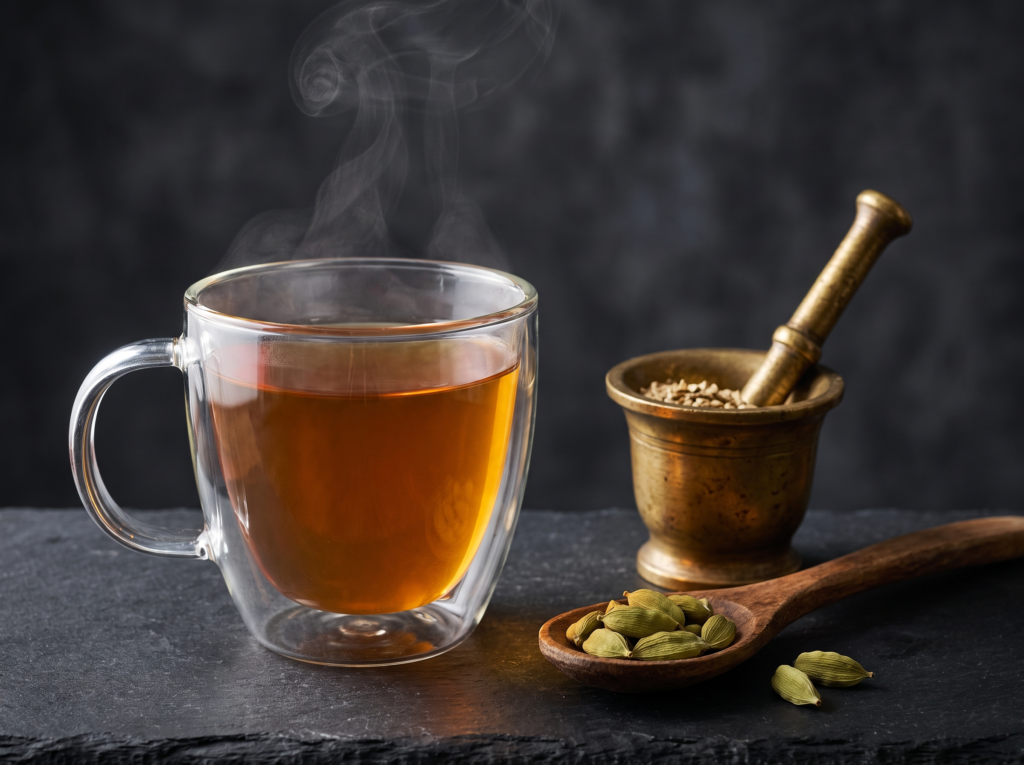
- Infusion: about 1 g of crushed seeds (2 to 3 pods) in 150 ml of boiling water, covered and left to steep for 10 minutes. Up to 3 cups a day.
- Powder: a commonly cited dosage is 3 g a day, split into 3 doses of 1 g.
- In cooking: in coffee (the famous qahwa bel hbahane), tea, pastries, sweet-and-savoury tagines or rice dishes.
- Essential oil: a highly concentrated form, to be used only under the guidance of a professional trained in aromatherapy.
To preserve the aromas, store whole pods in an airtight container away from light and moisture, and crush them only when you are ready to use them.
Precautions and contraindications
In food amounts, cardamom is considered safe for the vast majority of people. A few situations do, however, call for caution:
- Gallstones or bile duct obstruction: because of its cholagogue action, seek medical advice before any regular therapeutic use.
- Pregnancy and breastfeeding: culinary use poses no particular problem, but concentrated forms, and especially the essential oil, should be avoided without professional advice.
- Anticoagulant treatment: an interaction has been reported in the literature; do not take a concentrated supplement without talking to your doctor or pharmacist.
- Long-term treatments (heart, blood sugar, blood pressure): the same caution applies; medical follow-up comes first.
- Known allergy to plants of the Zingiberaceae family: use is contraindicated.
- Young children: the essential oil must be avoided; use in food remains possible.
As with any spice, too much can irritate the digestive tract. Stick to the usual amounts and take breaks between courses.
Cardamom FAQ
Does cardamom help with weight loss?
There is no solid human data to support this. It can improve digestive comfort and add flavour to preparations without added sugar, which helps indirectly, but it is no substitute for a balanced diet or physical activity.
Green or black cardamom: which should you choose?
Green cardamom (Elettaria cardamomum) is the one studied and used in herbal medicine, with a fresh, lemony aromatic profile. Black cardamom, which is smokier, is mainly a spice for savoury cooking.
Can you take it every day?
Yes, in food amounts or as a moderate infusion, for a healthy person with no contraindications. For prolonged therapeutic use, ask a healthcare professional for advice.
Conclusion
Cardamom perfectly illustrates the dual status of many Moroccan spices: both a kitchen ingredient and a traditional remedy. Its richness in 1,8-cineole and alpha-terpinyl acetate explains its digestive and respiratory effects, the best documented to date. Easy to fit into daily life — a few pods in your coffee or an infusion after a meal — it deserves its place in a well-stocked herbal cupboard, provided you respect the precautions for use.
Further reading
- Cardamom — full botanical profile on Wikipedia
- Ginger: benefits, dosage and precautions
- Aniseed: benefits, dosage and precautions
- Caraway: benefits, dosage and precautions
- Turmeric: benefits, dosage and precautions
This article is for information only and does not replace medical advice. If you have persistent symptoms, are on medication, or are pregnant or breastfeeding, consult a healthcare professional before using cardamom for therapeutic purposes.