Caraway, known as “karwiya” in Morocco, is one of the most widely used seeds in the traditional Moroccan pharmacopoeia for soothing digestion. Found in the kingdom’s kitchens and herbal shops for centuries, it flavours harira, soups and breads, while relieving bloating, cramps and sluggish digestion. In this article, we review its composition, its documented benefits, how to take it, the recommended dosage and the precautions to know before making it part of your daily routine.
What is caraway?
Caraway (Carum carvi) is a biennial herbaceous plant of the Apiaceae family, the same botanical family as fennel, aniseed, cumin and coriander. It grows wild in Europe, western Asia and North Africa, and is easy to cultivate in temperate climates.
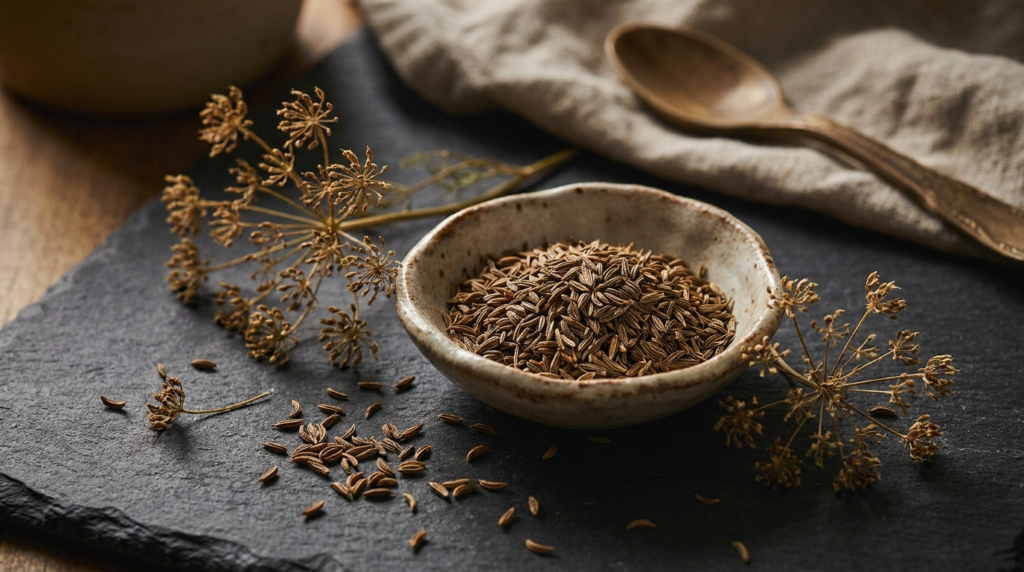
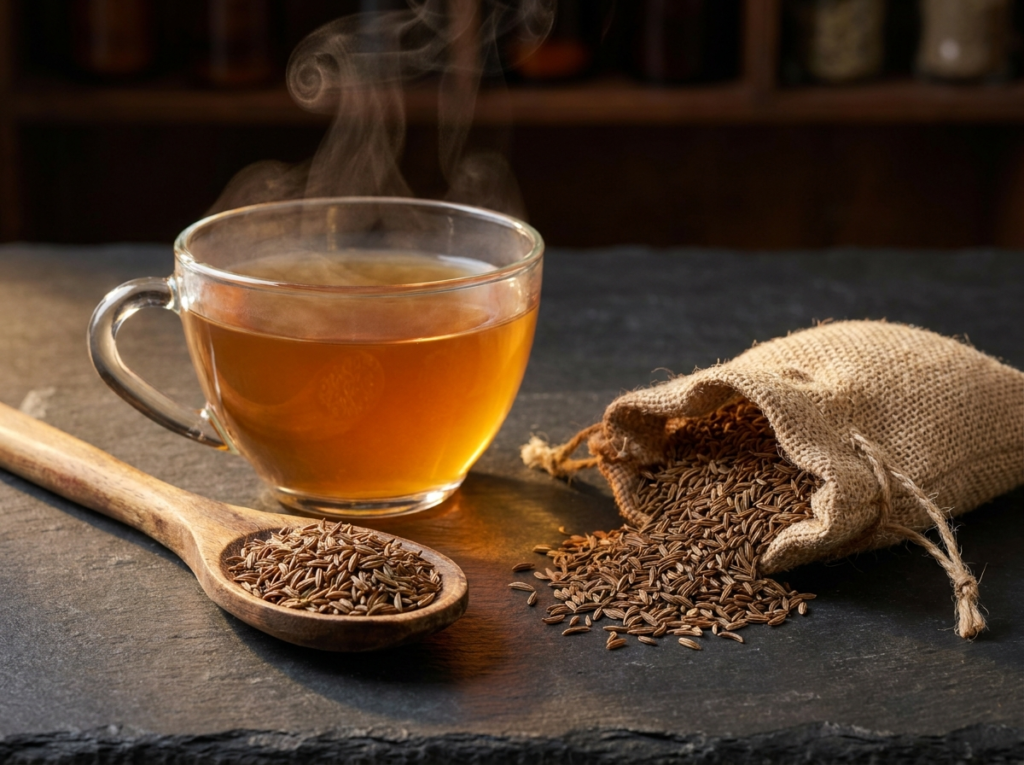
What we call caraway “seeds” are actually its dried fruits: small, brown, elongated and ridged achenes, often confused with cumin. Their taste, however, is different: fresher, slightly aniseed-like and peppery. In Morocco, karwiya is an essential grandmother’s remedy: it is made into a tea after hearty meals, added to buttermilk (lben) and traditionally given as a light infusion to calm digestive discomfort.
Composition and active compounds
Caraway’s effectiveness relies mainly on its essential oil, concentrated in its fruits. Its main active compounds are:
- Carvone: the main ketone in the essential oil, with antispasmodic properties; it also helps thin the bile.
- Limonene: a terpene that stimulates bile production and contributes to the seed’s fresh aroma.
- Secondary compounds: carvacrol, γ-terpinene, α-pinene, linalool and p-cymene, which complement its aromatic and antimicrobial action.
- Fibre, minerals and flavonoids found in the whole seed.
It is the carvone–limonene combination that explains the dual choleretic (bile production) and cholagogue (bile flow) action traditionally attributed to this seed.
The health benefits of caraway
More comfortable digestion
This is its best-known use. By stimulating the secretion and flow of bile, caraway makes it easier to digest fatty meals. It is traditionally recommended as an infusion after a heavy meal to avoid a feeling of heaviness and slow digestion.
Less bloating and gas
Caraway is a carminative plant: it helps limit the formation of intestinal gas and promotes its expulsion. That is why it is included in many digestive teas, often combined with fennel and aniseed, two seeds from the same family with complementary effects.
An antispasmodic effect on the gut
Thanks to carvone, the seed helps relax the smooth muscles of the digestive tract. This antispasmodic effect makes it a traditional aid for intestinal cramps and abdominal discomfort caused by spasms.
Traditional support for breastfeeding
In Moroccan tradition, as in European herbalism, karwiya is reputed to be a galactagogue: it is used to support breastfeeding. This use remains traditional; breastfeeding mothers should ask a healthcare professional before taking it regularly.
Fresh breath and antimicrobial action
Chewing a few seeds after a meal is an age-old practice for freshening the breath. The aromatic compounds in the essential oil also have antimicrobial properties that contribute to this purifying effect.
How to use it and dosage
The simplest and safest form remains a tea made from the seeds:
- Digestive infusion: 1.5 to 6 g of seeds (about one teaspoon), crushed just before use, in 150 ml of boiling water. Leave to steep for 10 to 15 minutes, and drink preferably after the meal.
- In cooking: add the seeds whole or ground to soups, tagines, breads and vegetables; it is a gentle way to benefit from its properties every day.
- Essential oil: highly concentrated, it is reserved for supervised use. It must always be diluted before any oral or skin use, and never given to children.
For regular use, it is best to crush the seeds at the last moment: their essential oil is volatile and evaporates quickly once the seed is ground.
Precautions and contraindications
At food doses, caraway is well tolerated by the vast majority of adults. A few precautions are nevertheless necessary:
- In high doses, the seed can become irritating: stick to the recommended amounts.
- Pregnant women should seek medical advice before consuming it in therapeutic amounts.
- Use as an infusion is traditionally reserved for adults and children over 10.
- The essential oil is not recommended for pregnant or breastfeeding women or for children, and is never used undiluted.
- If you have a liver disorder or gallstones, or are on medical treatment, ask your doctor or pharmacist for advice.
Caraway FAQ
What is the difference between caraway and cumin?
The two seeds look alike, but cumin (Cuminum cyminum) has a warm, earthy taste, while caraway offers fresher, aniseed-like notes. Their essential oils are different: carvone dominates in caraway, cuminaldehyde in cumin.
When should you drink karwiya tea?
Ideally after meals, especially rich or hearty ones. A cup after lunch or dinner helps limit bloating and digestive heaviness.
Can you take it every day?
Yes, at food doses or as an infusion (1.5 to 6 g of seeds a day for an adult), daily consumption is considered safe. If in doubt or on medical treatment, ask a healthcare professional for advice.
Conclusion
Discreet but remarkably effective, caraway deserves its place in every Moroccan kitchen and herbal shop. Digestive, carminative and antispasmodic, it perfectly illustrates the richness of the kingdom’s traditional pharmacopoeia: a small seed, great digestive comfort. As a tea after meals or sprinkled into your dishes, it is a simple, affordable and time-tested wellness habit.
Further reading
To learn more about the botany of this plant, see the Wikipedia page on caraway. And to continue exploring digestive plants and natural wellness, read our articles on fennel, aniseed and cumin.
This article is provided for information purposes only and does not replace medical advice. Consult a healthcare professional before using caraway for therapeutic purposes, particularly in case of pregnancy, breastfeeding, chronic illness or ongoing treatment.