Myrtle, known as “rihan” in Morocco, is one of the most iconic medicinal plants of the Mediterranean basin. An evergreen shrub with fragrant foliage, it grows wild in the Rif, the Middle Atlas and the northern regions of the kingdom, where herbalists have used it for centuries to relieve the airways, soothe digestion and purify the skin.
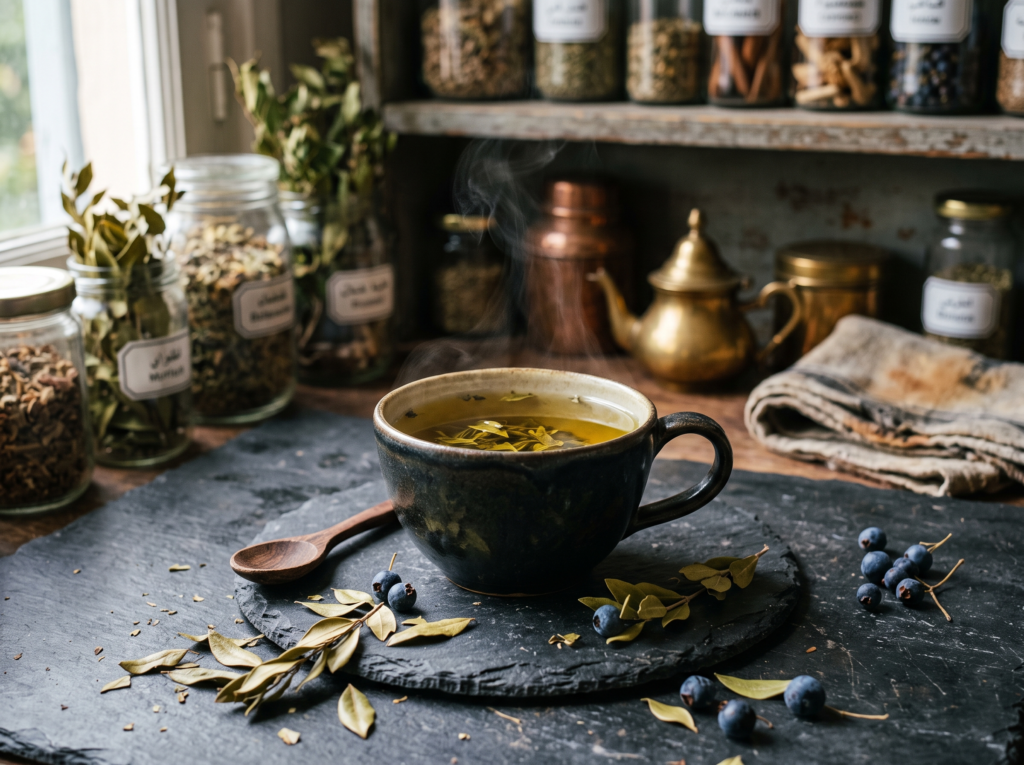
Dried leaves for infusion, a floral water nicknamed “angel water”, essential oil or powder: this plant comes in many forms. In this article, we review its composition, its documented benefits, common ways to use it, traditional dosages and the precautions to know before adopting it.
What is myrtle?
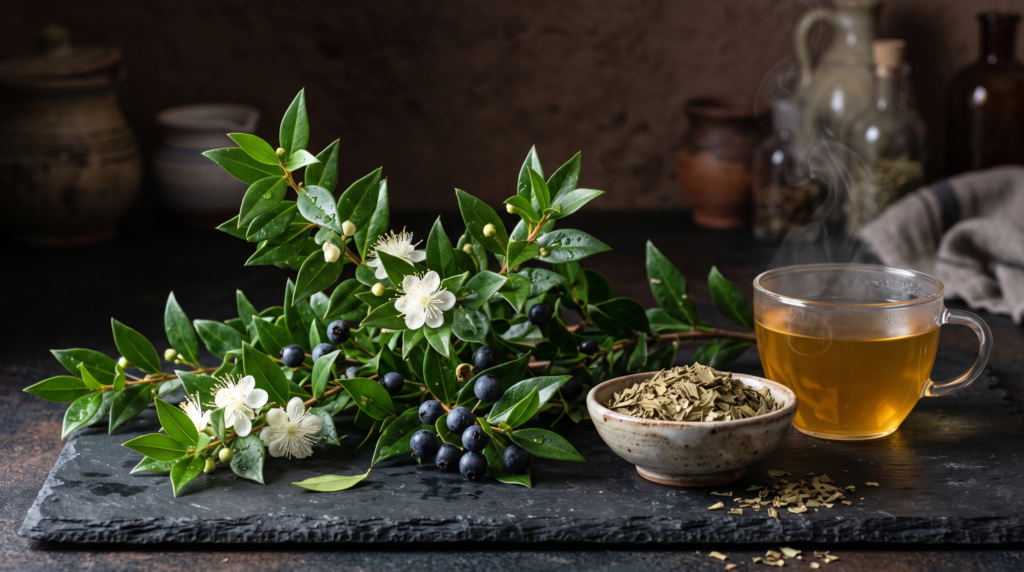
Common myrtle (Myrtus communis) is a shrub of the Myrtaceae family, the same family as eucalyptus and clove. It can reach two to three metres in height and is recognisable by its small, oval, leathery and glossy leaves, its fragrant white flowers that bloom in summer, and then its characteristic blue-black berries.
In Morocco, rihan holds a special place in tradition: its sprigs perfume homes during celebrations, its leaves go into herbal blends, and its floral water is used in skin and hair care. A distinction is generally made between green myrtle, richer in cineole, and red myrtle, whose essential oil is dominated by myrtenyl acetate and which often comes from Morocco.
Composition and active compounds
The therapeutic interest of this plant comes from the wealth of active compounds in its leaves and berries:
- Tannins: present in large amounts in the leaves (around 14%), they have an astringent action and tighten tissues.
- 1,8-cineole (eucalyptol): an aromatic compound with expectorant properties, also found in eucalyptus.
- Myrtenol and myrtenyl acetate: aromatic molecules characteristic of the essential oil, associated with its soothing effects.
- Flavonoids and polyphenols: antioxidants that help protect cells from oxidative stress.
- Myrtucommulone: a compound specific to myrtle, studied for its anti-inflammatory and antibacterial properties.
The benefits of myrtle
1. An ally for the airways
This is the plant’s best-known use. Thanks to the cineole they contain, the leaves have expectorant and antiseptic properties that help clear the bronchi and sinuses. As an infusion or an inhalation, they are traditionally used to support winter ailments such as productive coughs, bronchitis or sinusitis.
2. Support for digestion
Rich in tannins, the leaves have an astringent and soothing action on the digestive system. In Mediterranean tradition, the tea is used to calm bloating, sluggish digestion and episodes of mild diarrhoea. Taken after a heavy meal, it promotes intestinal comfort.
3. Antibacterial and purifying action
The plant’s aromatic compounds, including myrtucommulone, are being researched for their antibacterial effects. The infusion is traditionally used to cleanse the urinary tract, while gargling with myrtle water helps soothe sore throats and minor mouth irritations.
4. Support for venous circulation
Red myrtle, often of Moroccan origin, is renowned in aromatherapy for supporting circulation and relieving the feeling of heavy legs. This use mainly concerns the essential oil, which must always be diluted in a vegetable oil before local application.
5. A tonic for skin and hair
The hydrosol, the famous “angel water”, is valued in natural cosmetics for its astringent qualities: it tightens pores, tones combination to oily skin and calms redness. In Morocco, rihan water is also traditionally applied to the scalp to strengthen hair and give it shine.
How to use it and dosage
The forms of use vary depending on the desired effect:
- Infusion: allow about 1 to 2 g of dried leaves per cup of simmering water (i.e. 2 teaspoons for a teapot), and steep for 10 to 15 minutes. Tradition recommends 2 cups a day, after meals.
- Decoction for external use: about 25 g of leaves per litre of water, used once cooled as a gargle, a compress or a hair rinse.
- Hydrosol (angel water): as a toning lotion morning and evening on clean skin, or as a hair rinse.
- Essential oil: reserved for diluted external use (generally 1 to 2% in a vegetable oil) or inhalation, after advice from a professional.
Always start with small amounts to see how your body tolerates it, and choose good-quality leaves that are well dried and stored away from light.
Precautions and contraindications
- The essential oil is not recommended for pregnant or breastfeeding women, children, or people with epilepsy or asthma without medical advice.
- In high doses, the essential oil can irritate the skin and mucous membranes: it should never be used undiluted or swallowed without professional supervision.
- Its high tannin content can reduce iron absorption: take the tea well apart from iron supplements and meals if you are prone to anaemia.
- If you are on medical treatment, have a chronic illness, or if symptoms persist beyond a few days, ask a doctor or pharmacist for advice.
FAQ
Are myrtle and bay laurel the same plant?
No. Although their leaves look alike, they are two different species: bay laurel belongs to the Lauraceae family, while rihan belongs to the Myrtaceae. Their scents and uses are distinct.
Can you drink the tea every day?
As part of traditional use, 1 to 2 cups a day in a two- to three-week course are generally well tolerated by healthy adults. Then take a break, and seek professional advice for any prolonged use.
Are the berries edible?
Yes, the blue-black berries are edible. Slightly sweet and resinous, they are used around the Mediterranean to flavour dishes and traditional liqueurs, such as Corsican or Sardinian myrtle liqueur.
Conclusion
Fragrant, ornamental and medicinal all at once, myrtle fully deserves its place in Moroccan herbal medicine. Its leaves, rich in tannins and cineole, make it a valuable support for breathing, digestion and beautiful skin, provided you respect the dosages and precautions for use, particularly for the essential oil.
Further reading
To learn more about the botany of this plant, see the Myrtus communis page on Wikipedia. And to discover other treasures of nature, browse our articles on the benefits of rosemary, the benefits of spirulina and the benefits of moringa.
This article is provided for information purposes only and in no way replaces medical advice, diagnosis or treatment. Consult a healthcare professional before any therapeutic use.