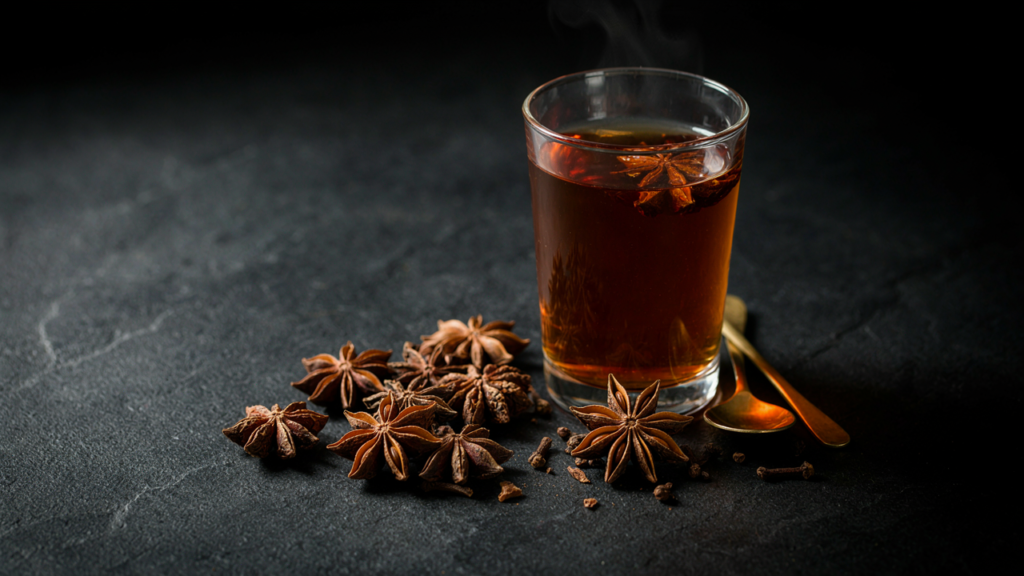
Star anise, also known as badian, is an eight-pointed star-shaped spice found in cooking, herbal teas and traditional remedies. In Morocco, it flavours teas, pastries and certain spice blends, and herbalists are regularly asked for it because of its effects on digestion.
What is star anise?
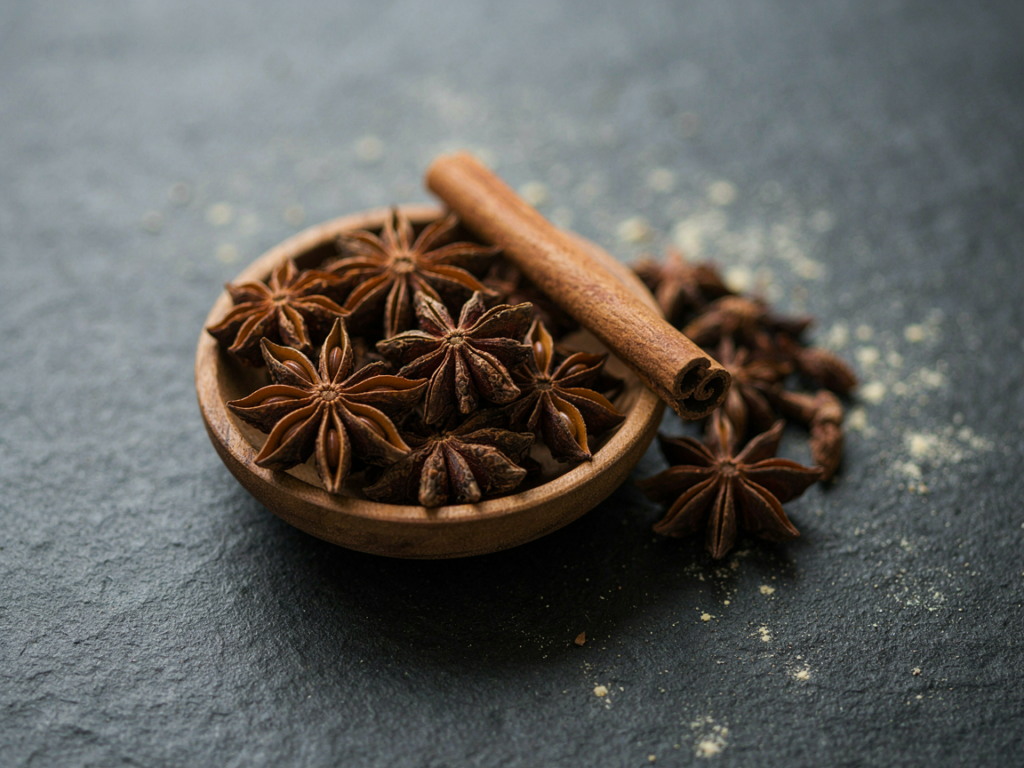
Star anise is the dried fruit of an evergreen tree, Illicium verum, from the Schisandraceae family. Native to southern China and Vietnam, the tree produces star-shaped, pinkish-brown fruits, each containing a shiny seed.
Despite its name, it is not related to green anise (Pimpinella anisum), but it shares its aniseed aroma, which comes from the same aromatic molecule. It is used whole, ground or as an essential oil.
Composition and active compounds of star anise
The characteristic aroma of star anise comes from its essential oil, whose main component is anethole. The fruit also contains other noteworthy compounds:
- Anethole: the main aromatic compound in the essential oil, responsible for the aniseed taste.
- Shikimic acid: found in the fruit, it is known in particular as a precursor of certain pharmaceutical compounds.
- Flavonoids and phenolic compounds: natural antioxidants present in varying amounts.
- Tannins and fibre: which contribute to the plant’s profile.
The benefits of star anise
Support for digestion
Star anise is traditionally used to ease digestion and relieve bloating and wind. An infusion after a meal is one of its most common uses, as with fennel or green anise.
Respiratory comfort in winter
As an herbal tea, it is often combined with thyme, honey or cinnamon during the cold seasons for its warming, aromatic character. This is a traditional use and does not replace medical advice in the case of a persistent cough.
Antioxidant properties
The phenolic compounds and flavonoids in star anise help counter oxidative stress. They are the subject of ongoing research, but their effects in humans have yet to be confirmed by larger studies.
A spice that lifts dishes and drinks
In the kitchen, star anise flavours broths, slow-cooked dishes, fruit compotes and tea. Just a few stars are enough to give preparations a sweet, liquorice-like flavour.
How to use star anise and dosage
- As an infusion: 1 to 2 stars (or about 1 g of crushed fruit) in a cup of boiling water, left to steep for 10 minutes.
- In cooking: 1 to 2 stars in a slow-cooked dish, tea or compote.
- As a powder: a pinch in sweet or savoury preparations.
- Essential oil: use only on the advice of a healthcare professional or aromatherapist, as it is highly concentrated.
As a precaution, infusions are generally limited to 2 or 3 cups a day for a short period. Always choose good-quality star anise bought from a trusted herbalist.
Precautions and contraindications
The first precaution concerns identification: Japanese star anise (Illicium anisatum) is a toxic species that is sometimes confused with Chinese star anise. You should therefore only buy products clearly labelled Illicium verum.
- Avoid star anise for infants and young children, who are more sensitive to it.
- Ask a doctor for advice before any regular use during pregnancy or breastfeeding.
- People with epilepsy or a sensitive constitution should avoid the essential oil.
- An allergy to plants in the anise family or to anethole is possible.
- Do not exceed the recommended doses: too much can cause nausea or digestive upset.
Star anise FAQ
What is the difference between star anise and green anise?
They are two different plants. Star anise is the star-shaped fruit of a tree, while green anise is a small seed from a herbaceous plant. Their aromas are similar thanks to anethole.
Can you drink star anise tea every day?
For occasional use, yes, as long as you respect the doses. For prolonged use, ask a healthcare professional for advice.
How can you recognise genuine star anise?
Chinese star anise (Illicium verum) usually has eight points and a sweet aniseed smell. Rely on the botanical labelling and your herbalist rather than on appearance alone.
Conclusion
Star anise is an aromatic spice rich in anethole, valued for its support of digestion and its warm flavour. Used in moderate amounts and with the species correctly identified, it easily finds a place in your herbal teas and your cooking.
Further reading
- External source: star anise on Wikipedia
- Green anise: benefits, dosage and precautions
- Fennel: benefits, dosage and precautions
- Cinnamon: benefits, dosage and precautions
This article is for information only and does not replace the advice of a doctor or healthcare professional. Consult one before any use, especially if you are on treatment, pregnant or have a medical condition.