Wormwood (Artemisia absinthium), known as chiba in Morocco, is one of the most iconic medicinal plants in Moroccan herbal tradition. As soon as the first cold days arrive, its intensely fragrant silvery leaves replace or accompany mint in tea, a custom rooted throughout the kingdom. Behind this convivial habit lies a plant with recognised digestive properties, but also a potent plant that calls for a few precautions. Here is everything you need to know before adding chiba to your teapot.
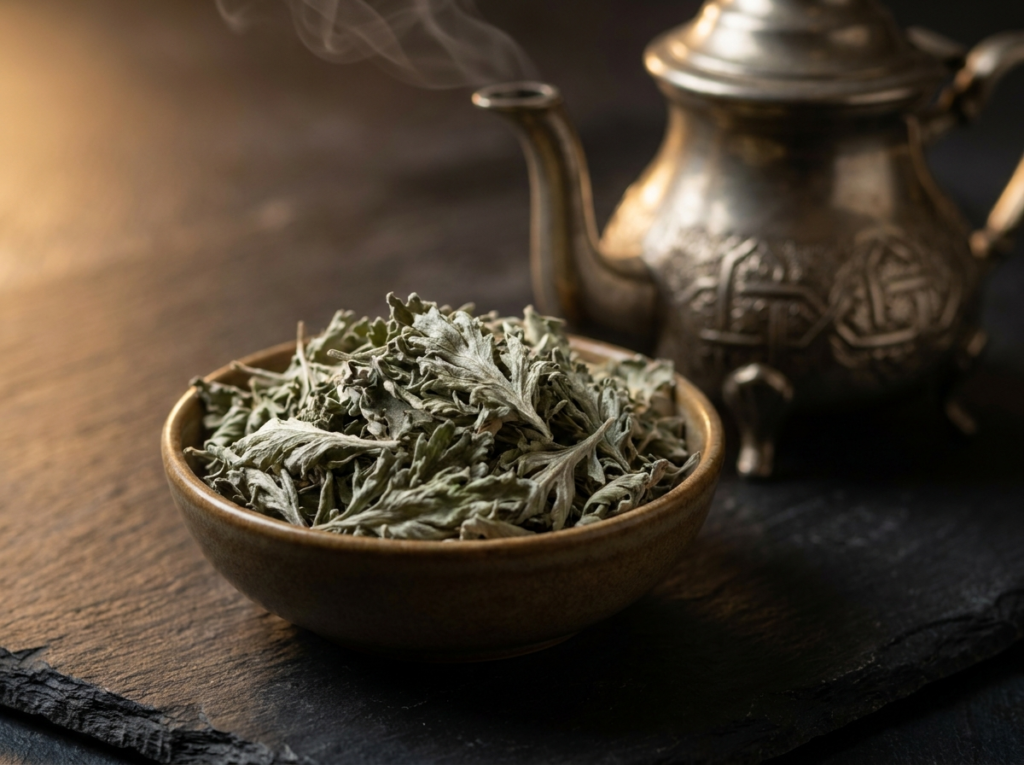
What is wormwood (chiba)?
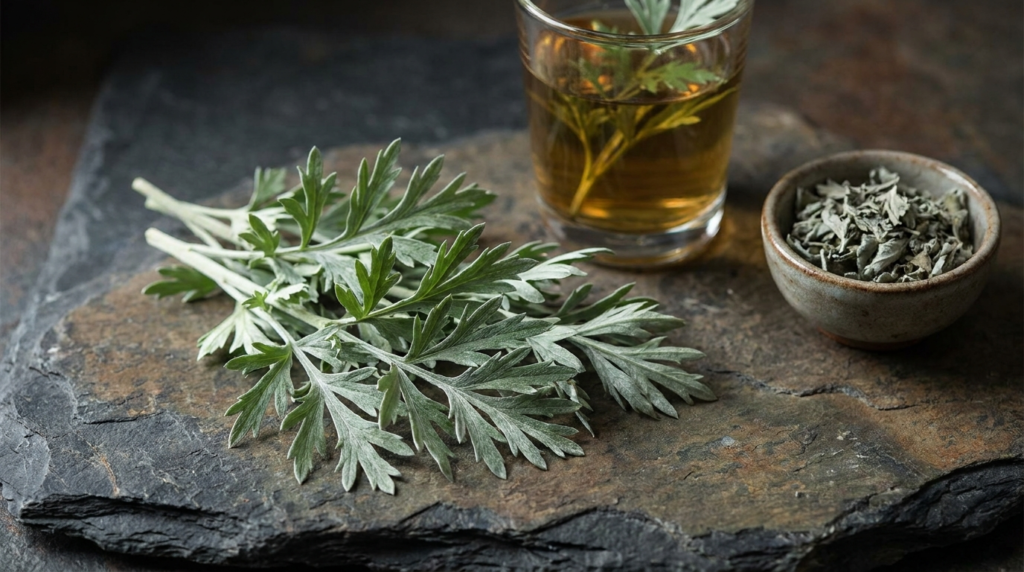
Wormwood is an aromatic perennial of the Asteraceae family, like chamomile and white wormwood. It is recognisable by its finely divided leaves, covered in a silky silver-grey down, and by its penetrating scent, both herbaceous and bitter.
Native to the temperate regions of Europe, Asia and North Africa, it is grown almost everywhere in Morocco, in gardens as well as in the mountains. In Europe, it is best known for absinthe liqueur, the famous “green fairy” of the 19th century. In Morocco, its use is entirely different: chiba is first and foremost a tea herb and a plant of traditional medicine, taken as an infusion to warm the body in winter and ease digestion.
Composition and active compounds
The plant’s characteristic bitterness comes from its active compounds, concentrated in the leaves and flowering tops:
- Absinthin and anabsinthin: very bitter sesquiterpene lactones, responsible for the appetite-stimulating and digestive effect;
- Essential oil: rich in thujone (alpha and beta), an active compound that is neurotoxic at high doses;
- Flavonoids and phenolic acids: compounds with antioxidant properties;
- Azulenes: molecules known for their soothing properties.
It is this combination of bitter and aromatic substances that explains both the plant’s effectiveness on the digestive system and the need to stick to moderate doses.
The benefits of wormwood
It stimulates digestion
This is its best-documented use. The bitter compounds stimulate salivary, gastric and bile secretions, which helps digest heavy meals. The European Medicines Agency (EMA) recognises the plant’s traditional use for relieving mild digestive complaints: a feeling of heaviness, bloating and flatulence. This is precisely why chiba is served after dinner in many Moroccan homes.
It boosts appetite
The EMA also recognises its traditional use for temporary loss of appetite. Taken before a meal, the bitter infusion prepares the stomach and revives the desire to eat, a welcome support during convalescence or periods of temporary fatigue.
A traditional dewormer
Its English name, wormwood, recalls its historical use against intestinal parasites. In traditional Moroccan medicine, a chiba decoction was commonly used as a dewormer. This age-old use, however, does not replace modern antiparasitic treatment prescribed by a doctor.
Comfort during the winter
In Morocco, chiba is said to “warm the body”. Added to tea between November and February, it brings a sense of warmth and well-being that is much appreciated during the cold season. Tradition also credits it with a soothing effect on nausea and motion sickness.
How to use it and dosage
The simplest way to benefit from the plant is still as an infusion, on its own or in green mint tea:
- Digestive infusion: 1 to 1.5 g of dried leaves (about one level teaspoon) per cup of simmering water, steeped for 5 to 10 minutes, 2 to 3 times a day at most;
- For appetite: drink the infusion about thirty minutes before the meal;
- In Moroccan tea: a small sprig is enough to flavour the whole teapot, so powerful is its taste;
- Duration: a short course of two weeks at most, in line with European recommendations.
As the bitterness is pronounced, the infusion can be softened with a little honey. Increasing the dose to “boost” the effect is not advised: with chiba, moderation is the rule.
Precautions and contraindications
The thujone contained in its essential oil is neurotoxic at high doses and can cause seizures. At traditional infusion doses, the plant is well tolerated, but certain situations require abstaining from it:
- Pregnancy and breastfeeding: strictly not recommended, as the plant stimulates the uterus;
- Epilepsy: thujone can trigger seizures;
- Children: for adult use only;
- Stomach ulcer or gastritis: bitters can worsen irritation;
- Allergy to Asteraceae (chamomile, mugwort…): risk of cross-reaction;
- Wormwood essential oil: avoid taking it orally without professional supervision, as it concentrates thujone.
If you are undergoing medical treatment, particularly antiepileptic medication, ask your doctor or pharmacist for advice before starting any course.
FAQ
What is the difference between chiba and chih (white wormwood)?
They are two related plants of the Artemisia genus, both used in Moroccan tea. Chiba (wormwood, Artemisia absinthium) has silvery leaves and a very bitter taste, while chih (Artemisia herba-alba) grows in arid areas and has a more camphor-like scent.
Can you drink chiba tea every day?
A small amount in tea, occasionally in winter, is not a problem for a healthy adult. However, daily and prolonged consumption is not recommended because of thujone: limit courses to two weeks.
Does chiba infusion help you lose weight?
No serious study has demonstrated a slimming effect. The plant eases digestion and can reduce bloating, which gives a feeling of lightness, but it does not replace a balanced diet or physical activity.
Conclusion
A treasure of Moroccan herbal tradition, wormwood perfectly illustrates the richness of bitter plants: digestive, appetite-stimulating and comforting in winter tea, it is genuinely useful as long as doses and contraindications are respected. A small sprig in the teapot, short courses, and chiba will remain a valuable ally for your digestive well-being.
Further reading
To learn more, see the Artemisia absinthium page on Wikipedia. And continue exploring plants on our blog: white wormwood (chih), chiba’s Saharan cousin, the benefits of spirulina and the benefits of moringa.
This article is provided for information only and does not replace medical advice. Consult a healthcare professional before any therapeutic use, particularly if you are pregnant, undergoing treatment or living with a chronic illness.