Ginger is one of the most valued roots in Morocco and around the world, both in cooking and in herbal medicine. Known locally as “skinjbir,” this pungent-tasting rhizome has for centuries accompanied traditional remedies for nausea, digestive troubles, and inflammatory pain. Behind its distinctive flavor lie powerful active compounds whose benefits are now confirmed by scientific research.
What is ginger?
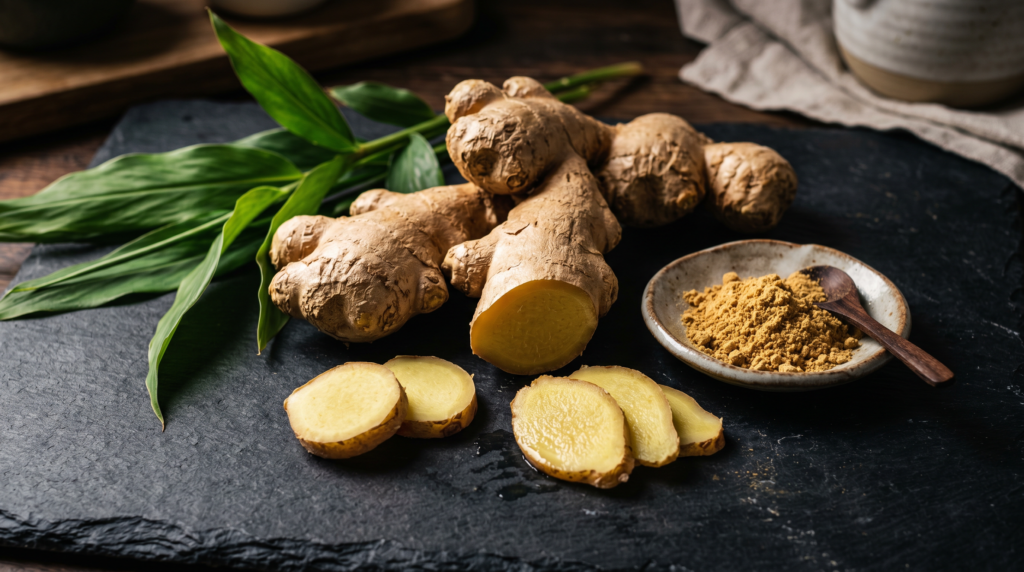
Ginger (Zingiber officinale) is a perennial herbaceous plant native to Southeast Asia, cultivated for its underground rhizome. It is this fleshy, aromatic part that is used, fresh or dried, as both a spice and a remedy. Widely imported and consumed in Morocco, it can be found in herbalist souks as well as on the shelves of supplement stores.
It is consumed in many forms: grated fresh root, powder, infusion, juice, essential oil, or capsules. Each form retains the essential active compounds, making it a versatile ally for everyday wellness.
Composition and active compounds of ginger
The power of ginger lies in its bioactive compounds. The most important is gingerol (notably 6-gingerol), responsible for the pungent flavor of the fresh root and for most of its anti-inflammatory and antioxidant effects. During drying, gingerols convert into shogaols, which have anti-inflammatory properties that are sometimes even more pronounced, as well as into zingerone.
The rhizome also contains essential oils (sesquiterpenes, monoterpene alcohols, phenols) and more than forty antioxidants. In terms of nutrients, it provides minerals such as manganese, phosphorus, and magnesium, as well as small amounts of B vitamins.
Health benefits of ginger
Rich in gingerols and antioxidants, ginger acts on several systems in the body. Here are its main documented benefits.
Relieving nausea and vomiting
This is the best-established use. The World Health Organization recognizes the use of ginger as “clinically justified” for preventing nausea and vomiting related to motion sickness, seasickness, post-surgical recovery, or pregnancy. Its antiemetic properties make it a popular natural remedy.
Aiding digestion
Ginger stimulates the production of gastric juices and bile secretion, promoting smoother digestion. It is traditionally used to relieve bloating, heaviness after meals, and sluggish digestion.
Acting as a natural anti-inflammatory
Gingerol modulates immune responses, notably by acting on the NF-κB signaling pathway, which is central to inflammatory processes. This action explains ginger’s usefulness in easing certain joint and muscle pain.
Supporting immunity and fighting oxidative stress
Thanks to its richness in antioxidants, ginger helps the body defend itself against the oxidative stress responsible for cellular aging. Warming and invigorating, it is often consumed as an infusion during the cold season to support the body’s natural defenses.
Easing menstrual pain
Several studies suggest that ginger may help reduce the intensity of menstrual pain, thanks to its anti-inflammatory action. It represents a complementary natural option for women dealing with this issue.
How to use ginger and dosage
Recommended amounts depend on the form consumed and the intended goal. As a general guide, the commonly cited benchmarks are as follows:
- Fresh root: about 10 g per day (roughly a thumb-sized piece).
- Powder: 1 to 2 g per day for digestive issues and nausea.
- Pain and inflammation: 500 mg to 1 g of powder, 1 to 2 times per day.
- Acute conditions: the dose may be temporarily increased to 3-4 g per day, without exceeding this limit.
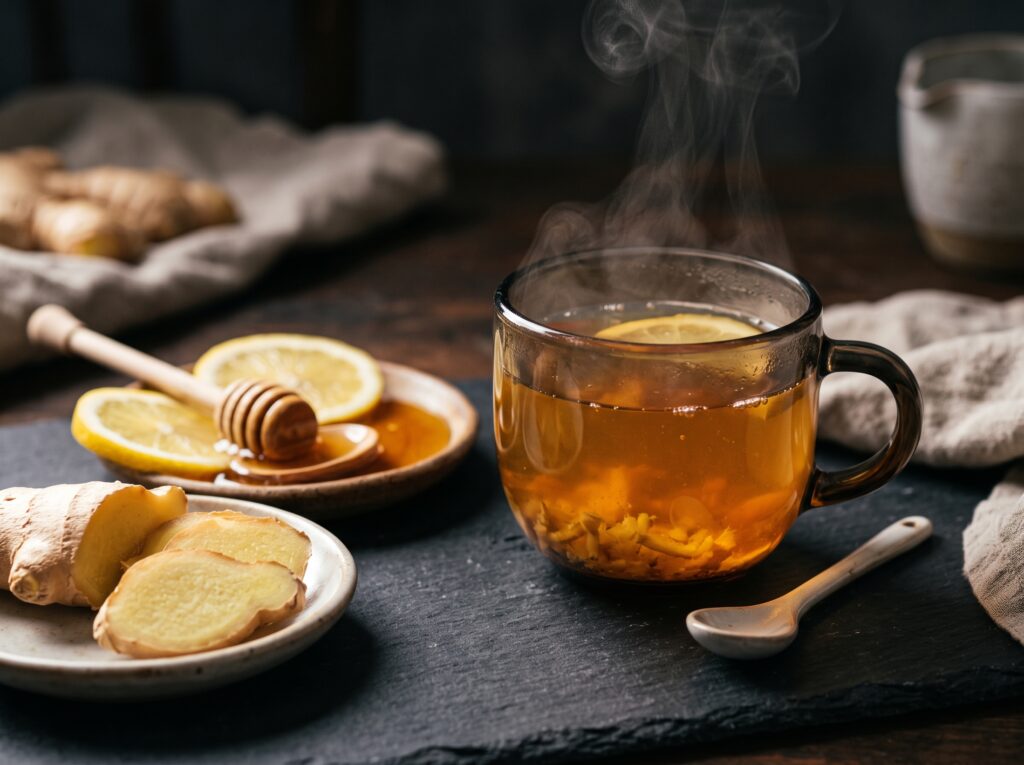
To make an infusion, simply steep a few thin slices of fresh root in hot water for ten minutes. A dash of lemon and a spoonful of honey enhance the flavor while reinforcing the soothing effect. Beyond the recommended doses, ginger can cause stomach upset.
Precautions and contraindications
Despite its reputation as a gentle remedy, ginger is not without risk. A few precautions are needed when consuming it:
- It has a mild anticoagulant effect: caution is advised when taking anticoagulant medication or before surgery.
- At high doses, it can cause gastric irritation and heartburn.
- As a dietary supplement, it is not recommended for children under 6 years old.
- During pregnancy, medical advice is recommended before any supplementation.
- It may interact with certain medications (particularly for diabetes and high blood pressure).
If in doubt, and especially for vulnerable individuals or those undergoing treatment, it is best to seek advice from a doctor or pharmacist.
FAQ: your questions about ginger
Can you consume ginger every day?
Yes, moderate daily consumption (around 1 to 2 g of powder or 10 g of fresh root) is generally well tolerated in healthy adults. It is simply important not to exceed the recommended doses.
Does ginger help you lose weight?
Ginger is not a miracle weight-loss product. It can support digestion and complement a balanced diet, but it does not replace a suitable diet or regular physical activity.
Fresh or powdered: which form to choose?
Fresh ginger is richer in gingerol and offers a livelier flavor, ideal for infusions or cooking. Powder, more concentrated in shogaols, is convenient for precise dosing as a supplement. Both forms are complementary.
Conclusion
Ginger confirms its place among the most valuable medicinal plants: a recognized anti-nausea remedy, a digestive ally, a natural anti-inflammatory, and a source of antioxidants. Consumed in moderation and with attention to precautions, it fits easily into a wellness routine, whether enjoyed as a comforting infusion or taken as a supplement.
To learn more
To dive deeper into the topic, check out the reference page on ginger (Zingiber officinale) on Wikipedia. Also discover our other guides on plants and natural supplements:
- Spirulina: benefits, dosage, and precautions
- Moringa: benefits, dosage, and precautions
- Ginseng: benefits, dosage, and precautions
This article is provided for informational purposes only and is in no way a substitute for professional medical advice. Consult a doctor or pharmacist before starting any supplementation, particularly in cases of pregnancy, medical treatment, or health conditions.