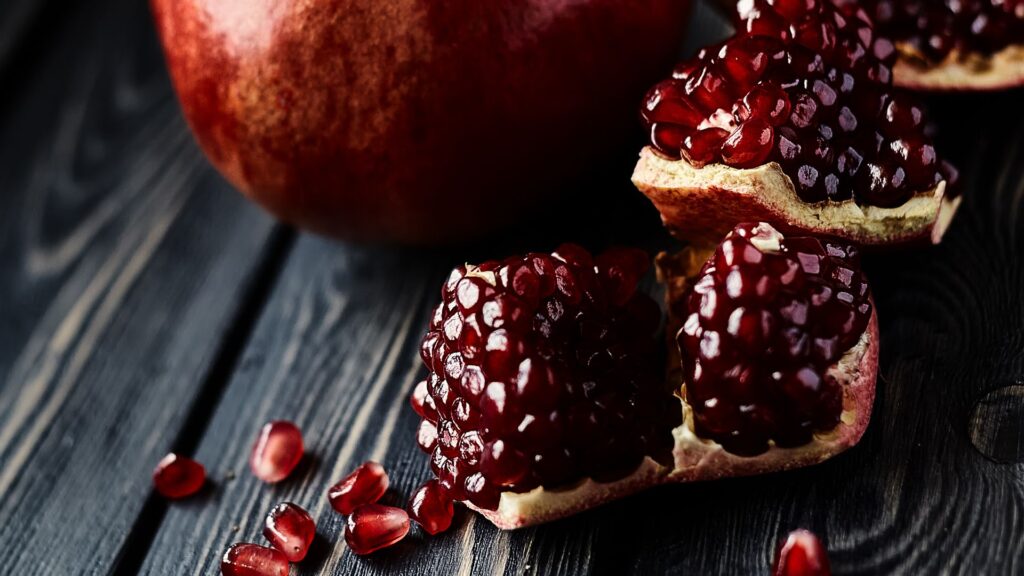
Pomegranate, known as “romman” in Morocco, is one of the most highly regarded fruits for health, both in tradition and in light of modern research. Eaten as fresh seeds, drunk as juice or used in herbal medicine, it stands out for an exceptional wealth of antioxidants rarely matched in the plant kingdom.
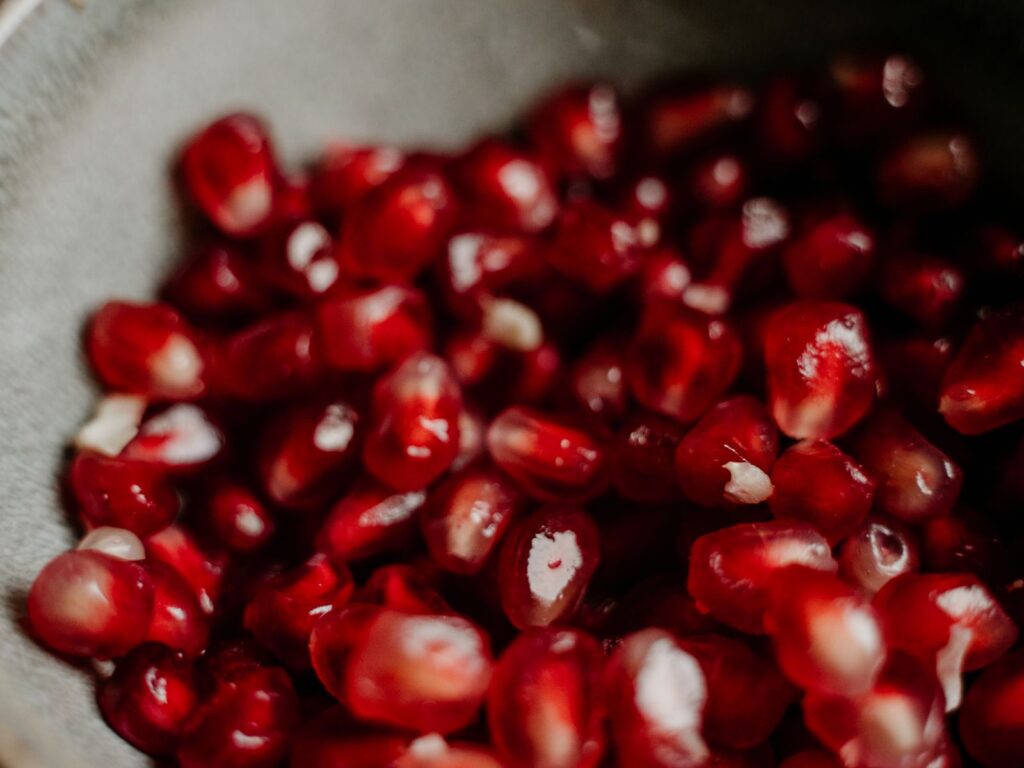
Found on Moroccan market stalls from late summer, including the renowned varieties from the Ouarzazate and Haouz regions, pomegranate has accompanied the cuisine and traditional medicine of the Mediterranean basin for centuries. In this article, we review its composition, its documented benefits, how to eat it and the precautions to know.
What is pomegranate?
Pomegranate is the fruit of the pomegranate tree (Punica granatum), a small tree native to Western Asia and cultivated around the Mediterranean since Antiquity. The fruit consists of a thick rind enclosing hundreds of fleshy seeds, the arils, bursting with ruby juice that has a sweet and tangy flavour.
In Morocco, romman holds a special place: a seasonal fruit widely eaten in autumn, it also features in the traditional pharmacopoeia, where the dried rind of the fruit was used for digestive complaints. A symbol of abundance, pomegranate is also mentioned in many traditions around the Mediterranean basin.
Composition and active compounds
If pomegranate attracts so much interest from researchers, it is above all because of its remarkable polyphenol content. Its main active compounds are:
- Punicalagins: powerful antioxidant tannins, concentrated mainly in the pericarp (the peel) and present in juice pressed from the whole fruit.
- Ellagic acid: a polyphenol studied for its antioxidant and cell-protective properties.
- Anthocyanins: the pigments responsible for the red colour of the arils, which are also antioxidants.
- Vitamin C, potassium and fibre: the arils provide vitamin C, potassium and fibre, which contribute to overall nutritional balance.
The antioxidant power of pomegranate juice is considered higher than that of most other fruit juices, and it is often compared favourably with green tea.
Benefits of pomegranate
A powerful antioxidant
Pomegranate’s first asset is its ability to neutralise free radicals, the unstable molecules involved in cellular ageing. Punicalagins and ellagic acid help protect cells against oxidative stress, a mechanism at the heart of many chronic diseases.
Support for the heart and circulation
This is the most studied area. In several studies, regular consumption of pomegranate juice has been associated with improvements in cardiovascular markers: it may help slightly lower blood pressure, limit the oxidation of LDL cholesterol and support healthy blood circulation. These effects are attributed to the fruit’s high polyphenol content.
Anti-inflammatory action
In the laboratory and in some clinical studies, pomegranate compounds have shown an ability to reduce markers of inflammation. This anti-inflammatory action may explain some of the beneficial effects observed on joint comfort and metabolic health, although further research is still needed.
An ally for the skin and digestive comfort
Thanks to its antioxidants, pomegranate is reputed to protect the skin from premature ageing, which explains its presence in many cosmetics. As for digestion, the fibre in the arils supports regular bowel movements, while Moroccan tradition used the tannin-rich dried rind of the fruit against diarrhoea — a use that nevertheless calls for caution.
How to use it and dosage
Pomegranate can be consumed in several forms, depending on the desired goal:
- Fresh fruit: the arils of half a pomegranate to one whole pomegranate a day make a reasonable portion, as a snack or in salads.
- Pomegranate juice: a glass of 150 to 250 ml a day is the amount generally used in studies. Choose pure juice with no added sugar, ideally pressed from the whole fruit.
- Extracts and capsules: supplements standardised in punicalagins or ellagic acid should be taken according to the manufacturer’s directions.
- Dried rind: traditionally used as an infusion, it contains alkaloids and tannins; internal use is now not recommended without professional advice.
To enjoy the benefits of pomegranate, regularity matters more than quantity: moderate, regular consumption during the season is better than excessive, occasional consumption.
Precautions and contraindications
Pomegranate fruit and juice are well tolerated as part of a normal diet. A few precautions are nevertheless necessary:
- Rind and root: they contain alkaloids (pelletierine) that are potentially toxic at high doses; their use is not recommended, particularly for pregnant or breastfeeding women and for children.
- Allergies: rare but possible, they can show up as itching, hives or breathing difficulties in sensitive people.
- Drug interactions: since pomegranate juice can lower blood pressure, caution is needed if you are taking antihypertensive treatment; ask your doctor or pharmacist for advice if you are on long-term medication.
- Excess: drinking very large amounts of tannin-rich juice can cause digestive upsets (nausea, discomfort).
Pomegranate FAQ
What is the best time to eat pomegranate?
There is no single best time: the arils can be enjoyed as a snack or at breakfast, and the juice can accompany a meal. In Morocco, the peak season runs from September to December, when the fruit is at its tastiest and most affordable.
Does pomegranate juice lower blood pressure?
Several studies suggest a slight drop in blood pressure with regular consumption of pomegranate juice. The effect remains modest: it is in no way a substitute for medical treatment, and people taking antihypertensives should talk to their doctor.
Can you eat pomegranate during pregnancy?
The fresh fruit and juice, consumed in normal dietary amounts, pose no particular problem. However, the rind, root and concentrated extracts are not recommended during pregnancy and breastfeeding because of their alkaloids.
Conclusion
An emblematic fruit of the Moroccan autumn, pomegranate combines great taste with nutritional value: rare antioxidants such as punicalagins, documented cardiovascular support, fibre and vitamin C. Eaten regularly and in moderation, as seeds or pure juice, it fully deserves its place in a balanced diet. As always in herbal medicine, however, the concentrated parts of the plant (rind, extracts) require professional supervision.
Further reading
To learn more, see the Wikipedia page on pomegranate. Also explore our other articles: the benefits of spirulina, the benefits of moringa and the virtues of prickly pear.
This article is provided for information only and does not replace medical advice. Consult a health professional before any therapeutic use, especially if you are pregnant, breastfeeding or on medication.