Henna (Lawsonia inermis) holds a special place in Moroccan tradition: from Taroudant to the souks of Marrakech, this dye and medicinal plant has accompanied beauty and care rituals for centuries. Beyond its well-known decorative use, henna has genuine properties for the hair, scalp, skin and nails. In this article, we review its composition, its documented benefits, how to use it and the essential precautions to know before adopting it.
What is henna?
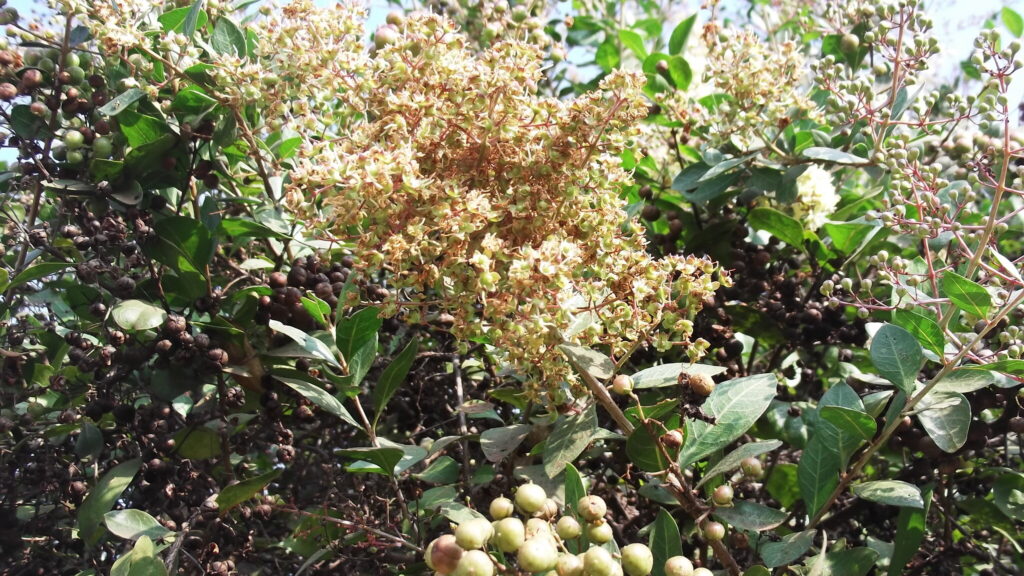
Henna is a thorny shrub of the Lythraceae family that grows in the hot, arid regions of North Africa, the Middle East and South Asia. In Morocco, its cultivation has historically been associated with certain renowned regions, notably the province of Taroudant, whose henna is considered among the most sought-after in the country.
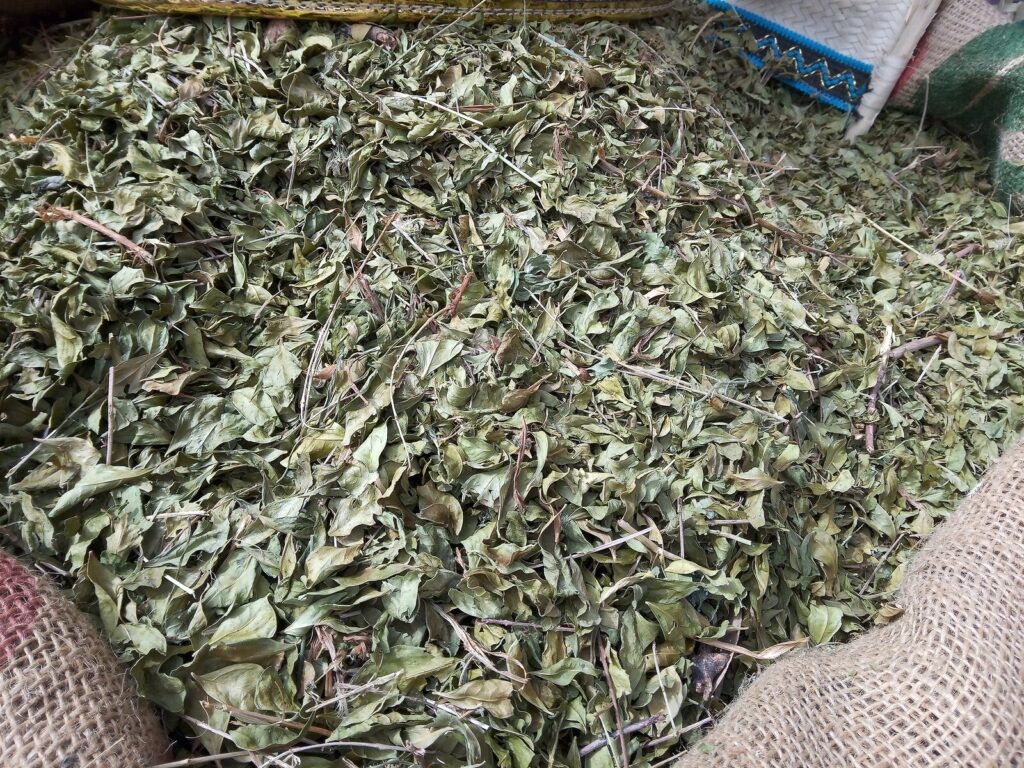
It is the leaves of the shrub that are used: harvested, dried and then ground into a fine green powder, they are mixed with warm water to form a paste. Applied to the hair or skin, this paste releases a pigment that binds to keratin and leaves a characteristic copper to brown colour. In Moroccan tradition, henna is much more than a dye: it is used as a hair treatment, as a soothing poultice and as a central element of family celebrations.
Composition and active compounds
Henna’s main active compound is lawsone, a natural pigment of the naphthoquinone family. It is this molecule that binds to the keratin in hair, skin and nails, and it is also linked to the plant’s antimicrobial properties.
- Lawsone: a colouring pigment with documented antibacterial and antifungal properties.
- Tannins: astringent compounds that tighten tissues and contribute to the coating effect on the hair fibre.
- Flavonoids: natural antioxidants that help protect cells from oxidative stress.
- Mucilages: softening substances that make the paste easier to apply and soothe the skin.
Benefits of henna
A strengthening hair treatment
This is its most widespread use. By binding to keratin, lawsone forms a protective coating around the hair fibre. The result: hair that is visibly thicker, more resistant to breakage and shinier. Neutral henna (Cassia obovata), which does not colour, is in fact used solely for this coating and strengthening effect.
Natural, ammonia-free colour
Unlike chemical dyes, henna colour does not penetrate the hair cortex and contains neither ammonia nor oxidising agents. It coats the fibre and gives copper to mahogany highlights that fade gradually, while respecting the structure of the hair.
An ally for the scalp
Thanks to its antifungal and astringent properties, henna is traditionally used to cleanse the scalp, regulate excess sebum and limit dandruff. Its purifying action makes it a popular treatment for oily hair.
Antimicrobial properties for the skin
Scientific studies have documented the antibacterial and antifungal properties of Lawsonia inermis leaf extracts. In traditional medicine, the leaf paste is applied as a poultice to minor skin irritations and some superficial fungal infections. Moroccan tradition also credits it with a cooling effect on the feet and hands, especially in summer.
Stronger nails
Applied to the nails, it coats them in the same way as hair. This traditional use is reputed to strengthen brittle nails and give them a smoother, neater appearance.
How to use it and dosage
For a hair treatment, the classic preparation is simple: mix the powder with warm water until you get a smooth paste, neither too runny nor too thick. The amount depends on hair length: about 100 g for short hair, up to 300 g for very long hair.
- Leave the paste to rest for a few hours to release the pigments (some people add a few drops of lemon juice).
- Apply section by section to clean, slightly damp hair, then cover with a shower cap.
- Leave on for 30 minutes (conditioning effect) to 2–3 hours (deep colour), then rinse thoroughly with clean water.
- As a skin poultice: apply the fresh paste in a thin layer to the affected area, leave it to work, then rinse.
For storage, keep the powder in an airtight container away from light, heat and moisture: stored properly, it retains its colouring power for many months. A good-quality powder can be recognised by its bright green colour and characteristic herbal scent; a brownish tint or stale smell indicates an old or poorly stored product that will be less effective.
One application a month is generally enough to maintain the colour and benefit from the strengthening effect. Using it too often can dry out the hair: follow the treatment with a nourishing mask, for example one made with argan oil.
Precautions and contraindications
Natural henna applied to the skin or hair is generally well tolerated, but some precautions are essential:
- Avoid “black henna”: it often contains PPD (para-phenylenediamine), a chemical dye that can cause severe contact eczema, blisters and lasting allergies. PPD is banned in cosmetics applied directly to the skin.
- G6PD deficiency: cases of acute haemolysis have been reported in G6PD-deficient people after skin application. Those affected and newborns must avoid any contact with henna.
- Patch test first: apply a small amount of paste to the inside of the elbow and wait 24 to 48 hours before using it for the first time.
- Never take it orally: ingesting henna carries a risk of poisoning; it is for external use only.
- Chemically coloured hair: avoid applying henna over a recent chemical colour (and vice versa), as the results can be unpredictable.
- Product quality: choose a 100% pure powder with no metallic salts or additives, ideally of controlled origin.
Henna FAQ
Does henna cover grey hair?
Yes, but differently from a chemical dye: grey hairs take on brighter copper highlights than the rest of the hair. For a darker result, it is traditionally combined with other plant powders such as indigo.
How long does the colour last?
The colour fades gradually over a few weeks to a few months, depending on how often you wash your hair and its type. On the skin, designs generally disappear within one to three weeks.
Can you use henna during pregnancy?
Pure natural henna applied occasionally to the hair is generally considered acceptable, but it is recommended to seek the advice of a health professional and to strictly avoid black henna containing PPD, as well as any product whose composition is not guaranteed.
Conclusion
A treasure of Moroccan pharmacopoeia and tradition, henna combines natural colour, strengthening care and recognised antimicrobial properties. Used pure, with a quality product and following the precautions for use — in particular avoiding black henna entirely and taking care in case of G6PD deficiency — it is a gentle, natural alternative to conventional dyes and treatments.
Further reading
To learn more, see the Wikipedia page on henna. Also explore our other articles on Morocco’s iconic plants and oils: argan oil, lavender and black seed (habba sawda).
This article is provided for information only and does not replace medical advice. Consult a health professional before any therapeutic use, particularly if you are pregnant, breastfeeding, on medication or have a known medical condition.