Aloe vera is one of the most popular medicinal plants in Morocco and around the world, prized as much for its virtues on the skin as for its action on digestion. Grown in hot, dry climates, this succulent stores a translucent gel in its thick leaves that has been used since antiquity. In this article, we detail aloe vera’s composition, its main benefits, how to use it, the recommended dosage and the essential precautions.
What is aloe vera?
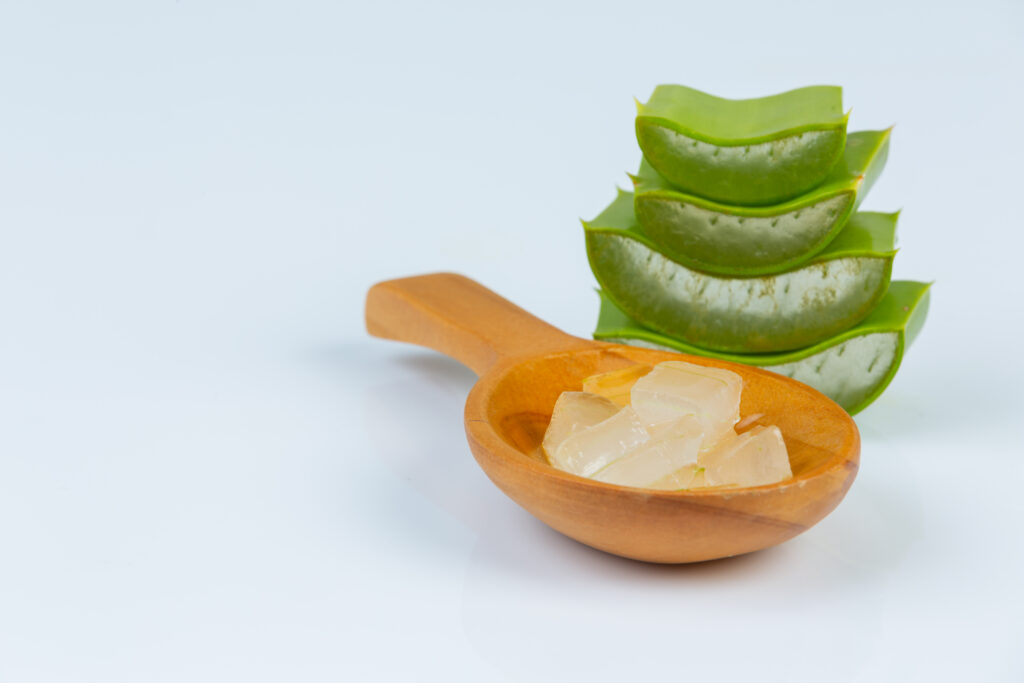
Aloe vera (Aloe barbadensis miller) is a succulent plant of the Asphodelaceae family, native to the arid regions of Africa and the Mediterranean rim. Its long, fleshy leaves, edged with small spines, contain two quite distinct substances that must never be confused: the internal gel, transparent and rich in water, and the yellow latex located just under the rind.
The gel is the most sought-after part: it is used both in topical application and orally as a juice or supplement. The latex, on the other hand, contains aloin, a powerful laxative whose use is far more delicate. This distinction is essential to understanding both the benefits and the precautions of the plant.
Aloe vera’s composition and active compounds
Aloe vera gel is remarkably complex: it contains many active compounds that explain its interest in herbal medicine. Among the main ones are:
- polysaccharides, including acemannan, with moisturizing and immunomodulating properties;
- vitamins (C, E, as well as several B-group vitamins);
- minerals and trace elements such as calcium, magnesium, zinc and potassium;
- phenolic compounds with antioxidant virtues;
- enzymes and amino acids that contribute to digestive comfort;
- aloin, concentrated in the latex, with marked laxative effects.
It is this richness in nutrients and active molecules that gives aloe vera its status as a versatile plant, used both in cosmetics and to support transit.
The benefits of aloe vera
An ally for the skin
This is its best-known use: applied locally, aloe vera gel soothes, hydrates and helps the skin regenerate. It is traditionally used to relieve sunburn, minor irritations, redness and dry skin. Its light, non-greasy texture makes it a soothing care product for the face as well as the body.
Support for digestion
Consumed as a juice or drinkable gel, aloe vera is reputed to promote digestive comfort and regular transit. Its enzymes and polysaccharides help soothe the intestinal lining. Be careful, though: the pronounced laxative effect comes mainly from the aloin-rich latex, to be distinguished from the pure gel.
An antioxidant action
Thanks to its phenolic compounds and its vitamins C and E, aloe vera helps fight oxidative stress, the phenomenon involved in cellular aging. These antioxidants help the body neutralize free radicals.
Care for the hair
The gel is also used on the scalp and lengths to hydrate, soothe itching and add shine. It features in the composition of many natural hair masks and treatments.
How to use it, and dosage
Aloe vera comes in several forms, each with its own use:
- Pure gel in topical application: to be applied directly to the skin or hair, as often as needed;
- Juice or drinkable gel: strictly follow the dosage indicated on the bottle, generally a few dozen milliliters a day;
- Capsules or supplements: follow the manufacturer’s recommendations.
For internal use, always choose a food-grade product with a reduced aloin content (marked “decolorized” or “aloin-free”). Courses are generally taken over several weeks. When in doubt, seek advice from a healthcare professional or a qualified herbalist.
Precautions and contraindications
While the pure gel is very well tolerated, internal use of aloe vera latex calls for caution. Here are the main precautions to know:
- Oral consumption is not advised for pregnant or breastfeeding women or for young children;
- Prolonged use of the aloin-rich latex can cause diarrhea, cramps and mineral loss;
- Oral aloe vera can interact with certain medications, notably blood-sugar-lowering treatments or diuretics;
- It is not advisable to combine it with other laxative plants;
- For topical application, do a test on a small area to rule out any risk of allergy.
Aloe vera FAQ
Can you drink aloe vera juice every day?
Yes, provided you choose a food-grade product low in aloin and respect the indicated dosage. In case of medical treatment, seek the advice of a healthcare professional.
Is aloe vera gel suitable for all skin types?
The pure gel is generally well tolerated, including by sensitive skin. A prior skin test is still recommended to avoid any allergic reaction.
What is the difference between aloe vera gel and latex?
The gel is the transparent pulp at the heart of the leaf, hydrating and gentle. The latex is the yellow sap located under the rind; rich in aloin, it has a powerful laxative effect and must be used with caution.
Conclusion
A plant with many facets, aloe vera charms with the versatility of its gel, as useful for the skin as for digestive comfort. Provided you clearly distinguish the gel from the latex and respect the doses, it makes an excellent natural ally. As with any plant, product quality and moderation remain the keys to worry-free use.
To go further
To deepen your knowledge, see the reference botanical entry on the aloe vera Wikipedia page. Also discover other plants and supplements on our blog:
- Turmeric: benefits, dosage and precautions
- Ginger: benefits, dosage and precautions
- Moringa: benefits, dosage and precautions
This article is provided for informational purposes and does not replace medical advice. Consult a healthcare professional before any use, particularly in case of pregnancy, breastfeeding, medical treatment or a health condition.