Orange blossom, known as “zhar” (زهر) in Morocco, is one of the most iconic plants in traditional Moroccan herbal medicine. Every spring, in the orchards around Fez, Marrakech and the Souss, the white petals of the bitter orange tree are picked by hand and then distilled in copper stills to produce the famous orange blossom water, “ma zhar”. Far more than a pastry flavouring, this plant has been used for centuries to ease nervous tension, help people fall asleep and soothe difficult digestion. Here is what we know about its composition, benefits, dosage and precautions for use.
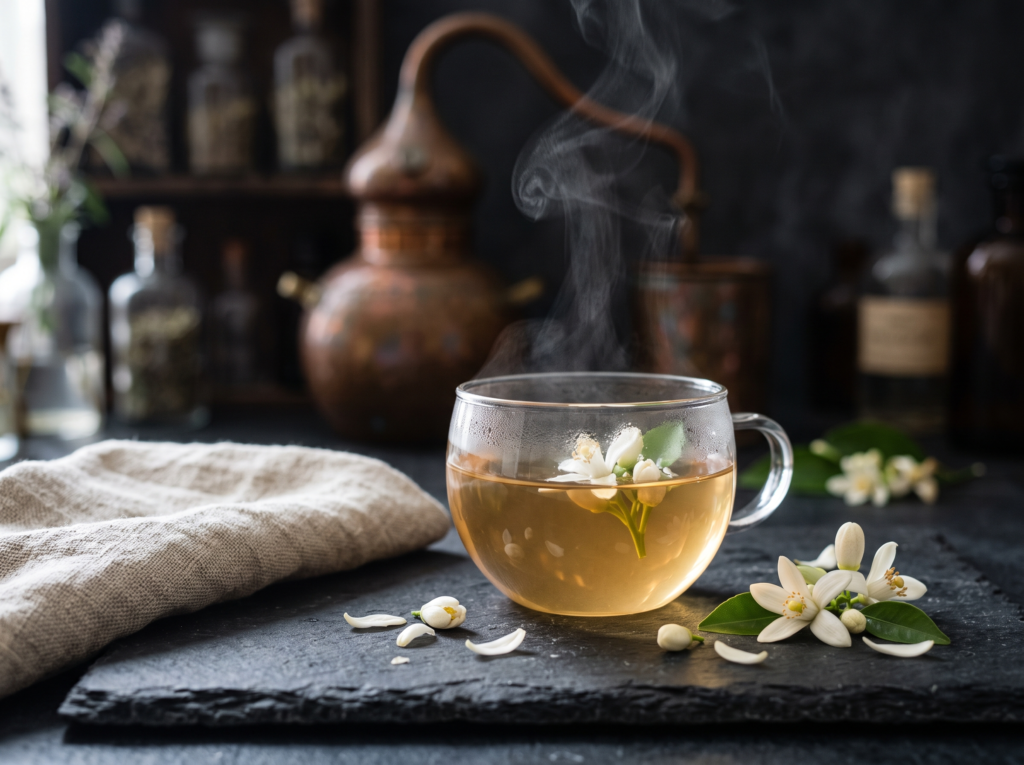
What is orange blossom (zhar)?
Orange blossom is the highly fragrant white flower of the bitter orange tree, or Seville orange, whose botanical name is Citrus aurantium subsp. amara. It is a tree of the Rutaceae family, grown all around the Mediterranean and especially common in Morocco, Tunisia and Egypt.
The various products obtained from this tree should not be confused, as they differ both in concentration and in use:
- Dried flowers: used in infusions, on their own or combined with other calming plants.
- Orange blossom water (hydrosol, “ma zhar”): the floral water collected during steam distillation, very gentle and weakly concentrated.
- Neroli essential oil: the essential oil obtained by distilling the flowers, extremely concentrated and expensive.
- Petitgrain bigarade essence: obtained from the leaves and twigs, not to be confused with neroli.
In Morocco, the artisanal distillation of zhar is a craft handed down from generation to generation. The floral water flavours pastries, tea, coffee, pancakes and festive dishes, and it is also drunk diluted in a glass of water for its relaxing effects.
Composition and active compounds of orange blossom
The benefits of orange blossom rest mainly on its volatile aromatic compounds, which are abundant in neroli essential oil. The main active compounds identified are:
- Linalool: the main compound in neroli, usually making up 26 to 42% of the essential oil. It is responsible for most of the relaxing effect.
- Linalyl acetate: an ester known for its calming and antispasmodic properties.
- Limonene: present at 10 to 20%, it provides the fresh, citrusy note.
- Beta-pinene: 6 to 18%, with soothing properties for the respiratory system.
- Nerolidol and farnesol: sesquiterpene alcohols of interest for the skin.
- Trans-beta-ocimene: 4 to 10%.
The dried flowers also contain flavonoids, notably neohesperidin and naringin, as well as the bitter compounds characteristic of the bitter orange tree. The hydrosol, for its part, contains only the water-soluble fraction of these molecules: it is therefore far gentler than the essential oil, which is why it can be used by a much wider range of people.
The benefits of orange blossom
1. Easing stress and nervousness
This is its best-documented use. Rich in linalool and linalyl acetate, orange blossom is traditionally used for stress, nervousness, mild anxiety and stage fright. Inhaled or diffused, its scent is associated with a feeling of relaxation and a slower heart rate. That is why a glass of water scented with zhar is often offered to guests in Moroccan homes.
2. Promoting restful sleep
The most widespread traditional use in the Maghreb is to drink an infusion of dried flowers or a tablespoon of diluted floral water before bed. The plant is not a sleeping pill: it works by reducing the mental agitation that delays sleep, which makes it particularly suited to “sleep-onset” insomnia linked to the worries of the day.
3. Relieving stress-related digestive problems
The antispasmodic properties of the bitter orange tree are used against bloating, intestinal spasms, colitis and the “knots in the stomach” caused by anxiety. In practice, orange blossom is often combined with lemon balm, chamomile or lemon verbena to make an after-dinner digestive tea.
4. Caring for the skin
In cosmetics, orange blossom hydrosol is used as a gentle toning lotion. It is particularly suitable for sensitive, mature or dehydrated skin, which it helps to soothe and delicately scent. Neroli, meanwhile, is valued for its regenerating and antioxidant action, but it must always be diluted.
5. Soothing the respiratory system
Thanks to its volatile compounds such as linalool and nerol, orange blossom is traditionally used in inhalation to relax the airways and relieve throat irritation, often together with honey.
How to use orange blossom and dosage
As an infusion
Allow about 1 teaspoon of dried flowers (1 to 2 g) per 200 ml cup of simmering water. Cover and leave to steep for 5 to 10 minutes to retain the aromatic compounds, then strain. One to three cups a day, including one in the evening before bed, is a common use.
As floral water (hydrosol)
Taken internally, the traditional use is to dilute 1 tablespoon of hydrosol in a large glass of water, to drink shortly before bed or after a meal. Externally, the floral water is applied undiluted to the face with a cotton pad, morning and evening. Choose a food-grade hydrosol that is 100% natural, with no alcohol or synthetic flavouring: many “orange blossom waters” sold in supermarkets are nothing more than flavourings.
As neroli essential oil
The essential oil is for external use only. For application to the skin, dilute it at 1 to 2% in a vegetable oil, i.e. 1 to 2 drops per 10 ml of carrier oil. When diffusing it into the air, it is advisable not to exceed 15 to 20 minutes per hour. Essential oils should never be swallowed without the advice of a healthcare professional trained in aromatherapy.
Precautions and contraindications
Taken as an infusion or as food-grade floral water, orange blossom is very well tolerated. A few reservations do apply, however, especially to concentrated forms:
- Pregnancy and breastfeeding: neroli essential oil is not recommended during the first three months of pregnancy. For any concentrated form, ask your doctor’s advice.
- Sensitive skin: the essential oil is potent and potentially irritating; it must always be diluted in a vegetable oil and tested in the crook of the elbow.
- Drowsiness: the relaxing effect may increase drowsiness. Take care before driving or operating machinery, and when combining it with sedative or anti-anxiety medication.
- Young children: the essential oil is not suitable for babies and young children without medical advice. The much gentler hydrosol is generally preferred for them.
- Current treatments: concentrated Citrus aurantium extracts made from the fruit, which are rich in synephrine, may interact with certain cardiovascular treatments. Tell your doctor about anything you take.
- Allergies: rare, but possible in people sensitive to citrus fruits.
As with any plant, short courses and products of traceable origin are best. A quality hydrosol should state the part distilled (the flowers), the botanical name and the absence of synthetic preservatives.
Orange blossom FAQ
What is the difference between orange blossom water and neroli?
Both come from distilling the same flowers, but neroli is the highly concentrated essential oil that floats on top, while orange blossom water is the remaining floral water, which contains only small amounts of active compounds. The hydrosol can be drunk diluted; the essential oil cannot.
Can you drink orange blossom water every day?
At traditional culinary doses (one tablespoon, diluted), daily use is common in Morocco and generally well tolerated. Just make sure it is genuine food-grade floral water and not an artificial flavouring, and take breaks if you consume large amounts.
Does orange blossom really help you sleep?
It does not induce sleep the way a medicine does. Its value lies in its relaxing action: by reducing evening nervousness and tension, it makes it easier to fall asleep for people whose insomnia is anxiety-related. For chronic insomnia, medical advice remains essential.
Conclusion
Part culinary heritage, part grandmother’s remedy, orange blossom holds a special place in Moroccan culture. Its aromatic profile, dominated by linalool, explains its calming effect on the nervous system, sleep and difficult digestion, while its hydrosol offers a gentle, accessible way in for the whole family. As always in herbal medicine, product quality and respect for the dosage make all the difference.
Further reading
- Learn more about the botany of the bitter orange tree (Citrus aurantium) on Wikipedia.
- Lemon verbena: benefits, dosage and precautions
- Chamomile: benefits, dosage and precautions
- Lemon balm: benefits, dosage and precautions
- Lavender: benefits, dosage and precautions
This article is provided for information only and does not replace medical advice. Consult a healthcare professional before starting a course, if you are on medication, pregnant or breastfeeding, or have a chronic condition.