Parsley (maadnous in Darija) is probably the most widely used herb in Moroccan kitchens, yet its nutritional value remains largely underestimated. Far from being a mere garnish on a tagine or a bowl of chorba, it is an aromatic and medicinal plant in its own right, used since antiquity for its diuretic and cleansing properties. In this article, we review its composition, its benefits, how to use it as an infusion, and the essential precautions to know before taking it in concentrated form.
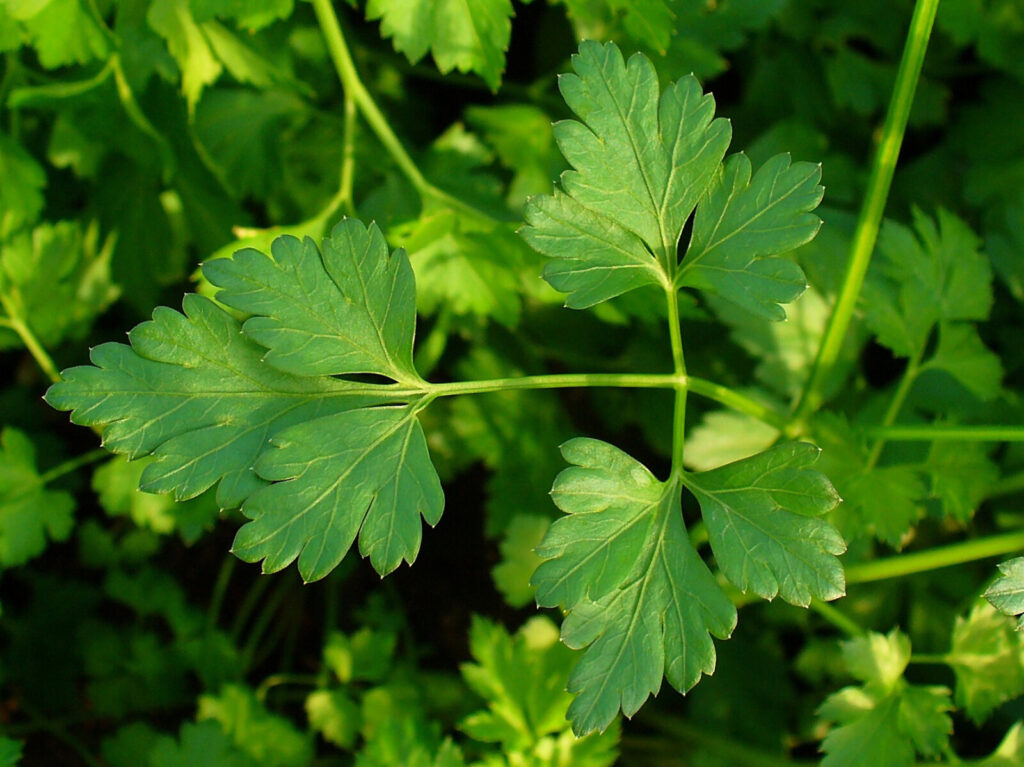
What is parsley?
Parsley (Petroselinum crispum) is a biennial herbaceous plant of the Apiaceae family, the same family as carrot, fennel, aniseed and coriander. Native to the Mediterranean basin, it is now grown all over the world and thrives easily in Morocco, where it is sold fresh in bunches at every market.
There are three main varieties:
- Flat-leaf parsley (Petroselinum crispum var. neapolitanum): the most common in Morocco, with broad leaves and a strong flavour.
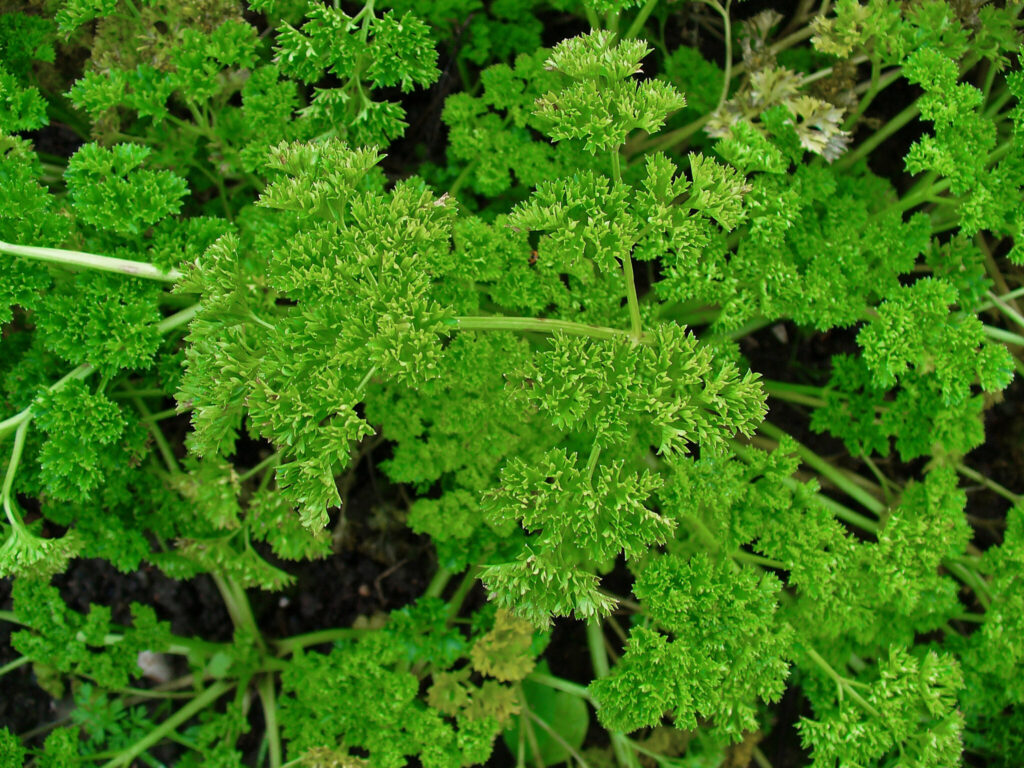
- Curly parsley (var. crispum): with crinkled leaves and a milder taste, often used as a garnish.
- Root parsley (var. tuberosum): grown for its fleshy root, rarely found in North Africa.
In herbal medicine, it is mainly the fresh leaves, the seeds and sometimes the root that are used. The seeds and essential oil are much more concentrated in active compounds than the leaves, which explains why the precautions differ depending on the form used.
Composition and active compounds of parsley
Its richness lies in an unusual combination of micronutrients and bioactive plant compounds concentrated in a very small volume of leaves.
Vitamins and minerals
- Vitamin K: parsley is one of the most concentrated food sources, with about 1,640 µg per 100 g of fresh leaves. This vitamin plays a role in blood clotting and bone mineralisation.
- Vitamin C: a significant amount, supporting immune function and iron absorption.
- Carotenoids (provitamin A), involved in vision and cell protection.
- Minerals: iron, calcium, potassium and magnesium.
Polyphenols and flavonoids
This herb is one of the main dietary sources of apigenin, a flavonoid of the flavone family studied for its anti-inflammatory and antioxidant properties. It also contains apiin, 6″-acetylapiin and catechins. On top of these come chlorophyll, responsible for its intense green colour, and various phenolic acids.
Essential oil
The aerial parts, and especially the seeds, contain an essential oil whose main constituents are apiole and myristicin. These two molecules account both for some of the traditional effects attributed to the plant and for most of its contraindications.
The health benefits of parsley
1. A diuretic and cleansing effect
This is its most firmly established traditional use: it is reputed to promote the elimination of water through the kidneys and to help the body drain. That is why it features in many so-called “detox” teas and is used when people feel they are retaining water or have heavy legs.
2. A rich source of antioxidants
The combination of vitamin C, carotenoids and flavonoids makes it a food with a high antioxidant density. These compounds help protect cells against oxidative stress, a mechanism involved in cellular ageing and several chronic diseases.
3. Support for bone health
Thanks to its exceptional vitamin K content, a few spoonfuls of fresh leaves more than cover the daily reference intake. Vitamin K activates osteocalcin, a protein needed to bind calcium into the bone matrix.
4. Anti-inflammatory properties
Apigenin is being studied for its anti-inflammatory effects and its potential role in reducing cardiovascular risk. The available research is mostly based on experimental models: it is promising but does not yet allow us to conclude that there is an established therapeutic effect in humans.
5. An aid to digestion
Like most plants in the Apiaceae family, it is traditionally used to ease bloating and stimulate the appetite. Its essential oil contributes to this carminative effect, well known to herbalists.
6. Fresher breath
Chewing a few sprigs of fresh leaves after a meal rich in garlic or onion is an old and effective remedy: chlorophyll and the aromatic compounds neutralise some of the sulphur molecules responsible for bad breath.
7. A source of plant-based iron
It provides non-haem iron, whose absorption is greatly improved by the vitamin C found in the same plant. Adding raw parsley to a salad or a pulse dish is therefore a sensible dietary habit.
How to use parsley and dosage
In cooking
This is the safest and most recommended form. Add it fresh and raw at the end of cooking or straight into salads: vitamin C and some of the aromatic compounds are sensitive to heat. One to two tablespoons of chopped herb a day provide a worthwhile intake with no risk at all.
As an infusion
- Allow one tablespoon of fresh parsley (or one teaspoon of dried parsley) per 250 ml of hot water.
- Cover and leave to steep for about 10 minutes, then strain.
- Drink no more than 1 to 2 cups a day. Beyond two cups a day, the concentration of active compounds becomes a problem for the kidneys.
- Opt for courses of a few days rather than prolonged continuous use.
As juice and essential oil
Juice and essential oil are highly concentrated forms. Parsley essential oil should only be used under the strict supervision of a healthcare professional and has no place in self-medication.
Precautions and contraindications of parsley
Eaten as a seasoning, it poses no problem. The precautions concern concentrated forms: repeated infusions, juice, seeds, supplements and essential oil.
- Pregnancy and breastfeeding: parsley infusions, juices and supplements are not recommended. Apiole and myristicin can stimulate contractions of the uterine muscle fibres. The essential oil is strictly contraindicated. A few leaves used as seasoning, however, remain perfectly safe.
- Anticoagulant treatment: the very high vitamin K content can interfere with vitamin K antagonists (such as warfarin). The aim is not to cut it out, but to keep your intake stable and talk to your doctor.
- Kidney failure or known kidney disease: the diuretic effect and the load of active compounds make concentrated forms unsuitable.
- Excessive consumption: it can cause kidney problems, headaches and nausea.
- Allergies: take care if you have a known allergy to Apiaceae (celery, carrot, fennel, coriander).
If in doubt, especially if you are on long-term medication, ask your doctor or pharmacist for advice before starting a course of parsley.
FAQ: your questions about parsley
Does parsley tea help you lose weight?
No. The diuretic effect causes a loss of water, not of body fat. The weight lost is regained as soon as hydration returns to normal. No plant can replace a balanced diet and regular physical activity.
Does dried parsley have the same benefits as fresh?
Partly. Drying preserves the minerals and some of the flavonoids well, but greatly degrades vitamin C and the volatile aromatic compounds. For nutritional purposes, fresh parsley is still preferable; for infusions, dried parsley works very well.
Can you eat parsley every day?
Yes, as a seasoning in your diet, with no particular problem apart from the contraindications. As an infusion, however, it is best to stay below two cups a day and to favour short courses rather than prolonged daily use.
Conclusion
Parsley perfectly illustrates a key principle of herbal medicine: the same plant can be an excellent everyday food and a preparation to be handled with care, depending on the dose and form. Raw and chopped over your dishes, it provides vitamin K, vitamin C, iron and apigenin at a trifling cost. As a concentrated infusion or essential oil, it becomes an active preparation that requires you to respect dosages and contraindications, especially during pregnancy and when taking anticoagulants. Choose a bright green bunch with no yellowed leaves, wash it carefully and store it in the fridge wrapped in a damp cloth, or with the stems in a glass of water.
Further reading
- Full botanical profile of parsley on Wikipedia
- Coriander: benefits, dosage and precautions — another essential Apiaceae of Moroccan cooking
- Fennel: benefits, dosage and precautions
- Spirulina: benefits, dosage and precautions
This article is for information only and is in no way a substitute for medical advice. Consult a healthcare professional before starting any course, if you are on medication, pregnant or breastfeeding, or have a chronic condition.