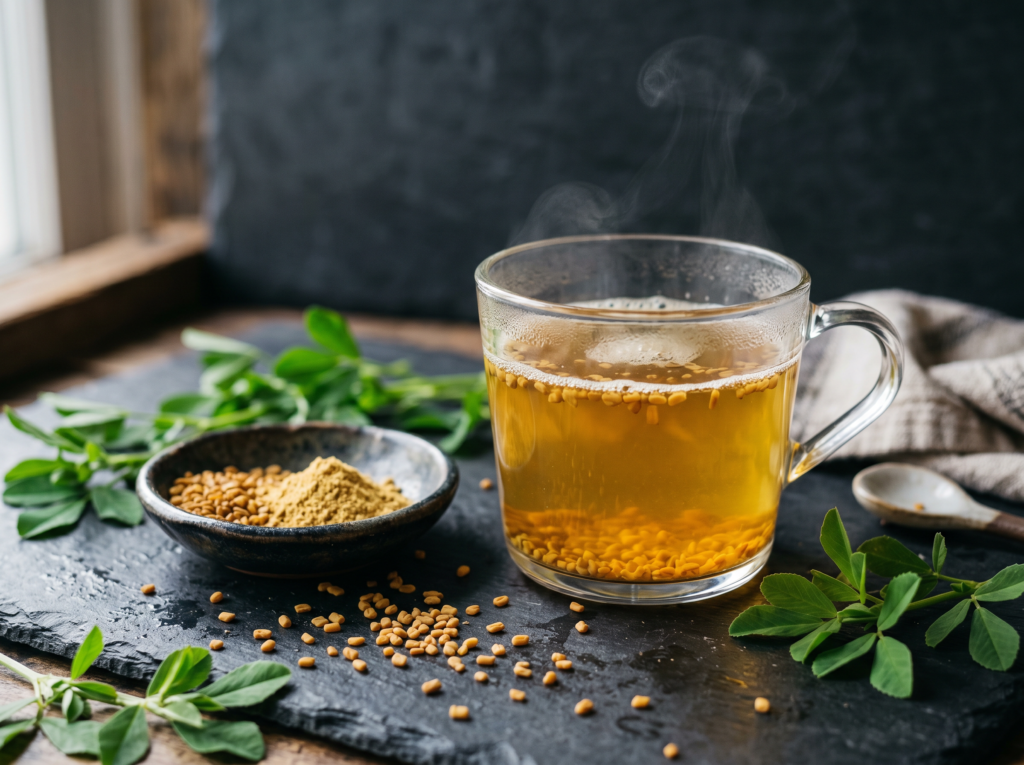
Fenugreek (Trigonella foenum-graecum), known in Morocco as “helba” (حلبة), is one of the oldest and most widely used medicinal plants in Moroccan herbal tradition. Its small golden seeds, with their characteristic aroma, have been used for centuries in both cooking and herbal medicine to support digestion, help balance blood sugar, or promote lactation. In this article, we take a factual look at the benefits of fenugreek, its dosage, and the precautions to know.
What is fenugreek (helba)?
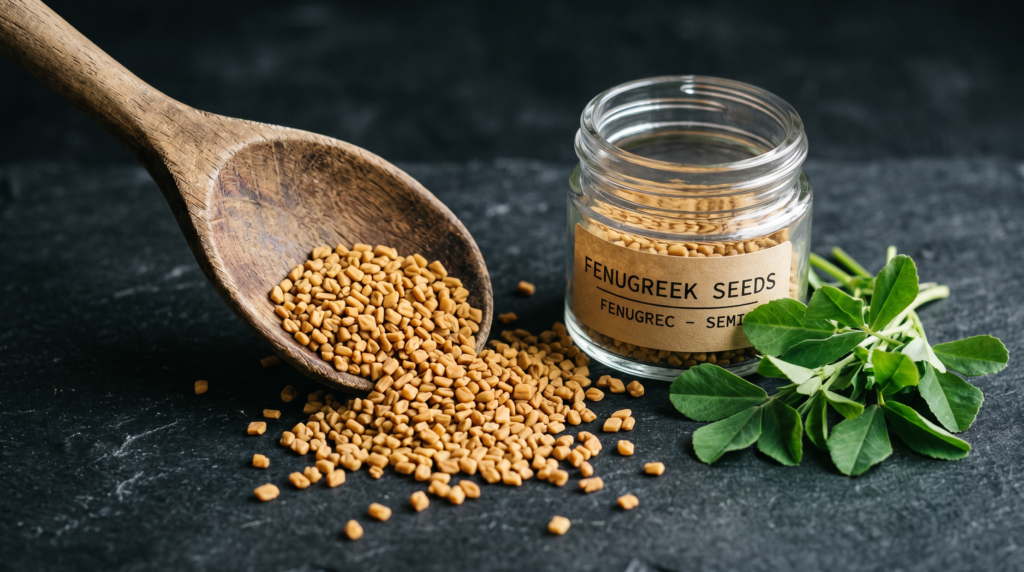
Fenugreek is an annual plant of the Fabaceae family (legumes), grown in the Mediterranean basin, the Middle East, and India. It is mainly its seeds — small, angular, and yellow-brown in color — that are harvested and dried for food and medicinal use.
Its Arabic name “helba” shares the same root as “halib” (milk), a direct reference to its traditional reputation as a plant that promotes milk production in breastfeeding women. In Morocco, helba is consumed as an herbal tea, powder, sprouted seeds, or added to culinary preparations.
Composition and active compounds of fenugreek
Fenugreek’s richness comes from its particularly dense composition. The seeds contain about 30% protein, along with carbohydrates, soluble fiber, and a significant proportion of mucilage.
- Steroidal saponins, including diosgenin, involved in several of its traditional effects.
- 4-hydroxyisoleucine, an uncommon amino acid studied for its role in blood sugar regulation.
- Galactomannan, a mucilage (soluble fiber) that swells on contact with water.
- Flavonoids such as vitexin, with antioxidant properties.
- Minerals and vitamins: iron, magnesium, phosphorus, calcium, as well as vitamins A, B1, and C.
Health benefits of fenugreek
Fenugreek is credited with many virtues. Here are the main ones, distinguishing what is documented by clinical studies from what mainly stems from traditional use.
Blood sugar support
This is one of the best-supported uses. Fenugreek contributes to maintaining normal glucose metabolism, and several clinical trials have observed a decrease in blood sugar levels in people with type 1 and type 2 diabetes. Soluble fiber and 4-hydroxyisoleucine slow the absorption of sugars and support the insulin response.
Promoting lactation
The galactagogue plant par excellence in tradition, fenugreek is consumed as an herbal tea by breastfeeding women to stimulate milk production. Several observations report an increase in lactation and better weight recovery in infants, an effect often attributed to diosgenin.
Digestion and appetite
Rich in mucilage, fenugreek supports digestive comfort and stimulates appetite. It is traditionally used to support periods of convalescence or fatigue, when appetite is lacking.
Effect on cholesterol and lipids
Fenugreek’s soluble fiber contributes to balanced lipid metabolism. Some studies suggest a reduction in blood triglycerides and a protective effect on the liver, linked to its antioxidant and anti-inflammatory compounds.
Testosterone and vitality in men
Several studies in men report a modest increase in free testosterone levels with standardized extracts. However, the evidence remains limited and inconclusive: fenugreek should not be considered a substitute for medical care in cases of a confirmed hormonal disorder.
How to use fenugreek and dosage
Fenugreek comes in several forms: whole seeds, powder, herbal tea, or standardized extract capsules. Dosage depends on the desired goal and the form used.
- Seed powder: the usual dose is 500 to 1,000 mg, with total daily dosage ranging from 500 to 2,000 mg.
- Blood sugar support: in clinical trials, 5 to 25 g of powder per day have been used, ideally spread across meals.
- Galactagogue effect: 2 to 3 g per day are reported to support lactation.
- Herbal tea: steep a teaspoon of seeds in a cup of hot water, 1 to 3 times a day.
It is advisable to start with small amounts to assess digestive tolerance, then increase gradually. Drinking enough water is important given its high fiber content.
Precautions and contraindications
Although natural, fenugreek is not without precautions for use. Certain situations call for caution or the advice of a healthcare professional.
- Pregnancy: to be avoided, as fenugreek may cause uterine contractions and increase the risk of miscarriage.
- Diabetes: should not be combined with blood-sugar-lowering medications without medical supervision, due to the risk of hypoglycemia.
- Anticoagulant treatments: not recommended without medical advice.
- Digestive effects: bloating, gas, or diarrhea are possible, especially at high doses.
- Allergies: caution is advised for people allergic to legumes (peanuts, chickpeas).
FAQ: your questions about fenugreek
Does fenugreek cause weight gain?
Fenugreek is traditionally used to stimulate appetite, which may promote weight gain in people who are convalescing or underweight. However, this is not an automatic effect: it depends on overall diet and dosage.
When should fenugreek be taken during the day?
To support blood sugar, it is often taken with or before meals. As an herbal tea, it can be consumed morning and evening. The important thing is to stay consistent and follow the recommended doses.
Are helba and fenugreek the same thing?
Yes. “Helba” is simply the Arabic name for fenugreek, widely used in Morocco. It refers to the same plant, Trigonella foenum-graecum.
Conclusion
Fenugreek is a versatile plant, deeply rooted in Moroccan herbal culture. Its benefits for blood sugar, digestion, and lactation are the best documented, while other uses still require scientific confirmation. As with any supplement, the key remains sensible use, at an appropriate dose, and medical advice in the case of ongoing treatment or a particular health situation.
To learn more
To learn more about the subject, see the reference page on this plant: fenugreek on Wikipedia. Also discover our other articles on plants and natural supplements: the benefits of spirulina, the benefits of moringa, and the benefits of ginseng.
This article is provided for informational purposes only and does not replace medical advice. Please consult a healthcare professional before starting any supplementation, especially in cases of pregnancy, breastfeeding, chronic illness, or ongoing treatment.