Bee pollen is one of the most nutrient-rich products of the hive, and it is taking up more and more space on the shelves of herbal shops and supplement retailers in Morocco. Collected by bees from flowers and then packed into small coloured pellets, it concentrates proteins, vitamins, minerals and antioxidants into a very small volume. Here is what we know about its composition, its benefits, the usual dosage and the precautions to follow.
What is bee pollen?
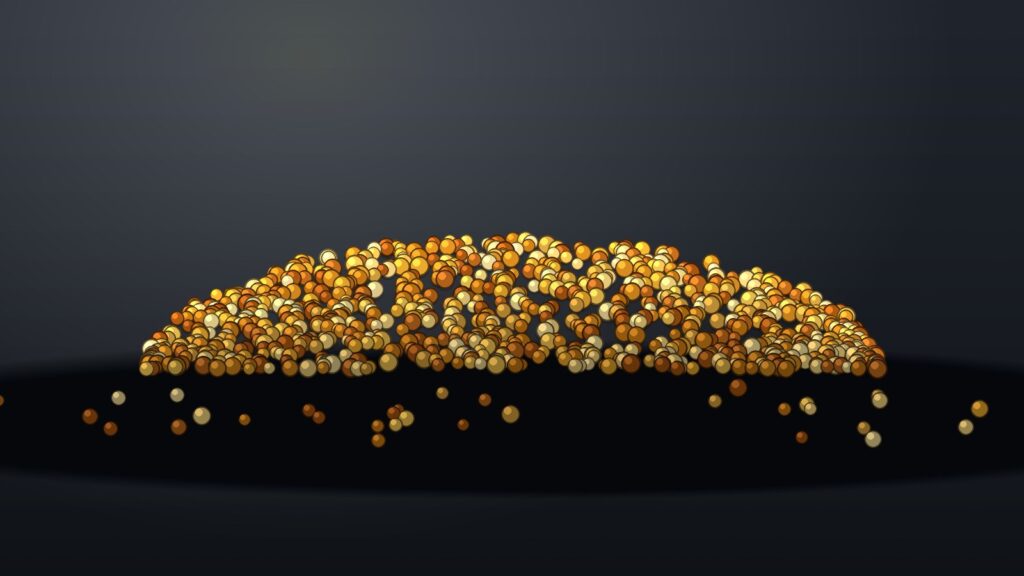
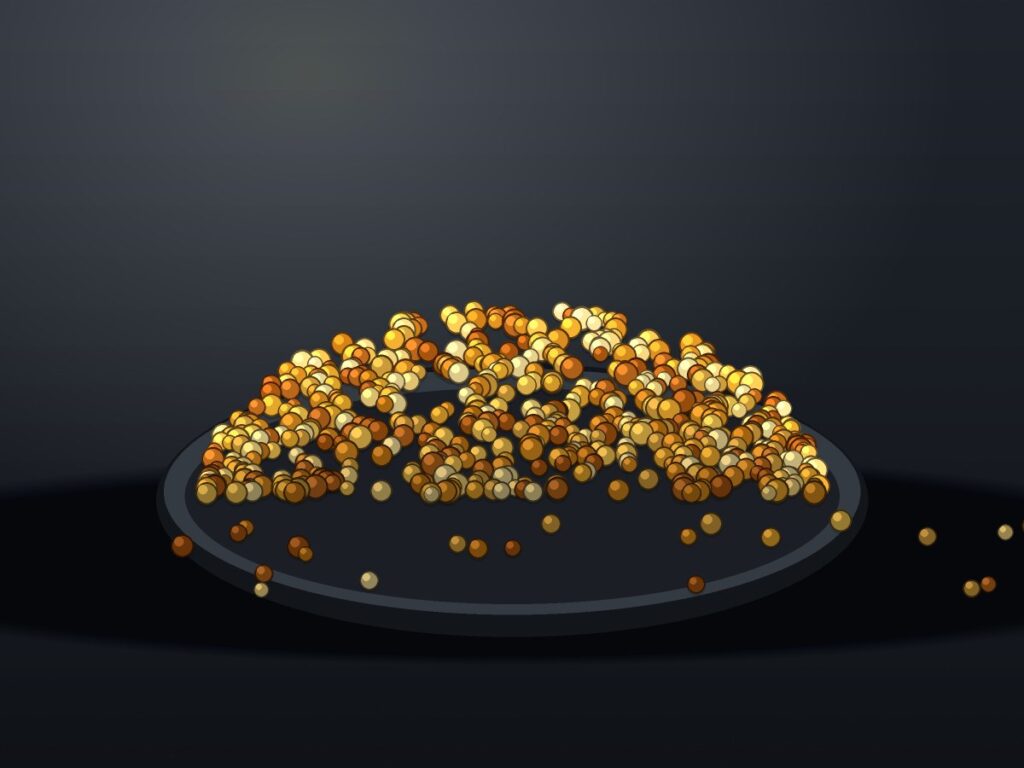
Pollen is the fertilising dust produced by the stamens of flowers. As it forages, the bee becomes covered in it, moistens it with a little nectar and saliva, then shapes it into pellets that it carries on its hind legs back to the hive. These pellets are the colony’s main source of protein: they feed the brood and the young bees.
The beekeeper collects some of these pellets using a trap placed at the hive entrance. The resulting product is therefore not a single plant but a floral blend: its colour, taste and nutritional profile vary according to the flowers visited. In Morocco, citrus, thyme, rosemary, euphorbia and jujube blossoms yield very different pollens, ranging from pale yellow to dark ochre.
Pollen composition: proteins, vitamins and antioxidants
More than 250 active substances have been identified in bee pollen. Its richness explains why it is often presented as a complete food rather than a mere supplement.
- Proteins and amino acids: about 25% of dry weight, including all eight essential amino acids.
- B vitamins: B1, B2, B3, B5, B6 and B9, involved in energy metabolism.
- Vitamins C and E, provitamin A: with an antioxidant role.
- Minerals and trace elements: potassium, calcium, magnesium, zinc, iron, copper, selenium.
- Polyphenols and flavonoids: responsible for much of its antioxidant activity.
- Fibre, lipids and enzymes: in modest amounts, but useful for digestive comfort.
Bear in mind, however, that these figures are approximate. Because pollen is a natural product from several flower species, its exact composition differs from batch to batch, region to region and season to season.
The benefits of bee pollen
Traditional uses and the available scientific data converge on several points. It should be kept in mind, however, that clinical research in humans remains limited: pollen is a supportive food, not a treatment.
Support during temporary fatigue
This is the most widespread use. Its density of B vitamins, amino acids and simple carbohydrates makes pollen a popular ally during energy dips, changes of season or periods of heavy workload. It is often recommended as a three- to six-week course, preferably in the morning.
Support for the body’s natural defences
Several studies suggest that regular consumption of pollen could stimulate the activity of certain immune cells, such as lymphocytes and macrophages. These results come mainly from experimental studies and need to be confirmed in humans, but they are in line with a long-standing popular use during convalescence.
Digestive comfort and gut flora
Fresh pollen contains natural lactic ferments and fibre that help balance the gut flora and keep bowel movements regular. This is one of the few points that clearly distinguishes fresh pollen from dried pollen, in which these ferments are lost.
Skin, hair and oxidative stress
Polyphenols, vitamin E and zinc help protect cells against oxidative stress. Zinc and sulphur-containing amino acids are also standard ingredients in courses aimed at improving the quality of skin, hair and nails.
Growth, convalescence and appetite
In apitherapy, pollen is traditionally recommended for older people whose appetite or nutrient absorption is declining, as well as after a period of bed rest. Its nutritional density means a single spoonful delivers a lot of micronutrients, which is useful when meals are smaller.
Fresh or dried pollen: what is the difference?
After harvesting, the pellets are very moist and deteriorate quickly. There are two ways of preserving them, and they do not give quite the same product.
- Frozen pollen (known as “fresh”): kept in the freezer, it retains its lactic ferments, heat-sensitive vitamins and polyunsaturated fatty acids. Its texture is soft and its taste milder.
- Dried pollen: dehydrated for a few hours at low temperature, it keeps for months at room temperature, away from light and moisture. It retains most of its proteins, minerals and antioxidants, but loses its ferments and some of its most fragile vitamins.
In both cases, heat, light and oxygen are the product’s main enemies. Pollen stored in a tightly closed opaque jar is far more worthwhile than an open bag left in the sun.
How to use it and dosage
For adults, the dose usually cited is between 15 and 20 g per day, or about one to two tablespoons, with some sources going up to 30 g for a short course. For a school-age child, it is generally reduced to one teaspoon. The wisest approach is to start with a small amount and increase gradually over a few days.
- Take it in the morning, preferably at breakfast.
- Always cold: plain by the spoonful, in yoghurt, fruit compote, a smoothie or a lukewarm drink below 40 °C. Cooking destroys vitamins and enzymes.
- Dried pellets benefit from being rehydrated for a few minutes in a little liquid, which makes them easier to digest and to chew.
- Take it as a 3- to 6-week course, repeated as needed, rather than continuously all year round.
Precautions and contraindications
Pollen is a food that most adults tolerate well, but it is not without risks.
- Allergies: this is the main precaution. People with a strong tendency to allergies, a known allergy to hive products or a history of severe reactions to bee stings should seek medical advice before taking it.
- A cautious first try: start with a few grains and watch for itching, swelling of the lips or throat, digestive upset or difficulty breathing. If any such sign appears, stop and see a doctor.
- Pregnancy and breastfeeding: as a precaution, medical advice is recommended.
- Ongoing treatments: people taking anticoagulants, immunosuppressants or treatment for a chronic illness should talk to their doctor or pharmacist.
- Product quality: choose pollen of identified origin that is clean, free of mould and properly stored. Poorly dried pollen can develop mould.
Finally, pollen does not replace a varied diet or a prescribed treatment. It complements a healthy lifestyle.
Bee pollen FAQ
Can bee pollen trigger an allergy to tree pollen?
The pollen collected by bees is so-called “heavy” pollen, carried by insects, which is different from the light, wind-borne pollen that causes hay fever. A reaction is still possible, however, especially in atopic people: caution and gradual introduction are essential.
Should it be combined with honey, propolis or royal jelly?
These hive products have complementary profiles and are often used together. It is nevertheless better to introduce them one at a time, a few days apart, so that the source of any reaction can be identified easily.
How long does it keep?
Dried pollen generally keeps for several months in an airtight, opaque container in a dry place. Frozen pollen keeps for about a year in the freezer and should be taken out quickly, without leaving the bag at room temperature.
Conclusion
Bee pollen is a natural concentrate of proteins, B vitamins, minerals and antioxidants, valued as a course during periods of fatigue and convalescence. One to two tablespoons a day, taken cold in the morning, is plenty. Its only real limitation concerns people prone to allergies, for whom prior medical advice is essential.
Further reading
- Pollen — encyclopedia entry on Wikipedia
- Propolis: benefits, dosage and precautions
- Royal jelly: benefits, dosage and precautions
- Spirulina: benefits and use
This article is for information only and does not replace medical advice. If in doubt, or if you are prone to allergies, pregnant, breastfeeding or undergoing treatment, ask a healthcare professional for advice.