Rosemary (Rosmarinus officinalis), known as “azir” or “iklil al jabal” in Morocco, is one of the most valued medicinal plants of the Mediterranean basin. Cultivated and wild-harvested in the Moroccan mountains, this small evergreen shrub flavors both the kitchen and traditional pharmacy. Renowned for its digestive, antioxidant, and memory-boosting properties, rosemary is consumed as an herbal tea, essential oil, or supplement. Discover its benefits, how to use it, dosage, and precautions to follow.
What is rosemary?
Rosemary is an aromatic shrub of the Lamiaceae family, the same family as mint, thyme, and lavender. Native to the Mediterranean region, it grows wild on the dry, sunny soils of Morocco, where it is known by the names “azir,” “barkela,” or, in Tamazight, “touzzalt” and “ozbi.”
Its fine, needle-shaped leaves and bluish flowers contain a highly aromatic essential oil. Since antiquity, rosemary has been used as a general tonic, a memory herb, and a digestive remedy. Even today, it holds a place of choice in Moroccan herbal medicine, whether as an herbal tea or in topical application.
Composition and active compounds of rosemary
Rosemary’s effectiveness rests on a remarkable richness of active compounds. Its leaves contain notably:
- Phenolic acids: rosmarinic acid and carnosic acid, powerful antioxidants.
- An essential oil rich in 1,8-cineole (eucalyptol), camphor, borneol, bornyl acetate, pinenes, and verbenone.
- Flavonoids and diterpenes with anti-inflammatory properties.
- Phenolic acids such as chlorogenic acid, which complement the plant’s protective action.
Depending on the region and time of harvest, the essential oil’s composition varies. Three main chemotypes are distinguished: cineole-type (oriented toward the respiratory tract), camphor-type (oriented toward muscles and circulation), and verbenone-type (oriented toward the liver and digestion). This diversity explains rosemary’s versatility.
The health benefits of rosemary
Rosemary’s active compounds give it anti-inflammatory, antioxidant, digestive, and liver-protective properties recognized through traditional use. Here are its main benefits.
Aiding digestion
Rosemary is traditionally used to relieve digestive troubles: bloating, sluggish digestion, belching, and flatulence. It stimulates digestive secretions and gallbladder function, making it an ally for heavy meals. Its antispasmodic action also helps soothe intestinal cramps.
Supporting liver function
A detoxifying plant par excellence, rosemary supports the body’s elimination functions, particularly at the biliary level. It is often recommended as a cure to support the liver, especially after dietary excess. The verbenone chemotype is particularly reputed for this hepatic use.
Boosting memory and concentration
Nicknamed “the memory herb,” rosemary has long been associated with stimulating brain activity. The 1,8-cineole molecule is believed to be responsible for this favorable effect on memory. A pilot study observed that a single dose of 750 mg of powdered rosemary leaves could improve memory speed, whereas very high doses (1500 to 6000 mg) appeared to have the opposite, unfavorable effect.
A powerful natural antioxidant
Thanks to rosmarinic acid and carnosic acid, rosemary helps fight oxidative stress and cellular aging. These antioxidants are, moreover, used in the food industry as natural preservatives. Rosmarinic acid has also shown promise in improving seasonal allergy symptoms in certain studies.
Soothing muscle pain
In Morocco, rosemary oil is traditionally applied by friction to relieve muscular and rheumatic pain. The camphor chemotype, with its warming and toning action, is often favored for massages after physical exertion.
How to use rosemary and dosage
Rosemary lends itself to several forms of use, the most common remaining herbal tea. Here are the most frequently cited guidelines.
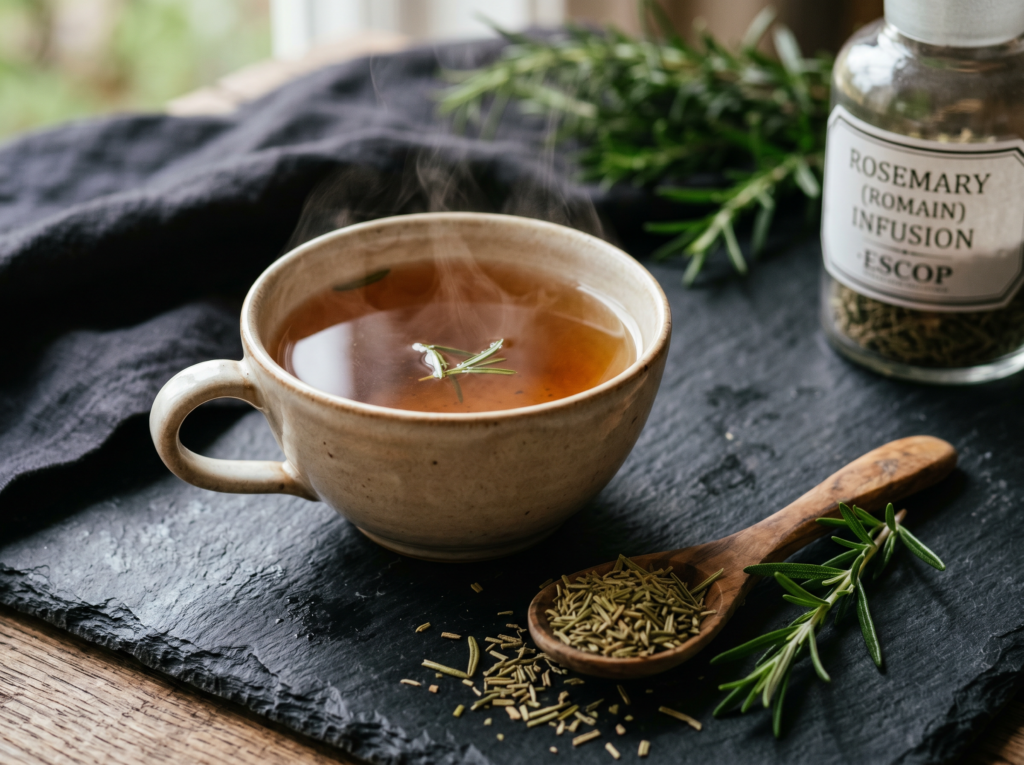
- As an infusion or decoction: use about 2 tablespoons of dried leaves or flowering tops per 0.5 liter of water. Bring to a boil for 15 to 20 minutes, strain, then drink 1 to 2 cups a day, preferably after meals.
- In powder form: a moderate dose (around 750 mg) is cited in memory-related research; it is best to avoid very high doses.
- As an essential oil: always diluted in a vegetable oil for massage, and never ingested without the advice of a health professional.
- For external use: diluted rosemary oil is used by friction on sore muscle areas.
As with any plant, it is advisable to follow limited-time cures and not exceed the usual amounts.
Precautions and contraindications
Although natural, rosemary is not without precautions, especially in essential oil form, which is much more concentrated than the herbal tea.
- Pregnancy and breastfeeding: rosemary essential oil is not recommended, particularly the camphor-rich type.
- Epilepsy: the camphor present in certain essential oils may promote seizures; these forms should be avoided.
- High blood pressure: as a precaution, camphor-rich essential oil is not recommended for people with hypertension.
- Biliary disorders: in case of bile duct obstruction or gallstones, medical advice is essential before using rosemary.
- Young children: the essential oil should not be used with young children.
It should also be noted that rosemary has not been the subject of large-scale clinical studies in humans: most of its uses are based on experience accumulated over centuries. If in doubt, always seek advice from a qualified herbalist or physician.
Frequently asked questions about rosemary
Can you drink rosemary tea every day?
One to two cups a day, after meals, are generally well tolerated by healthy adults. For prolonged use, it is preferable to follow cures and seek advice from a professional, especially if undergoing medical treatment.
Is rosemary good for hair?
Rosemary is included in many hair care products, and rosemary water is traditionally used as a rinse to invigorate the scalp. These cosmetic uses are popular, but rely mainly on tradition rather than solid scientific evidence.
What is the difference between rosemary essential oils?
There are three main chemotypes: cineole-type (respiratory sphere), camphor-type (muscles and circulation), and verbenone-type (liver and digestion). The choice depends on the intended use, and each chemotype has its own precautions for use.
To learn more
To deepen your knowledge of this plant, check the reference botanical entry on the Wikipedia page for rosemary. Also discover our other plant and supplement guides: the benefits of spirulina, moringa, and ginseng.
Conclusion
An emblematic plant of the Mediterranean and a treasure of Moroccan herbal medicine, rosemary combines aromatic pleasure with recognized benefits: easier digestion, liver support, memory stimulation, and antioxidant action. Consumed in moderation, whether as an herbal tea or in external use, “azir” naturally finds its place in a wellness routine. Simply be sure to observe the precautions related to the essential oil and adapt its use to your personal situation.
This article is provided for informational purposes only and does not replace medical advice. Consult a health professional before any use, particularly in case of pregnancy, breastfeeding, medical treatment, or a health condition.