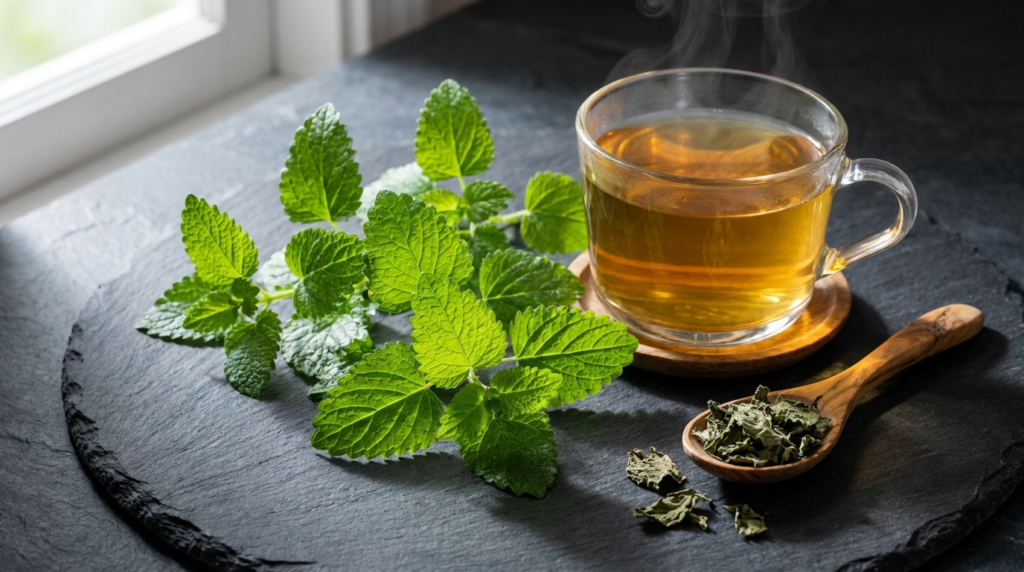
Lemon balm (Melissa officinalis) is one of the most popular medicinal plants in Morocco for easing stress, calming nervous tension and aiding digestion. Known in Darija as “toronjane” or “habaq torongi”, this plant of the Lamiaceae family gives off a characteristic lemony scent as soon as its leaves are crushed. Used as an infusion since antiquity, it is today one of the most popular evening teas in Moroccan homes, alongside lemon verbena and chamomile.
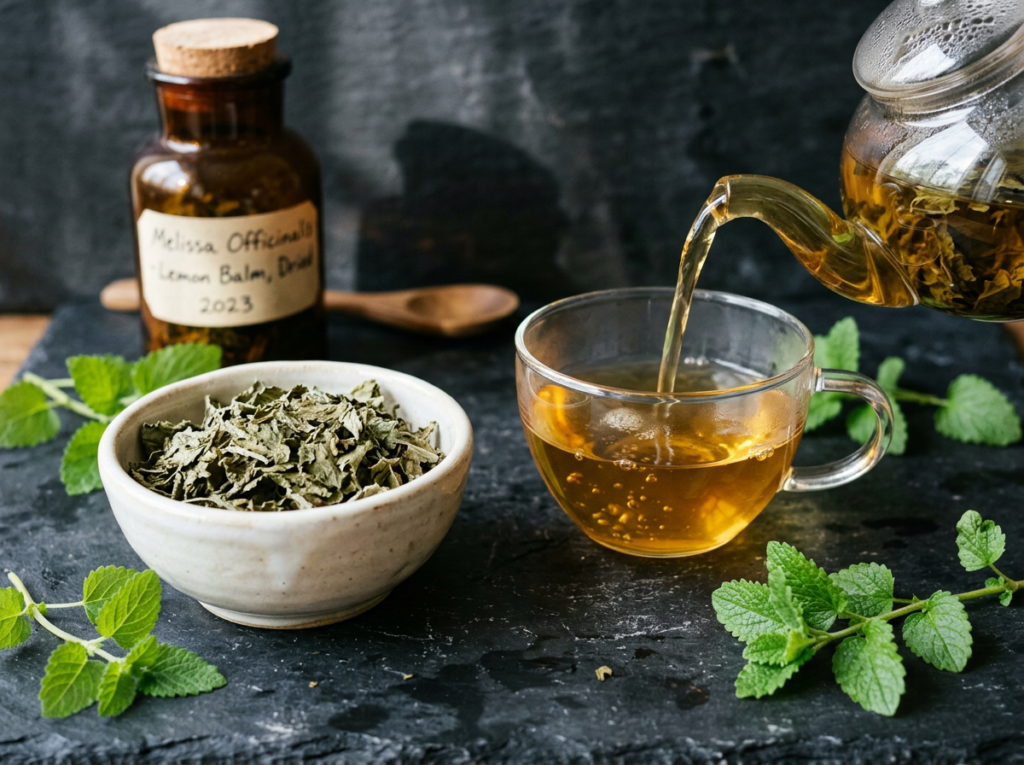
What is lemon balm?
Lemon balm is a herbaceous perennial that grows 30 to 80 cm tall. Its oval, crinkled and toothed leaves resemble those of mint, but stand out for their lemon scent. Native to the eastern Mediterranean basin, it has become naturalised throughout southern Europe and North Africa, where it thrives in gardens and in cool, shady ground.
Its name comes from the Greek melissa, meaning “bee”: beekeepers traditionally rubbed the inside of hives with its leaves to attract swarms. In Morocco, it can be found at herbalists (attarine) as dried leaves, as well as in tea bags, dry extract or essential oil in parapharmacies.
Composition and active compounds of lemon balm
The activity of this plant relies on a combination of aromatic and polyphenolic compounds found mainly in the leaves:
- Essential oil (in small amounts) rich in citral (neral and geranial), citronellal and geraniol, responsible for the lemony scent and the calming and antispasmodic properties.
- Phenolic acids, foremost among them rosmarinic acid, a well-studied antioxidant also found in rosemary and sage.
- Flavonoids (luteolin, apigenin, quercetin) with antioxidant effects.
- Triterpenes such as ursolic acid and oleanolic acid.
- Tannins, which contribute to the infusion’s slight astringent effect.
It is the combined action of these molecules — not a single isolated active ingredient — that explains the soothing and digestive profile traditionally attributed to the plant.
The benefits of lemon balm
Easing stress and nervousness
This is the best-documented use. The European Medicines Agency (EMA) recognises the traditional use of lemon balm leaf to relieve mild symptoms of mental stress and to aid sleep. Several studies have observed reduced agitation and improved mood after taking standardised extracts, often combined with valerian. In Moroccan practice, an evening cup of tea remains the most common way to release the pressure after a busy day.
Promoting better-quality sleep
Without any abrupt hypnotic effect, the plant works mainly by making it easier to fall asleep for people whose insomnia is linked to anxiety or racing thoughts. It is often combined with chamomile, linden or passionflower in evening tea blends.
Relieving digestive complaints
The EMA also recognises its traditional use for mild digestive complaints, notably bloating and flatulence. Thanks to its antispasmodic action on the smooth muscles of the digestive tract, it helps calm abdominal cramps, particularly when they are nervous in origin — a digestive profile very close to that of pennyroyal and fennel.
Calming stress-related palpitations
European herbal tradition credits this plant with a regulating effect on benign, stress-related palpitations. This use is empirical and, of course, never replaces a cardiology check-up in the event of heart rhythm disorders.
Support against cold sores
Applied locally, a concentrated lemon balm extract is used in Europe in creams for cold sore (herpes labialis) outbreaks. Studies have suggested that rosmarinic acid and polyphenols act on the binding of the virus, reducing the duration of discomfort. The classic infusion does not have this use: these are specific dermatological preparations.
An antioxidant contribution
Their richness in rosmarinic acid and flavonoids gives the leaves a marked antioxidant capacity, as measured in the laboratory. This effect helps protect cells against oxidative stress, though it should not be seen as a miracle remedy.
How to use lemon balm and dosage
The guidelines below correspond to the traditional uses accepted by the EMA for adults:
- Infusion: 1.5 to 4.5 g of dried leaves (about 1 to 2 teaspoons) in a cup of simmering water, covered, for 5 to 10 minutes. Two to three cups a day, including one in the evening before bed.
- Leaf powder: about 1 to 3 g a day.
- Dry extract in capsules: strictly follow the manufacturer’s dosage, as the extract is more concentrated than the whole plant.
- Mother tincture: according to the product’s and the pharmacist’s instructions.
- Essential oil: reserved for professionally supervised use; it is very expensive and often adulterated on the market.
As with most calming plants, courses of three to four weeks followed by a one-week break are preferred. Covering the cup while it steeps prevents the evaporation of the volatile aromatic compounds, which account for much of the desired effect. Store the dried leaves away from light and moisture, in an airtight jar.
Precautions and contraindications
The plant is well tolerated at usual doses, but a few situations call for caution:
- Pregnancy and breastfeeding: due to insufficient data, use is not recommended.
- Children under 12: the EMA does not recommend traditional use in younger children without medical advice.
- Thyroid disorders: experimental data suggest a possible interaction with thyroid function; medical advice is needed in cases of hypothyroidism or hormone treatment.
- Sedative medication: combining it with sleeping pills, anxiolytics or alcohol may increase drowsiness.
- Driving: possible drowsiness calls for caution when driving or operating machinery.
- Allergies: rare, but possible in people sensitive to Lamiaceae (mint, sage, rosemary).
If sleep problems, anxiety or digestive symptoms persist beyond two weeks, a medical consultation is essential to rule out an underlying cause.
Lemon balm FAQ
What is the difference between lemon balm and mint?
Both belong to the Lamiaceae family and look alike, but lemon balm gives off a distinct lemon scent, while mint releases menthol with a fresh, peppery fragrance. Their uses also differ: the former is mainly calming, the latter more tonic and digestive.
Can you drink it every day?
One to three cups of infusion a day for three to four weeks corresponds to common traditional use, with a break between courses. If you are taking medication or have a chronic condition, ask your doctor or pharmacist for advice.
Where can you find quality lemon balm in Morocco?
At traditional herbalists, in parapharmacies and from suppliers specialising in dietary supplements. Look for whole, bright green leaves with a clear lemony scent: a brownish colour or a faded fragrance indicates an old or poorly stored product.
Conclusion
Gentle, accessible and well tolerated, lemon balm holds a special place among evening plants. Its soothing profile for the nervous system and its antispasmodic digestive action make it a simple ally during periods of stress, difficulty falling asleep and mild digestive discomfort. Like any medicinal plant, it should be used at reasonable doses, in short courses, and with due regard for its contraindications.
Further reading
- Lemon balm — full botanical profile on Wikipedia
- Chamomile: benefits, dosage and precautions
- Lemon verbena: benefits, dosage and precautions
- Lavender: benefits, dosage and precautions
This article is for information only and does not replace medical advice. Consult a healthcare professional before any use, particularly in case of pregnancy, breastfeeding, chronic illness or medication.