The benefits of maca for men and women are attracting growing interest.
Maca is enjoying growing success among natural food supplements — and that is no coincidence. This root from the heights of the Andes has traditionally been used for centuries to support energy, vitality and hormonal balance. But what does the research actually say? And which variety should you choose depending on whether you are a man or a woman? Here is a clear guide grounded in the available data.
Contents
What is maca?
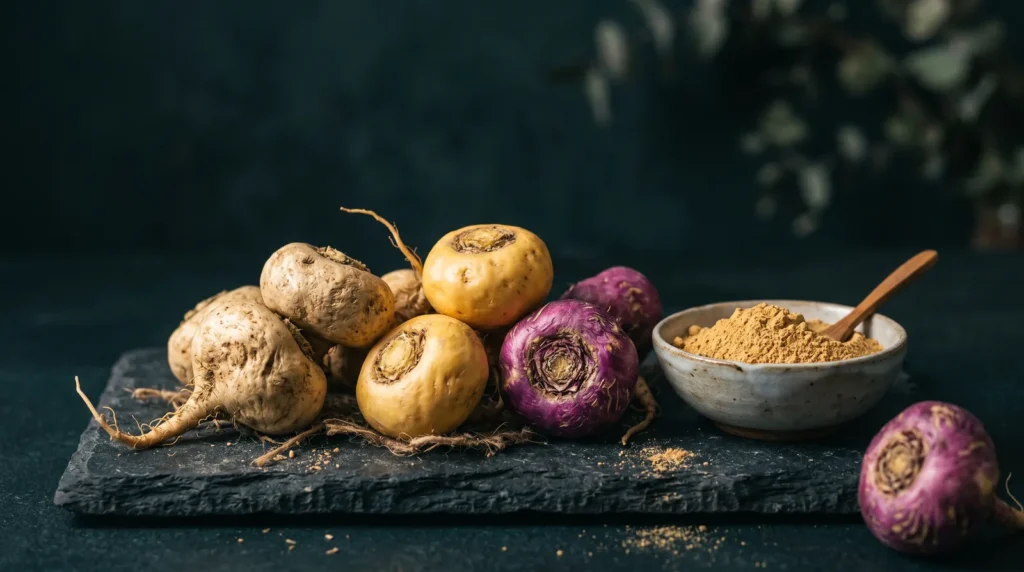
Maca (Lepidium meyenii) is a plant of the Brassicaceae family (the same as cabbage or radish), which grows wild in the Peruvian Andes at more than 3,000 metres of altitude. It is the root of the plant that is consumed, most often ground into powder or packaged in capsules — like our Maca 1000 mg capsules.
Maca is classed among the adaptogenic plants: plants reputed to help the body adapt better to physical and mental stress. Its reputation rests on a long tradition of use, now supplemented by a growing body of scientific studies. The plant is generally well tolerated and shows low toxicity, with rare adverse effects.
The benefits of maca for men
In men, maca is studied above all for its role on the sexual sphere and vitality:
- Libido and sexual desire. Several clinical trials conducted in healthy adult men observed an improvement in sexual desire after supplementation of 1.5 to 3 g per day for 8 to 12 weeks. Interestingly, this effect appears to be independent of testosterone levels, which are not altered by maca.
- Fertility. Some studies suggest an improvement in sperm parameters (quantity and motility), an area where black maca is often highlighted.
- Energy and endurance. Traditionally used as a tonic, maca is valued for supporting everyday energy, even though the scientific evidence on this point remains limited.
Note: the effects are generally not immediate. Most studies show a benefit after several weeks of regular use (often from 6 to 8 weeks onwards).
The benefits of maca for women
In women, interest often focuses on hormonal balance, particularly around menopause:
- Menopause comfort. Research suggests that maca could help ease certain symptoms such as hot flushes, sleep disturbances or mood swings. The data remain encouraging but limited.
- Female libido. Supplementation of around 3 g per day has shown, in some studies, an improvement in sexual function and desire, notably during the peri- and post-menopause period.
- Energy and mood. Maca is valued by many active women as a natural support for vitality and morale, with the first effects generally felt after 2 to 4 weeks.
- Bone health. Red maca in particular is studied for a possible support of bone density in post-menopausal women.
Yellow, red or black maca: which one to choose?
The colour corresponds to varieties of the same plant, with slightly different profiles. Here is a simple guide:
| Variety | Characteristics | Often preferred use |
|---|---|---|
| Yellow maca | The most common (about 70 % of production), the most studied, versatile | Energy, mood, general balance — men and women |
| Red maca | Rarer, rich in antioxidants (anthocyanins) | Female comfort, menopause, bone health |
| Black maca | The rarest, reputed to be a tonic | Vitality, endurance, male fertility, cognitive function |
No variety is “better” in absolute terms: the choice depends on your goal, your tolerance and the quality of the product. The gelatinised (cooked) form is often better digested than raw maca.
How to take maca? Dosage
The dose commonly used in studies is around 1.5 to 3 g per day, which should generally not be exceeded without professional advice. A few practical tips:
- Start with a small dose and increase gradually to assess your tolerance.
- Take it preferably in the morning or early in the day, because of its tonic effect.
- As a powder, it blends easily into a smoothie, yoghurt or porridge; as capsules, it is more convenient for precise dosing. Our Maca 1000 mg capsules offer exactly that: a simple, regular dose (2 to 3 capsules per day).
- Consistency is key: the benefits are seen over time, not from a single intake.
Precautions and contraindications
- It is not recommended during pregnancy and breastfeeding, for lack of sufficient data.
- In the case of a hormone-dependent disorder (certain cancers, thyroid conditions) or medication treatment, medical advice is recommended before any use.
- Some people may experience mild digestive disturbances or nervousness if the dose is too high.
This content is provided for informational purposes and does not replace the advice of a healthcare professional. Maca is a food supplement and not a medicine: it neither treats nor cures any disease.
The origin and history of maca

Cultivated on the high plateaus of the Peruvian Andes, at more than 4,000 metres of altitude, this root has been consumed for more than two thousand years by Andean peoples. Where few plants survive — extreme cold, violent winds, mineral soil — it thrives and concentrates its nutrients. The chronicles report that Inca warriors consumed it before battle to support their endurance, while it was also reputed to promote the fertility of herds as well as of people. This heritage explains the lasting interest in this tuber, which is today studied far beyond its birthplace.
Harvested and then dried naturally in the sun, the root was traditionally ground into flour and incorporated into the daily diet. This preservation method, still used today, makes it possible to stabilise its active compounds for use throughout the year.
What does scientific research say?
Several preliminary studies have looked at this adaptogenic plant. Small-scale studies suggest a positive effect on the feeling of energy, mood and sexual well-being, without any notable change in hormone levels — which points more towards a global support action than a direct hormonal one. Other research has explored its role on sperm quality and libido. The results are encouraging but need to be confirmed by larger-scale trials.
Its nutritional richness, on the other hand, is well documented: complex carbohydrates, fibre, plant proteins, B-group vitamins, vitamin C, and minerals such as iron, copper, potassium and zinc. It also contains specific compounds, macamides and glucosinolates, studied for their properties. As with any supplement, this data does not replace medical advice: if in doubt, seek the advice of a healthcare professional.
Maca and athletic performance
Among active people, this root is valued as a natural support for physical effort. Its density in complex carbohydrates makes it a source of gradual energy, useful before a workout, while its adaptogen status could help the body better manage the fatigue linked to high training loads. Many athletes take it as a course during intense periods, alongside a suitable diet and sufficient recovery. It is not among the prohibited doping substances and is used as a functional food.
Hormonal balance: menopause and andropause
An adaptogenic plant par excellence, it is traditionally used to accompany periods of hormonal transition. At menopause, some women report an improvement in general comfort, mood and sleep quality. In ageing men, it is used to support vitality and tone. Its value lies in the fact that it does not provide hormones: it is thought to act by helping the body regain its own balance, which makes it an option appreciated by those seeking a natural approach. People undergoing hormonal treatment should nevertheless seek their doctor’s advice before any course.
How to choose a quality maca?
Not all powders are equal. A few pointers to choose well:
- Origin: favour a root grown at altitude, a guarantee of nutritional density.
- Form: the “gelatinised” version (heated to remove the starch) is more digestible than the raw version, often better tolerated.
- Purity: a product without additives or fillers, ideally laboratory-tested.
- Dosage: a clear concentration per capsule (for example 1000 mg) to control your intake.
- Certification: in Morocco, a product compliant with ONSSA standards offers an additional guarantee.
Transparent labelling of the origin, dosage and manufacturing method remains the best indicator of a brand’s seriousness.
How long does it take to feel the effects?
Like most adaptogenic plants, its effects set in gradually. Consistency matters more than quantity: a course of 4 to 12 weeks, with a daily intake at the same time, generally allows the benefits to be assessed. Many users describe a boost in energy and better resistance to fatigue after two to three weeks. It is advisable to alternate courses (for example three weeks of intake followed by a week’s break) rather than continuous consumption all year round.
Possible side effects
Consumed at a reasonable dose, this root is well tolerated by most people. A few mild and transient effects may occur at the start of a course: digestive disturbances, bloating or, more rarely, a feeling of nervousness if it is taken too late in the day. Starting with a low dose and then increasing it gradually helps limit these inconveniences. It is not recommended for pregnant or breastfeeding women or for people with thyroid disorders without medical advice, because of the presence of glucosinolates.
How to integrate it into your daily routine
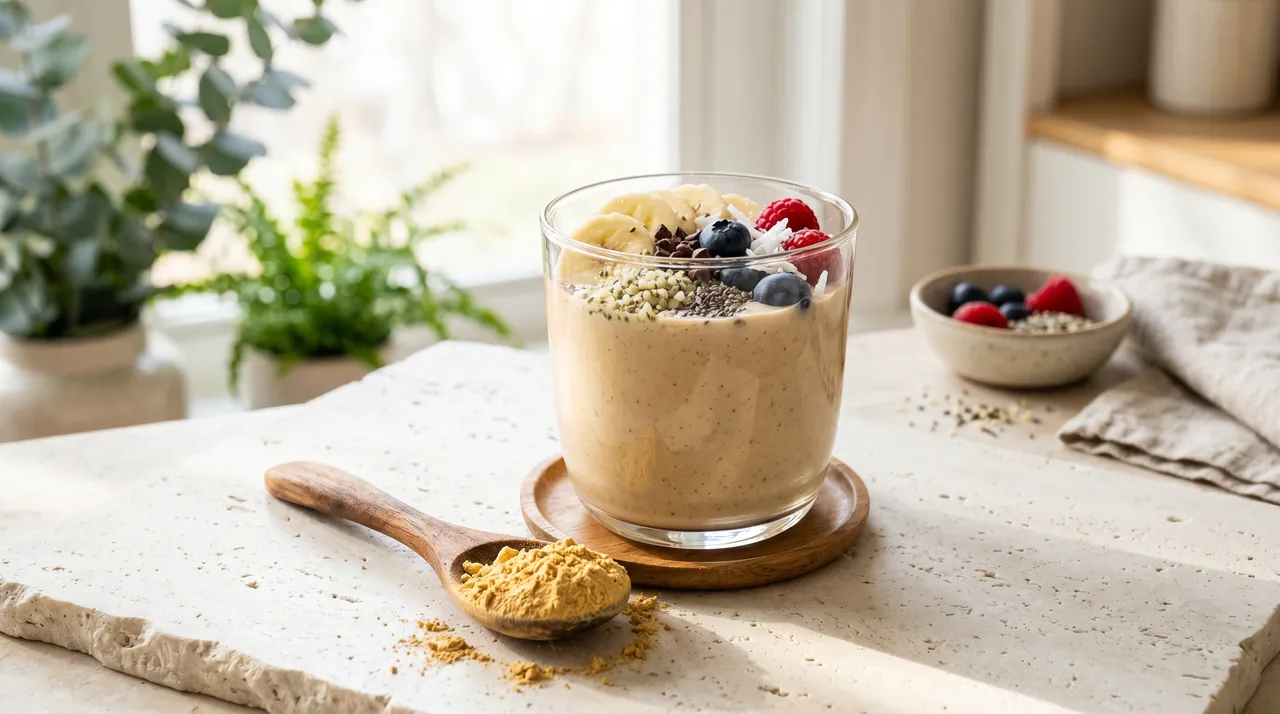
In capsule form, use is simple: just follow the indicated dosage, preferably in the morning or before exercise, with a large glass of water. In powder form, its slightly malty, caramelised taste pairs well with many preparations. You can add it to a fruit smoothie, mix it into porridge or yoghurt, add it to a hot cocoa-type drink, or incorporate it into pancake batter or homemade energy bars. Start with half a teaspoon and then adjust according to your tolerance and taste.
To preserve its qualities, it is best not to cook it at high temperature and to store it away from light and moisture, in an airtight container. Combined with a balanced diet rich in fruit, vegetables and quality proteins, it fits naturally into an overall healthy lifestyle in which sleep and physical activity play an equally decisive role.
A natural and sustainable cultivation
This root traditionally grows without pesticides or synthetic fertilisers, in soils that have remained preserved. The rotation of plots, essential because the plant depletes the soil’s nutrients, is part of the ancestral know-how that ensures environmentally respectful production. Choosing a product from a transparent supply chain also means supporting these practices and ensuring a quality raw material, free of contaminants. One more reason to pay attention to the origin indicated on the packaging.
Three misconceptions to correct
- “It is a medicine”: no, it is a food supplement derived from a traditional food, which neither treats nor replaces a course of treatment.
- “The effects are immediate”: false, its benefits are appreciated over time, as part of a regular course.
- “The more I take, the better”: incorrect, a suitable and regular dose is preferable to large occasional quantities.
In short, this Andean superfood deserves its reputation, provided it is chosen with care and used with consistency and common sense, alongside a healthy lifestyle.
An energy different from that of caffeine
Unlike coffee or energy drinks, this Andean tuber contains no caffeine and therefore causes neither a spike of stimulation nor a subsequent “crash”. The energy it provides is described as more stable and gradual, without nervousness or an increased heart rate. This is why many people who are sensitive to stimulants take an interest in it: it offers support for vitality without the drawbacks of classic stimulants, and can generally be consumed over the long term as part of supervised courses.
This distinction is important: here we are not seeking an immediate “boost” effect, but a deep support for the body. This is the very logic of adaptogenic plants, which help the body adapt better to the various forms of stress — whether physical, mental or environmental — rather than forcing it artificially.
Before starting a course, and especially if you are undergoing medical treatment, or are pregnant or breastfeeding, the advice of a healthcare professional remains the best guarantee of safe use suited to your personal situation.
Quality and regulation in Morocco
In Morocco, food supplements must comply with quality and safety standards. Certification by ONSSA, the National Office for the Sanitary Safety of Food Products, is a valuable benchmark: it attests to manufacturing and controls that comply with strict requirements. At the time of purchase, take the time to check the origin, the dosage, the expiry date and the brand’s transparency about its supply chain. A serious manufacturer readily communicates about the provenance of its raw materials and its manufacturing methods. These few simple habits make it possible to avoid products of dubious quality and to enjoy the benefits of a course with peace of mind, in complete confidence.
Frequently asked questions
How long does it take for maca to work?
Most often after 2 to 4 weeks of regular use for energy and mood, and sometimes 6 to 8 weeks for the effects on libido.
Is maca suitable for both men and women?
Yes. Yellow maca is versatile for both; red is often chosen by women, black by men.
Does maca increase testosterone?
The available studies show no change in testosterone levels: its effects on libido appear to work through other mechanisms.
Can maca be taken every day?
Yes, within the limits of the recommended doses (up to about 3 g/day). Some people take courses with regular breaks.
In summary
Maca is a versatile adaptogenic root, valued by men and women alike to support energy, libido and hormonal balance — with particular interest around menopause in women and vitality in men. The scientific evidence is encouraging, especially on libido, even though research is ongoing. To get the most out of it, the essential thing is to choose a quality maca, to match the variety to your goal, and to use it regularly over several weeks.
To go further: learn more about maca (external source).
The final word
Ultimately, this Andean treasure has crossed the centuries without losing any of its aura. Its nutritional richness, its status as an adaptogenic plant and its gentle, gradual action make it a companion of choice to support energy, vitality and balance, in men as in women. But the true secret of its effectiveness comes down to two words: quality and consistency. Choose a product whose origin and dosage are clearly indicated, certified, and set your course over the long term rather than expecting immediate miracles. Combine it with a balanced diet, quality sleep and regular physical activity: it is within this coherent whole that it fully expresses its potential. And at the slightest doubt, or in the case of treatment, never hesitate to seek the advice of a healthcare professional.
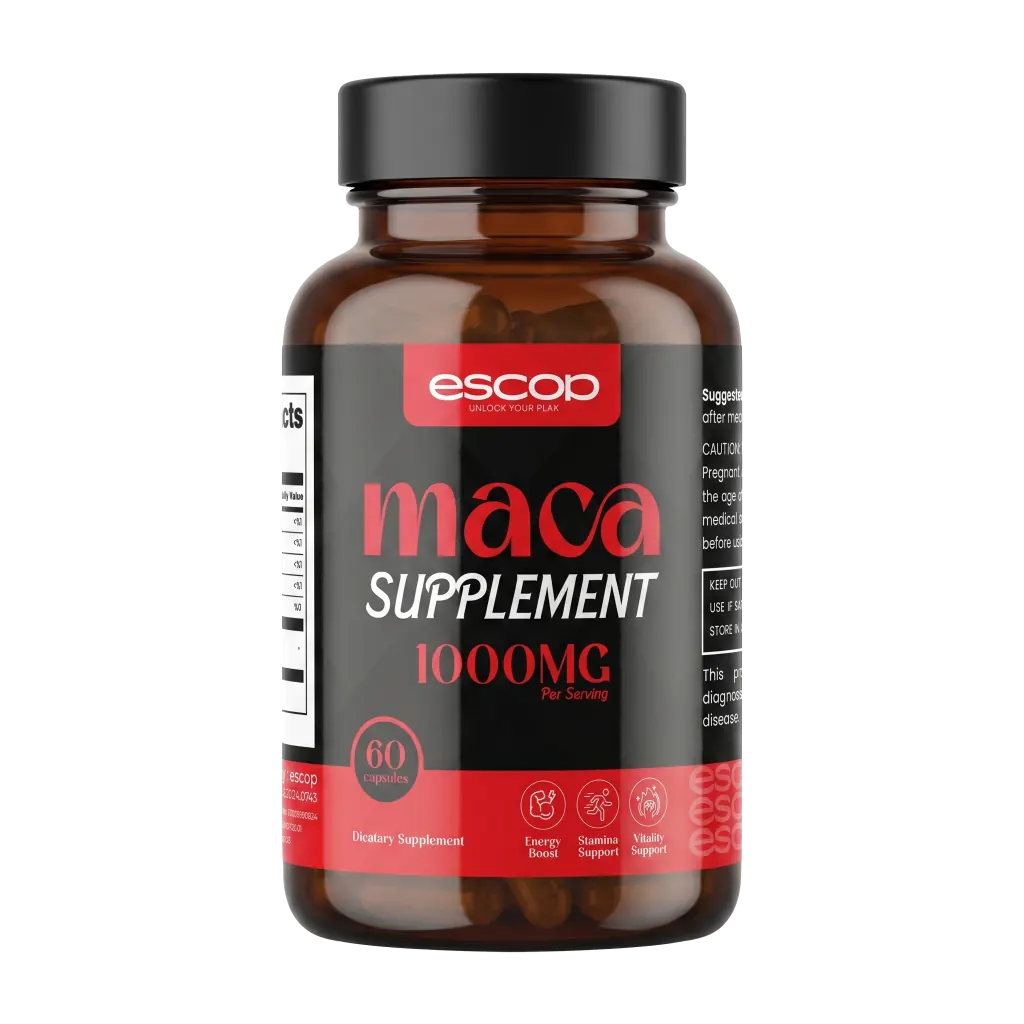
ESCOP — ONSSA Certified · Morocco
ESCOP Maca 1000 mg
For tone, energy and everyday balance. Dosed at 1000 mg, controlled quality, delivered anywhere in Morocco — cash on delivery.
Discover the product →