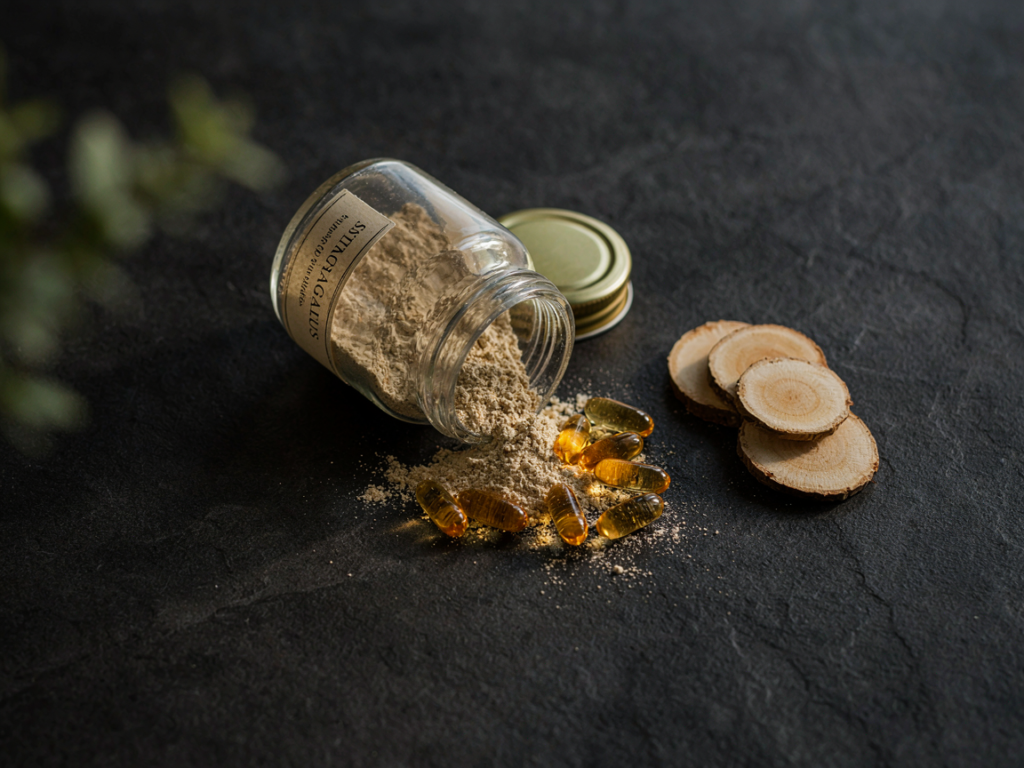
Astragalus (Astragalus membranaceus) is a medicinal plant that has been used for centuries in traditional Chinese medicine to strengthen the body’s natural defences. Now recognised by modern herbal medicine as a benchmark adaptogen, it is attracting a growing audience in Morocco, particularly during periods of seasonal fatigue or weakened immunity. This article looks at its composition, benefits, dosage and the precautions to know before starting a course.
What is astragalus?
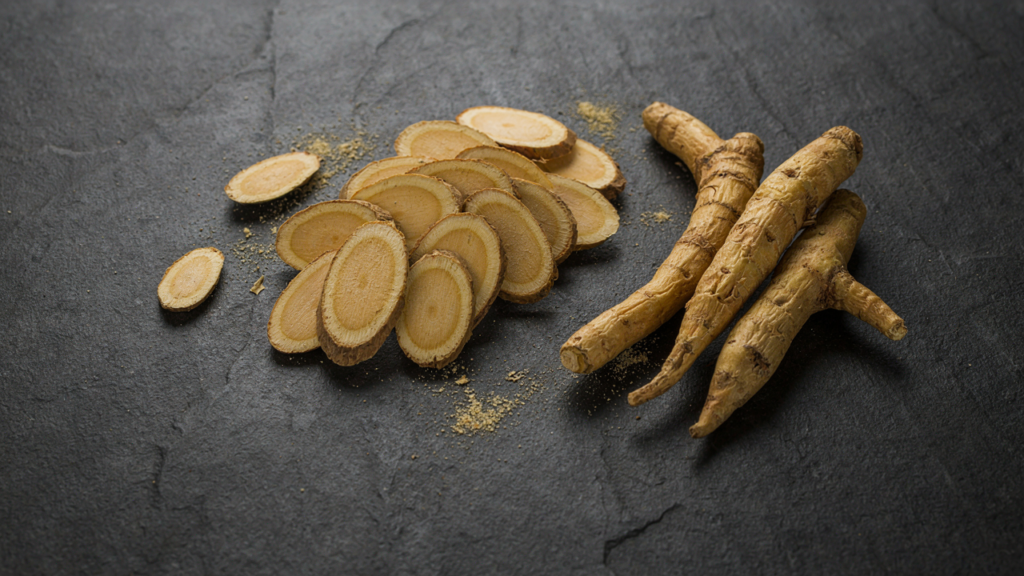
Astragalus is a perennial plant of the Fabaceae (legume) family, native to the mountainous regions of northern and western China and Mongolia. In traditional Chinese medicine, its dried root is called “Huang Qi”, literally “yellow leader”, a reference to the colour of the root once it is cut. It is one of the most widely used tonic herbs in the Chinese pharmacopoeia, where it is traditionally associated with supporting vital energy (“Qi”).
Only the root of the plant, harvested after several years of cultivation, is used in herbal medicine. It usually comes as a powder, a standardised dry extract, a mother tincture or a decoction.
Astragalus is one of the “50 fundamental herbs” listed in the traditional Chinese pharmacopoeia, alongside ginseng and liquorice, with which it is often combined in traditional formulas. Its use is thought to date back more than two thousand years, making it one of the best-documented tonic herbs in Asian herbalism. It was introduced to the West in the 1980s and has since been studied by modern scientific research for its effects on immunity.
Composition and active compounds of astragalus
The richness of astragalus comes from three major families of bioactive compounds found in its root:
- Triterpene saponins, including astragalosides (I to VII) and cycloastragenol, regarded as the quality markers of commercial extracts.
- Polysaccharides, around twenty of which have been identified, known for their immunomodulating properties.
- Flavonoids, including several isoflavones, with recognised antioxidant properties.
It is the synergy between these compounds that explains the plant’s adaptogenic activity, in other words its ability to help the body better withstand various forms of physical or environmental stress.
The benefits of astragalus
Astragalus is being studied for several effects on the body, particularly in the areas of immunity and vitality.
Well-recognised support for the immune system
The World Health Organization recognises the traditional use of astragalus to strengthen the body’s natural defences. Its polysaccharides are being studied in particular for their ability to stimulate the activity of certain immune cells, which makes it a popular plant for prevention, especially as winter approaches.
An adaptogenic plant against fatigue
Like other adaptogenic plants, astragalus is traditionally used to help the body adapt to periods of stress and physical or mental fatigue. European authorities on traditional herbal medicine acknowledge a tonic action that helps increase the body’s overall resilience.
Antioxidant properties
The flavonoids and saponins in astragalus help neutralise free radicals, thereby helping to limit cellular oxidative stress, a mechanism involved in tissue ageing.
Potential for cardiovascular health
Traditionally used as a heart tonic in China, astragalus is being researched for its potential role in supporting vascular function and in maintaining blood sugar levels that are already within the normal range.
Promising research on cellular ageing
Cycloastragenol, a molecule derived from astragalosides, has attracted particular scientific interest for its potential action on telomerase, an enzyme involved in cellular ageing. This research, still fairly recent, explains why astragalus is now associated with so-called “anti-ageing” plants in modern herbal medicine, alongside its more general antioxidant effects.
Useful during the change of seasons
In traditional Chinese medicine, astragalus is often used preventively at the start of autumn and winter, when upper respiratory tract infections are more common. It is usually recommended as a long-term course rather than during the acute phase of an infection, alongside a healthy lifestyle.
How to use astragalus and dosage
The dosage of astragalus varies considerably depending on the form used:
- Root powder: between 4 and 7 g per day, split into 2 to 3 doses taken with meals.
- Standardised dry extract: around 250 mg per day, depending on the astragaloside concentration.
- Mother tincture: 2 to 4 ml per day, in 2 to 3 doses diluted in a little water.
- Decoction: 15 to 30 g of dried root per litre of water, brought to the boil and then left to infuse, at a rate of 0.5 to 1 litre per day.
For dietary supplements, it is recommended to follow the manufacturer’s specific instructions and to take courses of 1 to 3 months, which can be repeated after a break, rather than taking it continuously over the long term.
In Morocco, astragalus is most often found in pharmacies and parapharmacies as capsules containing a dry extract, which are easier to fit into a daily routine than a decoction. It is best taken in the morning or around midday rather than in the evening, as its tonic effect may slightly delay falling asleep in some people. As with any dietary supplement, it is best to choose an extract standardised in astragalosides, which ensures a consistent level of active compounds from one batch to the next.
Precautions and contraindications
Although it is generally well tolerated, astragalus is not suitable for every situation. It is not recommended in the following cases:
- Autoimmune diseases (lupus, rheumatoid arthritis, multiple sclerosis) or a recent organ transplant, because of its stimulating effect on the immune system.
- Ongoing immunosuppressive treatment, due to the risk of drug interactions.
- A personal or family history of hormone-dependent cancer, particularly breast cancer, as a precaution.
- Pregnancy and breastfeeding, due to insufficient safety data.
- Children under 12, unless advised by a healthcare professional.
Mild digestive discomfort (bloating, intestinal discomfort) may occur at the start of a course, but it is generally temporary. If you are taking any medication, seeking medical advice beforehand is essential before taking astragalus.
Astragalus FAQ
Can astragalus be taken every day?
It is usually taken in courses of 1 to 3 months rather than continuously all year round, with regular breaks between courses.
Can astragalus be combined with other adaptogenic plants?
It is sometimes combined with other tonic plants such as ginseng or ashwagandha, but it is best to ask a healthcare professional for advice before combining several active plants.
What is the difference between powder, dry extract and mother tincture?
The powder is simply the dried, ground root; the dry extract is concentrated and standardised in active compounds; while the mother tincture is a liquid form obtained by maceration in alcohol, which allows more precise dosing drop by drop.
Conclusion
An emblematic plant of the Chinese pharmacopoeia, astragalus is now established as one of the most studied adaptogenic plants for supporting the immune system and resistance to fatigue. As with any active plant, an appropriate dosage and respect for contraindications remain essential to enjoy its benefits safely.
Further reading
To deepen your botanical knowledge, you can consult the Wikipedia page on Astragalus membranaceus. Also discover our articles on the benefits of ashwagandha, the benefits of ginseng and the benefits of moringa, other plants known for their tonic and adaptogenic action.
This article is provided for information purposes only and is in no way a substitute for medical advice. Ask a healthcare professional for advice before starting any herbal course, particularly if you are undergoing treatment, are pregnant or have a chronic condition.