In just a few years, chia has become one of the most sought-after superfoods in Morocco, alongside flaxseed and psyllium. Coming from a Mexican plant in the sage family, this tiny seed packs a remarkable amount of fibre, plant-based omega-3s and minerals. What does its nutritional composition really tell us? How much should you eat each day, and when should you be careful? Here is a factual overview.
What is chia?
Chia (Salvia hispanica L.) is an annual plant of the Lamiaceae family, the same family as sage, mint and rosemary. Native to Mexico and Guatemala, it was cultivated by the Aztec and Maya civilisations, who used its seeds as a staple food and as an energy reserve for long journeys on foot.
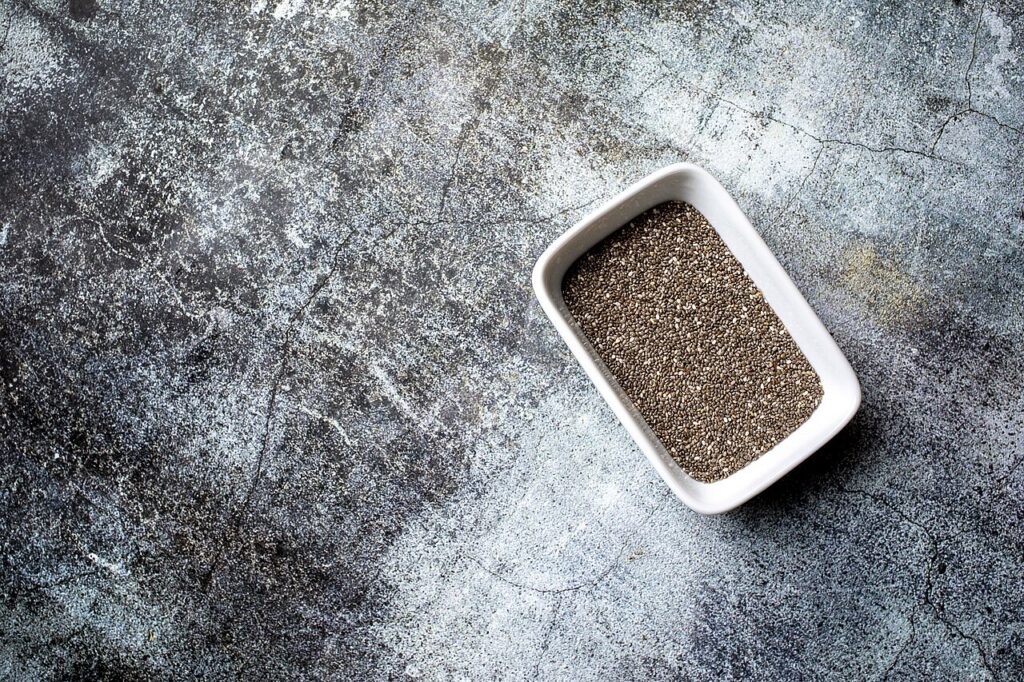
The seeds measure 1 to 2 mm and have a speckled coat ranging from light beige to almost black brown. There is no notable nutritional difference between white and black chia: only the colour of the outer coat changes.
On contact with water, the seed releases a mucilage that surrounds it with a translucent gel. This property, which it shares with psyllium and flaxseed, explains much of its culinary use and its effects on digestion. In Europe, chia seed has been covered by the Novel Food regulation since 2009. In Morocco, it is now found at herbalists, delicatessens and in the organic aisles of supermarkets.
Composition and active compounds of chia seeds
Chia’s nutrient density is what sets it apart from most seeds. Per 100 g of dry seeds, you will find on average:
- Fibre: about 34 g, mainly insoluble fibre and mucilage
- Fats: about 31 g, including nearly 18 g of alpha-linolenic acid (ALA), a plant-based omega-3
- Protein: about 16 g, containing all the essential amino acids
- Energy: about 486 kcal
- Minerals: calcium, phosphorus, magnesium, manganese, iron and zinc
- Polyphenols: chlorogenic acid, caffeic acid, quercetin, kaempferol
Note that the share of digestible carbohydrates is very low, as almost all of the carbohydrates come in the form of fibre. Chia seeds are also naturally gluten-free.
The health benefits of chia
A concentrated plant source of omega-3
This is its main nutritional selling point. EFSA recognises that alpha-linolenic acid contributes to the maintenance of normal blood cholesterol levels, with an intake of 2 g per day. A 20 g serving of chia is enough to provide this amount. Bear in mind, however, that only a small proportion of ALA is converted into EPA and DHA, the long-chain omega-3s found in oily fish. Chia therefore complements your diet without replacing them.
Support for bowel regularity
A 20 g serving provides almost 7 g of fibre, or about a quarter of the recommended 30 g per day. The mucilage increases the bulk and moisture of the stool, making it easier to pass. Like any fibre, it only works with an adequate fluid intake.
Satiety and weight management
The gel formed by the seeds takes up volume in the stomach and slows gastric emptying, which prolongs the feeling of fullness. Clinical trials remain modest, however: chia does not cause weight loss on its own and is only useful as part of an overall balanced diet.
Heart health and blood pressure
Several controlled trials have observed a moderate drop in systolic blood pressure in people with hypertension who consumed 35 to 40 g of chia or chia flour per day for 12 weeks. The results are clearer in people already on treatment. On the other hand, data on lowering cholesterol in metabolically at-risk individuals remain inconsistent.
Blood sugar and glycaemic index
The mucilage slows the absorption of sugars. When added to a carbohydrate-rich meal, chia seeds tend to flatten the post-meal blood sugar spike, an effect also seen with other viscous fibres.
Minerals and bone health
Chia is one of the richest plant sources of calcium, phosphorus and magnesium, three minerals involved in maintaining normal bones. This is a real advantage in vegan diets or diets low in dairy, bearing in mind that the presence of phytic acid partly limits their absorption.
How to use chia and dosage
The amount usually recommended is between 15 and 25 g per day, or one to two tablespoons. There is no need to go further: the expected benefits are already covered at this dose, and too much fibre quickly becomes uncomfortable.
- Soaked: 1 tablespoon in 100 to 150 ml of water, milk or plant-based drink for 15 to 30 minutes, until a gel forms.
- As a pudding: leave to set in the fridge overnight with a blended fruit.
- Ground: added to bread dough, yoghurt or soup; grinding makes the omega-3s more accessible.
- Sprinkled: over a salad or a dish, as long as you drink a glass of water alongside.
Store the seeds away from light and heat: omega-3s oxidise easily. Ground seeds should be kept in the fridge and used within a few weeks.
Precautions and contraindications
- Always hydrate the seeds. Cases of oesophageal obstruction have been reported after dry seeds were swallowed with too little liquid. They swell in the oesophagus.
- Strictures or swallowing difficulties: use is not recommended if you have a known narrowing of the digestive tract.
- Anticoagulant or antiplatelet treatment: the high ALA intake warrants medical advice beforehand.
- Blood pressure medication: chia’s modest effect on blood pressure may add to that of the medicine; monitoring is advisable.
- Irritable bowel, diverticulosis, recovery after digestive surgery: introduce gradually, or avoid on medical advice.
- Allergies: rare but reported, particularly in people sensitive to sesame or mustard.
- Pregnancy and breastfeeding: normal dietary amounts pose no known problem, but data on high doses are lacking.
Finally, start with a small amount and increase it over one to two weeks. A sudden increase in fibre often causes bloating and gas.
Chia FAQ
Does chia help you lose weight?
No, not on its own. It increases satiety and can help you naturally eat smaller amounts, but no trial shows significant weight loss without an overall change in diet.
Should chia seeds be soaked?
It is strongly recommended. Soaking forms the gel responsible for the digestive effects and avoids any risk of blockage when swallowing. Otherwise, grind the seeds or drink plenty of water.
Chia or flaxseed: which should you choose?
Both are rich in ALA and fibre. Flaxseed contains slightly more, but it must be ground to be absorbed, whereas chia can be eaten whole after soaking. They complement each other rather than compete.
Key takeaways
Chia is a seed dense in fibre, omega-3 ALA and minerals, whose main value lies in bowel regularity, satiety and plant-based fatty acid intake. One to two tablespoons a day, always hydrated, is more than enough. The precautions relate mainly to its swelling capacity and its possible interaction with anticoagulant or blood pressure treatments.
Further reading
- Detailed botanical profile: Chia (Salvia hispanica) on Wikipedia
- Flaxseed: benefits, dosage and precautions
- Psyllium (Ispaghula): benefits, dosage and precautions
- Spirulina: benefits, dosage and precautions
This article is for information only and does not replace medical advice. Ask a healthcare professional before starting any supplementation, especially if you are taking medication, have a chronic illness, or are pregnant or breastfeeding.