Harpagophytum, better known as “devil’s claw”, has become one of the most sought-after plants among people in Morocco who suffer from joint pain. Native to the desert regions of southern Africa, this root has earned its place on the shelves of herbalists and supplement stores as a natural, well-studied option for osteoarthritis, rheumatism and chronic back pain. But what does the science actually say about it? How much should you take, and above all, who should avoid it?

What is devil’s claw?
Devil’s claw (Harpagophytum procumbens) is a perennial herbaceous plant of the Pedaliaceae family. It grows wild in the sandy soils of the Kalahari Desert, which straddles Namibia, Botswana and South Africa. Namibia is now its main exporting country.
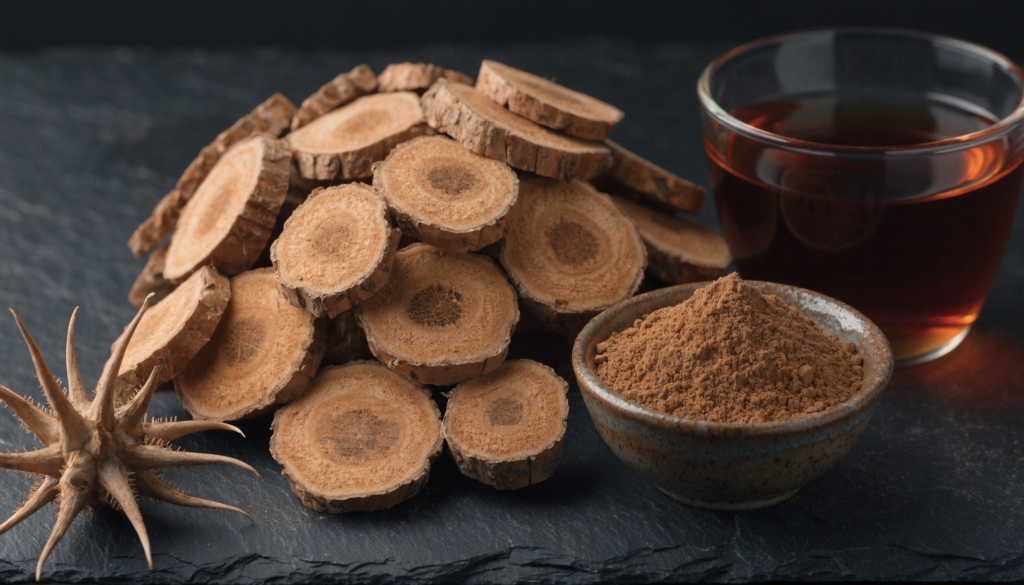
The nickname “devil’s claw” comes from the shape of its fruit: woody capsules bristling with curved hooks that cling to the feet and coats of animals, spreading the seeds far and wide. These hooks, which can be dangerous for livestock, are what gave the plant its name.
A key point that is often overlooked: it is not the main root that is used, but the secondary storage roots (tubers). They concentrate the active compounds and are the subject of all the available clinical data. A poorly identified root or another species of the Harpagophytum genus does not offer the same guarantees.
Composition and active compounds of devil’s claw
The plant’s activity relies on a well-identified family of molecules: iridoid glycosides, which make up roughly 1 to 3% of the dried root depending on its origin and the quality of the plant material.
- Harpagoside: the reference marker, the one all serious extracts are standardised to. Most of the anti-inflammatory activity is attributed to it.
- Harpagide and procumbide: two other iridoids that contribute to the overall effect of the whole plant.
- Procumboside and cinnamic esters of harpagide.
- Verbascoside (acteoside): a phenylpropanoid compound with antioxidant properties.
- Phytosterols, flavonoids and sugars, notably stachyose, which is very abundant in the root.
This combination explains why whole extracts are often preferred to isolated harpagoside: the effect observed in clinical settings seems to depend on the synergy of all the root’s constituents rather than on a single molecule.
The benefits of devil’s claw for the joints
The root’s anti-inflammatory and pain-relieving properties are recognised by the World Health Organization and are the subject of a monograph by the European Medicines Agency (EMA). Here is what we know for certain.
1. Relieving osteoarthritis pain
This is the best-documented use. A systematic review published in 2004 found a moderate level of evidence for a dose of 60 mg of harpagoside per day in osteoarthritis of the knee, hip and spine. A comparative study pitted a standardised extract providing 60 mg of harpagoside daily against diacerein, a reference drug for osteoarthritis: after four months, the improvement observed was comparable in both groups.
2. Easing chronic low back pain
Back pain is the second area where devil’s claw shows its value. A randomised, double-blind, placebo-controlled trial of 197 patients with flare-ups of chronic low back pain compared two daily doses of an aqueous extract, providing 50 and 100 mg of harpagoside respectively, over four weeks. The 2004 systematic review found a high level of evidence for a dose of 50 mg of harpagoside per day in chronic non-specific low back pain.
3. Supporting rheumatic complaints
Beyond osteoarthritis, the plant is traditionally used to support diffuse joint pain, tendinitis and morning stiffness. The effect is not immediate: unlike a conventional painkiller, devil’s claw generally needs two to four weeks of regular use before the benefit becomes noticeable.
4. Better digestive tolerance than conventional anti-inflammatories
In the available trials, devil’s claw extracts proved easier on the digestive system than non-steroidal anti-inflammatory drugs. This is an important point for people who have to manage joint pain over the long term. It does not mean the plant is free of side effects, nor that it can replace a prescribed treatment.
5. Stimulating appetite and digestion
The root is very bitter. This bitterness gives it a secondary traditional use, recognised as a European traditional use: supporting appetite and digestion. It is also choleretic, meaning it stimulates bile secretion by the liver — a property which, as we will see, calls for a specific precaution.
How to use devil’s claw and dosage
The golden rule is simple: what matters is not the weight of the capsule, but the amount of harpagoside actually delivered each day. It is the only figure that lets you compare two products.
- Standardised dry extract, the most studied form: about 600 to 1,200 mg of extract per day, providing 50 to 100 mg of harpagoside. The reference clinical dose is around 60 mg of harpagoside per day.
- Whole root powder: traditional doses are considerably higher, in the range of several grams per day, split into two or three doses.
- Decoction: since the root is hard, it is boiled for a few minutes and then left to steep. The taste is distinctly bitter.
- Mother tincture and fluid extract: dose according to the manufacturer’s directions or a healthcare professional’s advice.
Ideally, split the daily dose into two intakes with meals to limit the stomach irritation caused by its bitterness. Plan a course of two to three months, then reassess. The first effects are most often noticed between the second and fourth week.
When buying, check three things on the label: the botanical species (Harpagophytum procumbens), the part used (secondary roots) and the guaranteed harpagoside content. A product that mentions none of these three elements gives you no way of knowing what you are taking.
Precautions and contraindications
Devil’s claw is generally well tolerated, but it is not without risk. Several situations call for avoiding it or seeking medical advice first.
- Active gastric or duodenal ulcer: a contraindication explicitly listed in the European monograph. The plant stimulates acidic gastric secretions and can worsen the lesion.
- Gallstones: its choleretic effect can trigger biliary colic in people with gallstones. Medical advice is essential.
- Pregnancy and breastfeeding: not recommended, due to a lack of safety data.
- Children and teenagers: not recommended without medical advice.
- Anticoagulant treatment: the European monograph does not list any clinically demonstrated interaction, but an isolated case of purpura has been reported in combination with warfarin, and inhibition has been observed in vitro. To be safe, always tell your doctor you are taking it.
- Diabetes and heart medication: caution is also needed, and professional advice is recommended.
The most frequently reported side effects are digestive and mild: nausea, stomach ache, diarrhoea and, more rarely, headaches. They are often linked to taking it on an empty stomach or starting with too high a dose. Finally, devil’s claw is never a substitute for a diagnosis: joint pain that gets worse or comes with fever, significant swelling or loss of mobility should be assessed by a doctor.
Frequently asked questions about devil’s claw
How long does devil’s claw take to work?
It is not a fast-acting painkiller. Clinical trials observe a significant improvement after two to four weeks of regular daily use. Consistency, more than any single dose, is what determines the result.
Can devil’s claw be combined with turmeric or boswellia?
These three plants are often combined in commercial joint formulas because their anti-inflammatory mechanisms complement each other. The combination is common and generally well tolerated, but it deserves professional advice if you are already on medication, particularly anticoagulants.
Should you take breaks between courses?
Yes, that is the most common practice. A two- to three-month course followed by a break lets you reassess the real value of the supplement and avoid taking it out of habit over the long term without any measurable benefit.
Conclusion
Devil’s claw is one of the few plants whose use for joints is backed by controlled clinical trials and official monographs. Its strength lies in standardisation: a secondary-root extract providing 50 to 100 mg of harpagoside per day, taken consistently for several weeks, is the basis of everything that has been demonstrated. Its limit lies in its contraindications, which are real and specific, notably active ulcers and gallstones. Well chosen and properly supervised, it is a serious ally for everyday joint comfort.
Further reading
To learn more about the plant’s botany and history, see the Harpagophytum article on Wikipedia.
On the same topic, also explore our guides to other plants for joint comfort:
- Boswellia (Louban Dkar): benefits, dosage and precautions
- Turmeric: benefits, dosage and precautions
- Ginger: benefits, dosage and precautions
- Nettle: benefits, dosage and precautions
This article is provided for information purposes only and is in no way a substitute for medical advice. Ask your doctor or pharmacist for advice before starting a course, especially if you are already on treatment, pregnant, breastfeeding or living with a chronic condition.