Garlic (Allium sativum) is one of the oldest and best-studied natural remedies in the world, and it holds a central place in both Moroccan cooking and Moroccan herbal medicine. Found in almost every kitchen in the Kingdom, from tagine to chermoula, it has also been used for centuries as a health plant to support the heart, the body’s natural defences and digestion. This article takes stock of what is really known about its virtues, the usual dosages and the situations where caution is needed.
What is garlic?
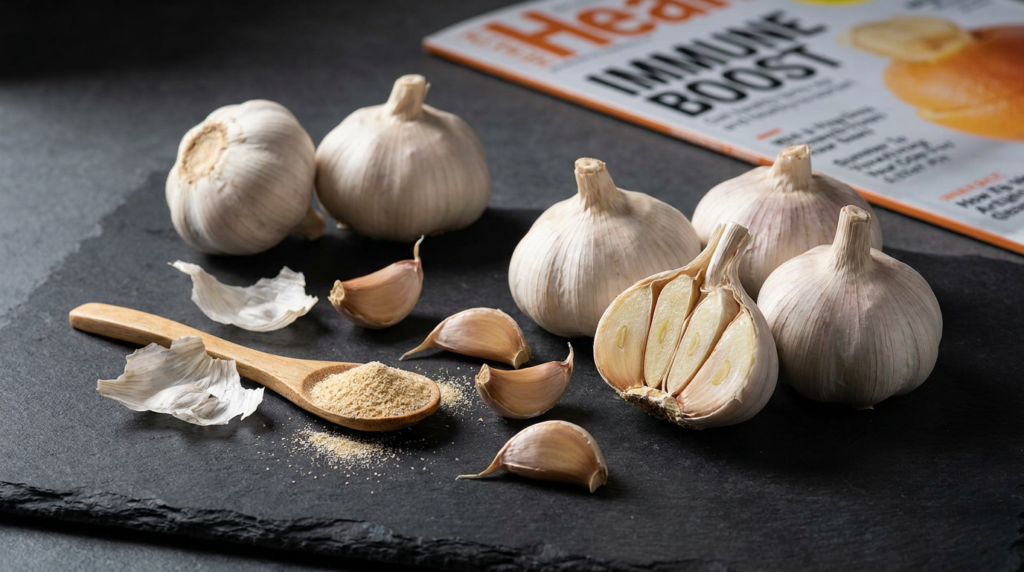
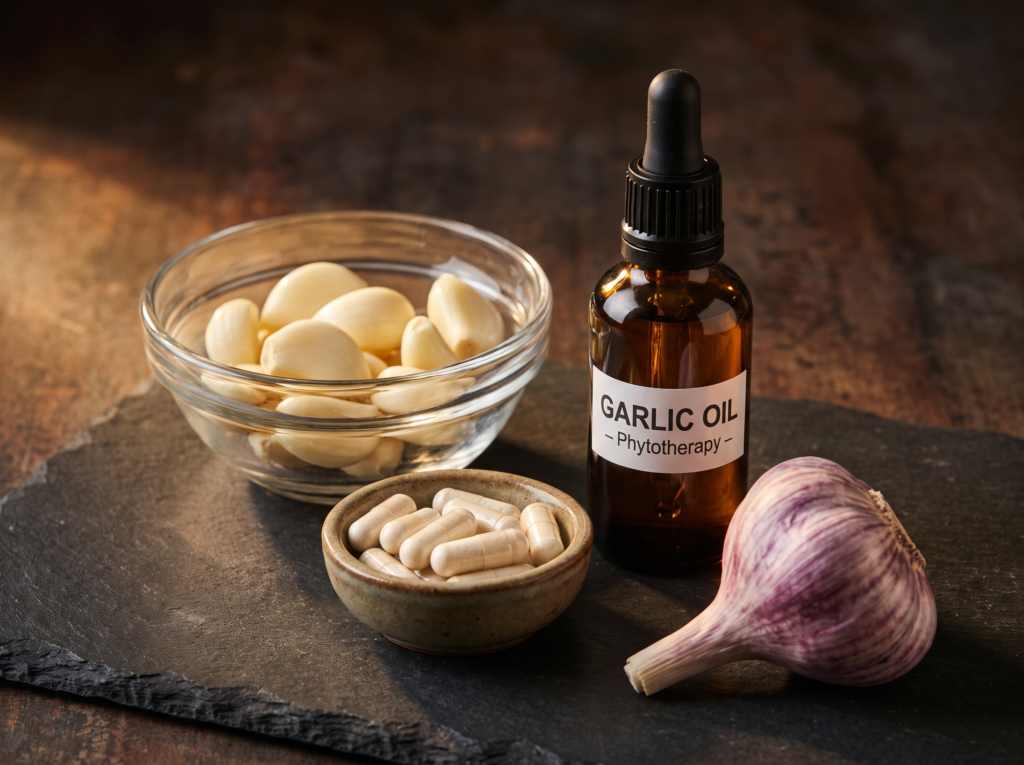
Garlic is a bulbous plant of the Amaryllidaceae family, a close relative of the onion, shallot and leek. Its bulb, called a “head”, divides into cloves covered with a thin white or purplish skin. Cultivated for more than five thousand years, it originated in Central Asia and spread very early throughout the Mediterranean basin.
In Morocco, it is known as touma (الثوم) and can be found both on souk stalls and at traditional herbalists. It is eaten fresh, dried, powdered, as a macerated oil or as concentrated extracts in food supplements.
Composition and active compounds of garlic
What makes this plant special is its chemistry. The intact clove contains alliin, an odourless and stable sulphur compound. When the clove is cut, crushed or chewed, an enzyme called alliinase rapidly converts alliin into allicin. It is this unstable compound that gives garlic its characteristic smell and that then breaks down into a family of sulphur derivatives with antioxidant, anti-inflammatory and antimicrobial properties.
The main constituents are as follows:
- Organosulphur compounds: alliin, allicin, ajoene, diallyl sulphides. These are the molecules responsible for most of the effects studied.
- S-allylcysteine: a stable, water-soluble sulphur compound, abundant in aged garlic extract.
- Antioxidant compounds: flavonoids and polyphenols.
- Micronutrients: manganese, selenium, vitamin B6 and vitamin C, in modest amounts at culinary doses.
- Fructans: prebiotic fibres that feed the gut microbiota.
An important nuance: the form of the product changes its profile. Crushed fresh garlic releases allicin; aged garlic extract, obtained by prolonged maceration, contains none but is standardised for S-allylcysteine. Both forms have been the subject of scientific research, but they are not interchangeable.
The health benefits of garlic
Support for cardiovascular health
This is the best-documented use. Studies in people with high blood pressure report an average reduction in systolic blood pressure of around 8.7 mmHg with standardised preparations, as well as a reduction in total cholesterol of about 17 mg/dL. These effects remain modest and complementary: they are in no way a substitute for blood pressure-lowering or cholesterol-lowering treatment prescribed by a doctor.
Antimicrobial properties
Allicin and its derivatives show activity against many bacteria, yeasts and fungi in the laboratory. This explains the popular use of this plant during colds, often combined with honey or lemon. However, clinical data in humans remain more limited than in vitro results.
Antioxidant action
The sulphur compounds help defend the body against oxidative stress, a mechanism involved in cellular ageing and several chronic diseases. Aged extract is particularly studied in this respect because of its richness in S-allylcysteine.
Immune support
Several trials suggest a reduction in the frequency or duration of colds in people regularly taking a standardised extract. The quality of the studies varies, so this benefit should be seen as support rather than guaranteed protection.
Digestive comfort
The fructans it contains act as prebiotics and promote a balanced gut microbiota. Conversely, in sensitive people or those with irritable bowel syndrome, these same fermentable fibres can cause bloating and discomfort.
How to use it and dosage
Dosages vary considerably depending on the form chosen. The commonly accepted guidelines are as follows:
- Fresh garlic: one to two cloves a day, crushed and left to stand for about ten minutes before eating, to give the alliinase time to produce allicin.
- Standardised powder (about 1% allicin): 600 to 1,200 mg a day, generally split into two or three doses.
- Extract standardised to 1.3% allicin: 200 to 400 mg, three times a day.
- Aged garlic extract: 600 to 900 mg a day, standardised for S-allylcysteine.
Cardiovascular benefits are not seen within a few days: a course of at least three months is usually needed to expect a measurable effect. Enteric-coated capsules limit odour and stomach irritation, and it is best to take the supplement with a meal.
Precautions and contraindications
At dietary doses, this plant is very well tolerated. As a concentrated course, however, several situations call for vigilance:
- Anticoagulant and antiplatelet treatments (warfarin, aspirin, clopidogrel): the risk of bleeding may be increased. Medical advice is essential.
- Planned surgery: it is advisable to stop supplementation one to two weeks before the procedure.
- Digestive disorders: reflux, heartburn, bloating and nausea are the most common side effects, especially on an empty stomach.
- Pregnancy and breastfeeding: culinary use is fine, but concentrated supplements are not recommended without professional advice.
- Allergy to plants of the Allium genus: absolute contraindication.
- Skin application: applied neat and for a long time to the skin, it can cause chemical burns. This use should be avoided.
Some interactions with antiretroviral drugs or drugs metabolised by the liver have also been reported. If you are on long-term treatment, it is wise to talk to your doctor or pharmacist before starting a course.
Frequently asked questions about garlic
Should it be eaten raw or cooked?
Cooking quickly deactivates alliinase and therefore reduces the formation of allicin. To preserve as many sulphur compounds as possible, it is recommended to crush the clove, wait about ten minutes, then add it at the end of cooking. Cooked garlic still has nutritional and culinary value, but its active profile is different.
How can you limit garlic breath?
The sulphur derivatives are partly eliminated through the lungs, which explains why the smell lingers. Chewing parsley, mint or cardamom seeds, drinking milk or eating an apple can reduce the effect. Aged extracts and enteric-coated capsules are much less odorous.
Can it be combined with other plants?
Yes, it is frequently combined with lemon, honey, ginger or turmeric in traditional preparations. These combinations are safe at dietary doses. However, combining several concentrated supplements with blood-thinning effects, such as ginger and ginkgo, warrants professional advice.
Conclusion
Garlic combines a long tradition of use with a substantial body of scientific evidence, particularly in the cardiovascular field. Its effects are real but measured: they are part of an overall healthy lifestyle rather than a substitute for treatment. Choosing a standardised form, respecting the dosages, planning a sufficiently long course and checking for interactions with your medication are the four rules to remember to get the most out of it.
Further reading
- Garlic (Allium sativum) — full botanical profile on Wikipedia
- Turmeric: benefits, dosage and precautions
- Ginger: benefits, dosage and precautions
- Spirulina: benefits, dosage and precautions
This article is for information only and does not replace medical advice. Consult a healthcare professional before starting any course, particularly if you are currently undergoing treatment, are pregnant or have a chronic condition.