Honey is one of the oldest and most cherished natural foods in Morocco, enjoyed both as an everyday treat and as a traditional remedy. In this article, discover what honey really contains, its main benefits, how to consume it and the precautions you should know.
What is honey?
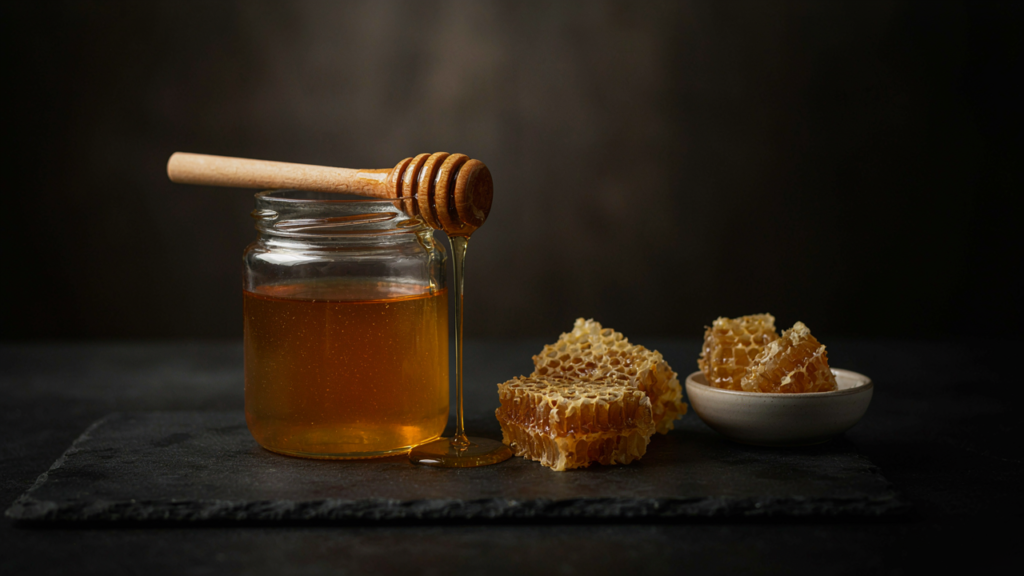
Honey is a sweet substance made by bees from flower nectar or honeydew. The bees transform it, dehydrate it and store it in the cells of the hive. Its colour, taste and texture vary depending on the flowers foraged and the region of production.
Morocco offers a wide variety of honeys thanks to its diverse flora. These include thyme honey, euphorbia honey (daghmous), orange blossom honey, jujube honey (sidr), eucalyptus honey and wildflower honey. Each type has its own flavour and uses.
Composition and active compounds of honey
Honey is made up mostly of simple sugars, mainly fructose and glucose, as well as water. It also contains small amounts of enzymes, organic acids, minerals, vitamins and plant compounds such as polyphenols and flavonoids.
- simple sugars (fructose and glucose), a source of quick energy;
- enzymes supplied by the bees, such as glucose oxidase;
- polyphenols and flavonoids with antioxidant properties;
- traces of minerals (potassium, calcium, magnesium) and vitamins;
- organic acids that give honey its natural acidity.
The exact composition depends on the floral source: a dark honey is generally richer in antioxidant compounds than a very light one.
The benefits of honey
A natural source of energy
Thanks to its quickly absorbed simple sugars, honey provides the body with energy. It is popular at breakfast or before exercise as a replacement for white sugar, while still being best consumed in moderation.
A traditional ally for the throat and coughs
Honey has long been used to soothe sore throats and coughs, often combined with lemon, thyme or ginger. Its thick texture coats the throat and provides a feeling of comfort. Several studies suggest a beneficial effect on night-time coughs in children over one year old, although it does not replace medical advice.
Antioxidant properties
The polyphenols and flavonoids in honey help fight oxidative stress. This effect remains modest at the amounts usually consumed, but it adds to honey’s nutritional value compared with refined sugar.
Support for digestion
Traditionally, honey is taken on an empty stomach in warm water or herbal tea for digestive comfort. Some honeys, such as euphorbia honey, are renowned for their digestive use in Moroccan folk medicine, although scientific evidence remains limited.
Use on the skin and minor wounds
Medical-grade honey, of controlled quality, is used in healthcare settings to promote the healing of certain wounds. At home, honey is also used as a face mask to moisturise the skin. For any wound, ask a healthcare professional for advice.
How to use honey: directions and dosage
Honey is still a sugar, so it should be consumed in moderation. Nutritional guidelines recommend limiting added sugars, which include honey. In practice, one to two teaspoons a day (about 5 to 10 g) is a common guideline for a healthy adult.
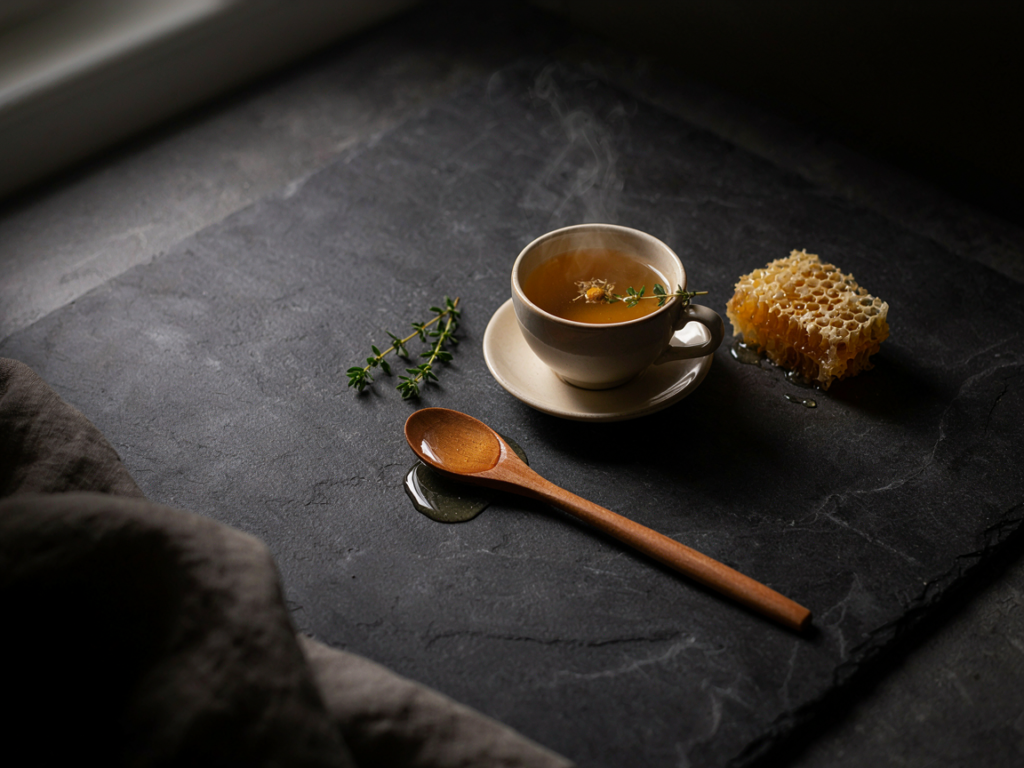
- in a warm herbal tea (thyme, ginger, lemon verbena): one teaspoon, added once the drink is no longer scalding;
- by the spoonful, on its own, to soothe the throat;
- on bread, yoghurt or oat flakes, as a replacement for sugar;
- as a face mask, applied to clean skin for 10 to 15 minutes.
Avoid heating honey to high temperatures, as heat damages its enzymes and aromas. Store it away from light, in a tightly closed jar, at room temperature.
How to choose a good honey
Choose a honey whose floral and geographical origin is clearly stated, from an identified beekeeper or cooperative. Be wary of unusually low prices, which may indicate honey cut with sugar syrup. Crystallisation is not a defect: it is a natural phenomenon that does not affect the quality of the honey.
Precautions and contraindications
- Never give honey to a child under 12 months old, due to the risk of infant botulism.
- People with diabetes should ask their doctor for advice, as honey raises blood sugar levels.
- Honey is high in calories: be careful if you are overweight or on a low-calorie diet.
- If you are allergic to bee stings, pollen or hive products, avoid it or consult a doctor.
- Brush your teeth after eating it to limit the risk of tooth decay.
FAQ about honey
How much honey can you eat per day?
One to two teaspoons a day is enough for a healthy adult, taking into account all the sugars consumed during the day.
Is crystallised honey still good?
Yes. Crystallisation is natural and depends on the proportion of glucose. To liquefy it, place the jar in a warm water bath without exceeding a moderate temperature.
Can you give honey to a baby?
No, never before the age of 12 months, because of the risk of infant botulism.
Conclusion
Honey is a treasured food of Moroccan heritage, valued for its taste, its energy content and its traditional uses. When chosen for its quality and consumed in moderation, it naturally has its place in a balanced diet.
Further reading
- External source: the Wikipedia page on honey
- Propolis: benefits, dosage and precautions
- Royal jelly: benefits, dosage and precautions
- Bee pollen: benefits, dosage and precautions
This article is for information only and does not replace the advice of a doctor or pharmacist. Consult a healthcare professional before any use, especially if you are pregnant, ill or currently undergoing treatment.