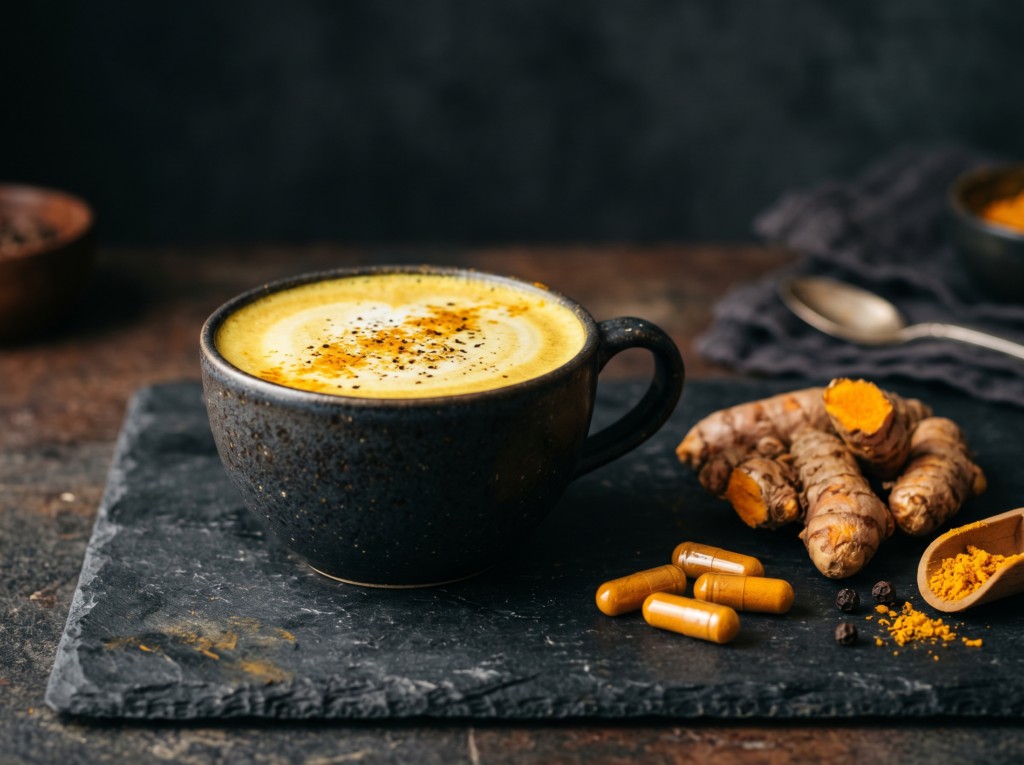
Turmeric is one of the most studied health spices in the world, and its popularity keeps growing in Morocco, where it features both in cooking and in dietary supplements. Renowned for its anti-inflammatory and antioxidant properties, turmeric draws most of its virtues from a golden-yellow pigment: curcumin. In this article, we take stock of its real benefits, the right way to use it, the recommended dosage and the essential precautions to know before consuming it.
What is turmeric?
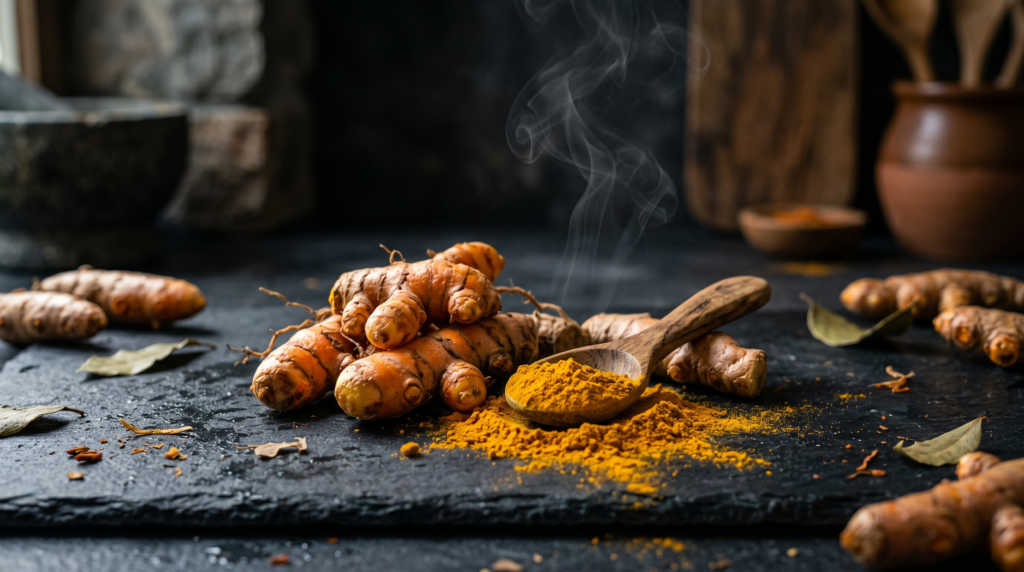
Turmeric (Curcuma longa) is a herbaceous plant of the Zingiberaceae family, the same as ginger. Its rhizome is used, an underground root that is dried and then ground into a characteristic yellow-orange powder. Native to South Asia, it has been cultivated for more than 4,000 years and holds a central place in Ayurvedic medicine as well as in Indian cuisine, where it is one of the major ingredients of curry.
In Morocco, turmeric (“kharkoum”) is valued both as a colouring spice and as a traditional remedy, often recommended by herbalists to support digestion and soothe inflammation.
Composition and active compounds of turmeric
The richness of turmeric rests on a group of compounds called curcuminoids, the most important of which is curcumin. It is this molecule that gives the spice its golden colour and that concentrates the majority of its biological effects.
- Curcumin and curcuminoids: powerful natural antioxidants and anti-inflammatories.
- Essential oils (turmerone): they contribute to the digestive properties.
- Polysaccharides and fibre: support intestinal comfort.
- Vitamins and minerals: notably iron, manganese and vitamin B6.
An important point: curcumin is poorly absorbed by the body when consumed on its own. This is why it is often combined with black pepper, whose piperine can strongly increase its absorption, or with a fatty substance, since curcumin is fat-soluble.
The benefits of turmeric
A natural anti-inflammatory
Turmeric’s main asset is its anti-inflammatory action. Curcumin acts on several mediators of inflammation in the body, which explains the interest shown in it for chronic low-grade inflammation. A study published in 2014 on patients suffering from knee osteoarthritis even showed that a turmeric extract could relieve pain comparably to a conventional anti-inflammatory, with fewer digestive disorders.
Support for digestion and the liver
Traditionally, turmeric is used to stimulate the secretion of bile and facilitate the digestion of fats. It can help reduce feelings of heaviness and bloating after meals. Its compounds also help protect liver cells against oxidative stress.
An antioxidant action
Curcumin is an antioxidant that helps neutralise free radicals, the molecules involved in cellular ageing. It is also thought to stimulate the body’s natural antioxidant defences, reinforcing the protection of cells.
Joint comfort
Thanks to its anti-inflammatory properties, turmeric is often suggested to accompany joint comfort, particularly in people who are active or prone to stiffness. It does not replace a medical treatment, but can fit into an overall healthy lifestyle.
How to use turmeric and its dosage
Turmeric is consumed in several ways depending on the goal sought:
- In cooking: one teaspoon of powder per day, added to dishes, tagines, soups or rice, together with a little black pepper and fat.
- As a drink: the famous “golden milk” (golden latte), made with plant-based milk, turmeric and a pinch of pepper.
- As a dietary supplement: standardised extracts generally provide between 500 and 1,000 mg of curcumin per day, depending on the formulations.
For dietary use, one teaspoon per day is enough to enjoy the benefits of turmeric. For concentrated supplements, it is preferable to follow the dosage indicated on the packaging and to seek advice from a healthcare professional.
Precautions and contraindications
Consumed as a spice, turmeric is very well tolerated. The precautions mainly concern heavily dosed supplements, particularly those whose bioavailability is increased by piperine or micellar forms.
- Biliary disorders: turmeric is not advised in cases of stones or obstruction of the bile ducts.
- Anticoagulant treatments: it can interact with anticoagulants, antidiabetics and certain anti-inflammatories.
- Pregnancy and breastfeeding: to be avoided at therapeutic doses, especially combined with piperine.
- Digestive effects: at high doses, it can cause nausea, heartburn or diarrhoea.
In 2022, the French health authorities (ANSES) recalled the vigilance required with regard to certain highly concentrated curcumin supplements, following reports of adverse hepatic effects. One more reason to favour quality products and a reasonable dosage.
Frequently asked questions about turmeric
Is turmeric effective without black pepper?
Curcumin is better absorbed in the presence of piperine (black pepper) or a fatty substance. Without these combinations, part of the benefits remains limited by the poor intestinal absorption.
Can you take turmeric every day?
Yes, at a dietary dose (about one teaspoon per day), turmeric can be consumed daily by most healthy adults. For supplements, it is better to follow the recommended duration and dosage.
Does turmeric make you lose weight?
Turmeric is not a fat burner. It can support digestion and fit into a balanced diet, but no significant slimming effect has been demonstrated for it on its own.
Conclusion
Turmeric is a precious spice, both flavourful and beneficial for the body thanks to its anti-inflammatory and antioxidant curcumin. Used with common sense, combined with black pepper and a little fat, it is a natural ally of digestive and joint comfort. As with any supplement, moderation and the advice of a healthcare professional remain the best guarantees of safe use.
To go further
To explore the subject further, consult the reference page on turmeric (Curcuma longa) on Wikipedia. Also discover our other articles on plants and supplements: the benefits of spirulina, the benefits of moringa and ginger, turmeric’s cousin.
This article is provided for informational purposes and does not replace medical advice. Seek advice from your doctor or pharmacist before any use, particularly in the event of treatment, pregnancy or a health problem.