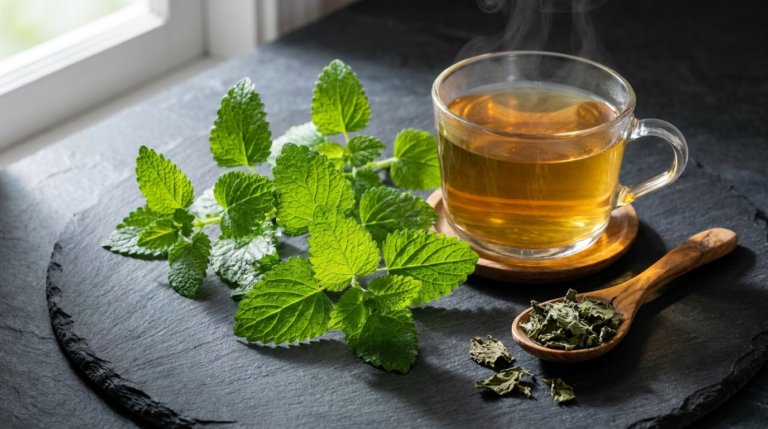
Mallow, known in Morocco as khoubiza or bakoula, is one of the most familiar plants in Moroccan herbal medicine. Every spring, its round leaves and purple flowers spread across fields, roadsides and souk stalls. Eaten as a traditional salad or brewed as a herbal tea, this unassuming plant hides remarkable soothing properties that have been known since Antiquity.
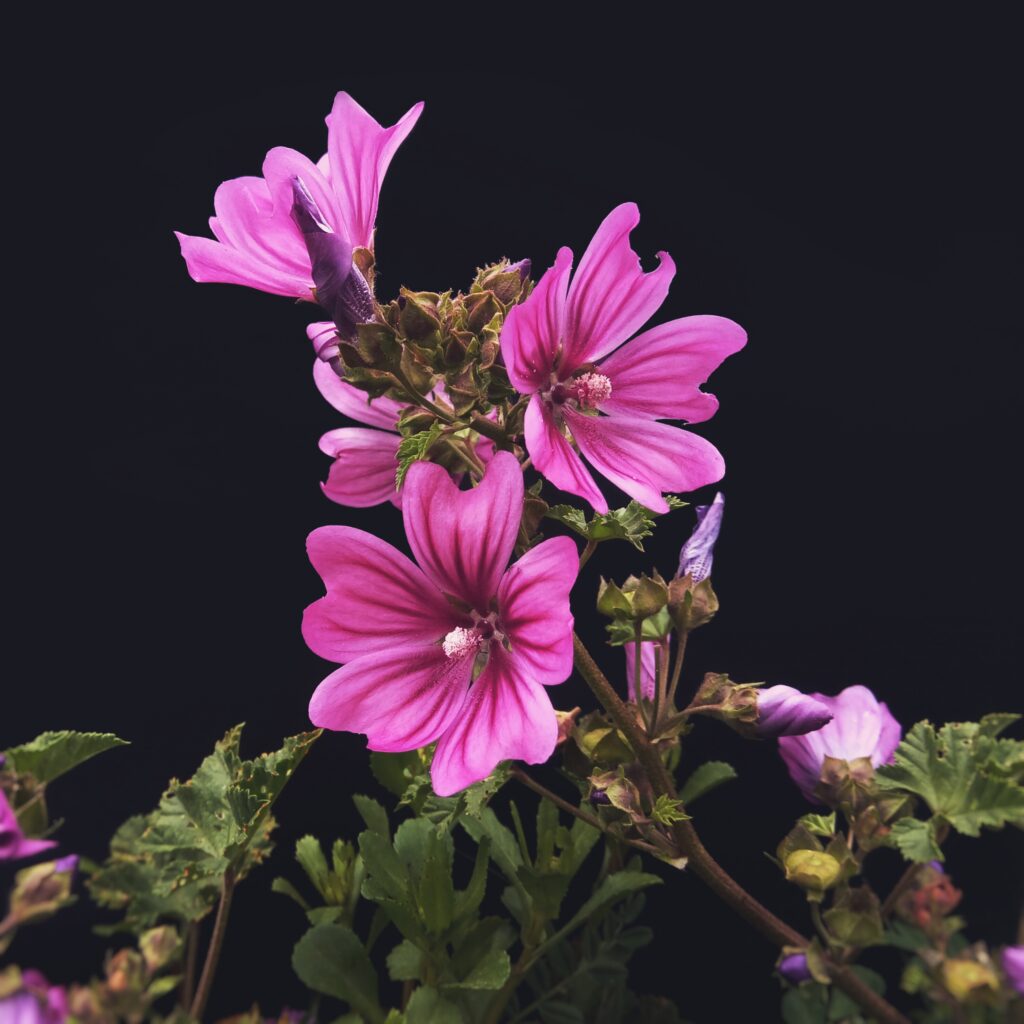
Rich in mucilage, mallow (Malva sylvestris) is traditionally used to calm a dry cough, soothe throat irritation and ease digestion. In this article, we review its composition, its benefits, how to use it, the recommended dosage as an infusion and the precautions to know before using it.
What is mallow (khoubiza)?
Common mallow (Malva sylvestris) is a herbaceous plant of the Malvaceae family, the same family as hibiscus and marshmallow. It grows wild throughout the Mediterranean basin, and Morocco is full of it after the winter and spring rains. It is recognisable by its rounded, velvety leaves and its mauve to purple flowers streaked with darker veins.
In Morocco, khoubiza plays a dual role: as a vegetable, cooked into a warm salad (the famous bakoula with olives and preserved lemon), and as a medicinal plant, used in herbal teas and externally. Moroccan herbalists sell it dried, as leaves or flowers, on its own or blended with other soothing plants.
Composition and active compounds
The value of this plant lies above all in its richness in mucilage, soluble fibres that swell on contact with water and form a protective gel over the mucous membranes. Its composition includes in particular:
- Mucilage: abundant in the flowers and leaves, it soothes the throat, stomach and intestines;
- Anthocyanins (including malvin): antioxidant pigments that give the flowers their purple colour;
- Flavonoids: antioxidant and anti-inflammatory compounds;
- Tannins: in small amounts, with astringent and soothing properties;
- Vitamins A, B and C as well as minerals (calcium, iron, potassium, magnesium) in the young leaves eaten as a vegetable.
The health benefits of mallow
From leaves to flowers, mallow is packed with soothing virtues that explain its popularity in Moroccan homes. Here are its five main benefits, as reported by traditional use and the herbal medicine literature.
1. It soothes a dry cough and an irritated throat
This is mallow’s best-known use in herbal medicine. Thanks to their mucilage, the flowers and leaves coat the throat with a protective film that calms a dry cough, hoarseness and the tickling caused by irritation of the mouth and pharynx. This traditional use is recognised in European herbal medicine, and khoubiza tea remains a much-loved grandmother’s remedy in winter.
2. It soothes the stomach and eases digestion
Mucilage has the same protective effect on the digestive lining. The infusion is traditionally used to relieve mild heartburn, bloating and digestive discomfort, especially after heavy or spicy meals.
3. It acts as a gentle laxative
By swelling in the intestine, the soluble fibres hydrate and lubricate the stool. The plant is therefore used for occasional constipation, including in sensitive people, because its action is mechanical and non-irritating, unlike stimulant laxatives.
4. It cares for the skin and mucous membranes
Used externally, compresses and lotions made from this flower are traditionally applied to irritated skin, redness, insect bites and minor skin inflammation. As a mouthwash or gargle, a concentrated infusion soothes mouth ulcers, sensitive gums and sore throats.
5. A nutritious, antioxidant plant
Eaten as a vegetable, as in bakoula, the young leaves provide fibre, vitamins and minerals, while anthocyanins and flavonoids help fight oxidative stress. A fine example of a plant that is both food and remedy, just as Moroccan tradition likes them.
How to use it and dosage
As an infusion
Use 1 to 2 teaspoons of dried flowers or leaves (about 1.5 to 3 g) per 200 ml cup of water that is simmering but not boiling, to preserve the mucilage. Cover and leave to steep for 10 minutes, strain and drink 2 to 3 cups a day, especially for a dry cough or digestive discomfort.
For external use
Prepare a more concentrated infusion, let it cool until lukewarm, then use it as a compress on irritated areas, as a mouthwash or as a gargle, one to three times a day as needed.
In cooking
The young leaves are cooked like spinach: steamed and then sautéed with garlic, parsley, coriander, olive oil, olives and preserved lemon, they make bakoula, an iconic salad of Moroccan cuisine.
Precautions and contraindications
The plant is very well tolerated at usual doses and has no known toxicity. A few common-sense precautions nevertheless apply:
- Mucilage can slow the absorption of medicines and iron: leave at least one hour between the herbal tea and any medication;
- As a precaution, pregnant or breastfeeding women should seek the advice of a healthcare professional before regular use;
- A cough that lasts more than a week, or is accompanied by fever or breathing difficulty, requires medical attention;
- Only harvest the plant in unpolluted areas, away from roads and sprayed fields.
FAQ
Are mallow and marshmallow the same plant?
No, but they are cousins. Both belong to the Malvaceae family and are rich in mucilage. Marshmallow (Althaea officinalis) is even more concentrated in mucilage, but khoubiza is far more common and accessible in Morocco.
Can you drink khoubiza tea every day?
Drinking 2 to 3 cups a day for a few days to a few weeks is generally well tolerated. Outside periods of discomfort (cough, sluggish digestion), there is no need to drink it daily all year round.
Which part of the plant should you use?
The flowers and leaves are used in herbal teas and externally; the young leaves are eaten as a vegetable. At the herbalist’s, you will most often find the dried flowers, which are the richest in mucilage and anthocyanins.
Conclusion
A humble field plant turned star of Moroccan tables and herbal teas, mallow fully deserves its place in a family’s natural medicine cabinet. Soothing for the throat, stomach and skin, and nutritious on the plate, it illustrates the richness of Morocco’s plant heritage. Used at the recommended doses and with the usual precautions, it is a gentle and versatile everyday ally.
Further reading
- Source: Malva sylvestris — Wikipedia
- Lemon verbena: benefits, dosage and precautions
- Nettle: benefits, dosage and precautions
- Spirulina: benefits, dosage and precautions
This article is provided for information purposes only and does not replace medical advice. Consult a healthcare professional before using a medicinal plant, particularly if you are pregnant or breastfeeding, have a chronic illness or are currently undergoing treatment.
Photo credits: Christian Ferrer and Rouibi Dhia Eddine Nadjm, CC BY-SA 4.0, via Wikimedia Commons.