Nettle is a medicinal plant long dismissed as a simple weed, yet it now ranks among the most studied remineralizing plants in herbal medicine. In Morocco, nettle (known as “harriga”) is highly sought after, particularly for vitality, joint comfort, and hair beauty. In this complete guide, we review nettle’s composition, its benefits, how to use it, its dosage, and its precautions.
What is nettle?
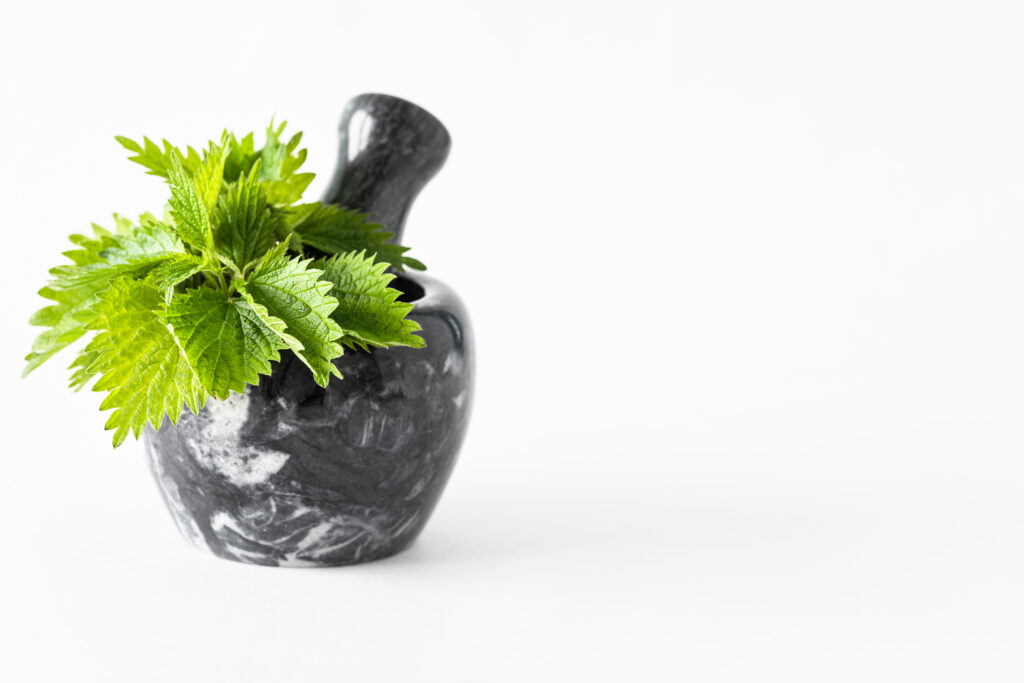
Stinging nettle (Urtica dioica), also called common nettle, is a wild perennial plant found across Europe, Asia, North America, and the Mediterranean basin, including Morocco. Its stems and leaves are covered with stinging hairs that release irritating substances on contact with skin, which is how the plant gets its name.
Despite its stinging nature, nettle is an entirely edible plant that has been used since antiquity in both cooking and herbal medicine. Two parts are mainly used: the leaves, rich in minerals and vitamins, and the root, which has different properties.
Composition and active compounds of nettle
Nettle’s nutritional richness explains much of its benefits. The leaves are particularly concentrated in:
- minerals: iron, calcium, magnesium, and silica;
- vitamins: vitamin C, B-group vitamins, and vitamin K;
- chlorophyll and plant proteins;
- flavonoids and phenolic compounds with antioxidant properties;
- organic acids.
Nettle root has a distinct composition: it contains lectins, polysaccharides, sterols, and lignans. These give it a traditional role in supporting male urinary comfort, distinct from the leaves’ properties.
Health benefits of nettle
Thanks to its nutrient density, nettle is traditionally associated with several benefits. Some of these properties are backed by studies, while others are rooted more in traditional use.
A remineralizing, fortifying plant
Rich in iron, calcium, and magnesium, nettle is traditionally used to fight temporary fatigue (asthenia) and support the body in cases of anemia. This is one of the reasons it is valued as a natural tonic, especially at the change of season.
Support for joint comfort
Thanks to its richness in minerals (calcium, magnesium, silicon), nettle is traditionally used to support joint and muscle comfort. It is often mentioned as an accompaniment for rheumatism and joint pain.
A diuretic and detoxifying action
Nettle leaves are traditionally used to promote kidney elimination by increasing urine volume. This diuretic and detoxifying property makes it a popular plant for detox and drainage regimens.
An ally for hair, skin, and nails
The silica in nettle takes part in collagen formation, a structural protein that contributes to the strength of tissues, nails, and hair. This is why nettle is traditionally favored, both taken internally and applied externally, to strengthen hair fiber and regulate excess scalp sebum.
How to use nettle and dosage
Nettle can be consumed in several forms: as an infusion, powder, capsules, mother tincture, or fresh in food (soups, purées). Leaf tea remains the most common way to use it.
- Leaf infusion: 8 to 12 g of dried leaves per day, steeped for about 10 minutes in hot water.
- Root decoction: 4 to 6 g of dried root per day.
- External use: the cooled infusion can be used as a hair rinse for the final rinse.
For an ongoing regimen, nettle is often taken in three-week courses, renewable after a break. It is advisable to follow the dosages indicated on the products purchased and to seek the advice of a healthcare professional if in doubt.
Precautions and contraindications
Although natural, nettle is not without precautions for use. It should be avoided or used only under medical supervision in the following situations:
- pregnant or breastfeeding women and young children, as a precaution;
- people with kidney or heart insufficiency, due to its diuretic effect;
- people on anticoagulant treatment, as nettle is rich in vitamin K;
- people being treated for hypertension or diabetes, for whom medical advice is recommended.
The fresh plant should never come into contact with the eyes or mucous membranes because of its stinging hairs. If in doubt, ask your doctor or pharmacist for advice before starting a course of nettle.
FAQ about nettle
Does nettle help you lose weight?
Nettle is not a fat burner. Its diuretic and draining action may support a figure-toning routine, but it does not replace a balanced diet and regular physical activity.
How many cups of nettle tea per day?
In practice, 2 to 3 cups of infusion per day provide the 8 to 12 g of dried leaves usually recommended. It is best to start gently to observe tolerance.
Is nettle good for hair?
Thanks to its silica and mineral content, nettle is traditionally used to strengthen hair and limit excess sebum. It is used both as an internal regimen and as an external hair rinse.
Conclusion
Nettle is a plant worth rediscovering: remineralizing, diuretic, and rich in nutrients, it supports vitality, joint comfort, and hair beauty. By respecting dosages and precautions for use, it makes for a valuable natural ally within a balanced lifestyle.
To go further
To explore the plant’s botany further, see the reference entry on stinging nettle on Wikipedia. Discover other plants and supplements on our blog: the benefits of spirulina, the benefits of moringa, and rosemary, benefits and dosage.
This article is provided for informational purposes only and does not replace medical advice. Consult a healthcare professional before starting any regimen, particularly if you are undergoing treatment, pregnant, or living with a chronic condition.