St John’s wort (Hypericum perforatum) is one of the most widely studied medicinal plants in herbal medicine, particularly for its effect on mood and emotional well-being. But this powerful plant also calls for special caution, as it interacts with many medications.
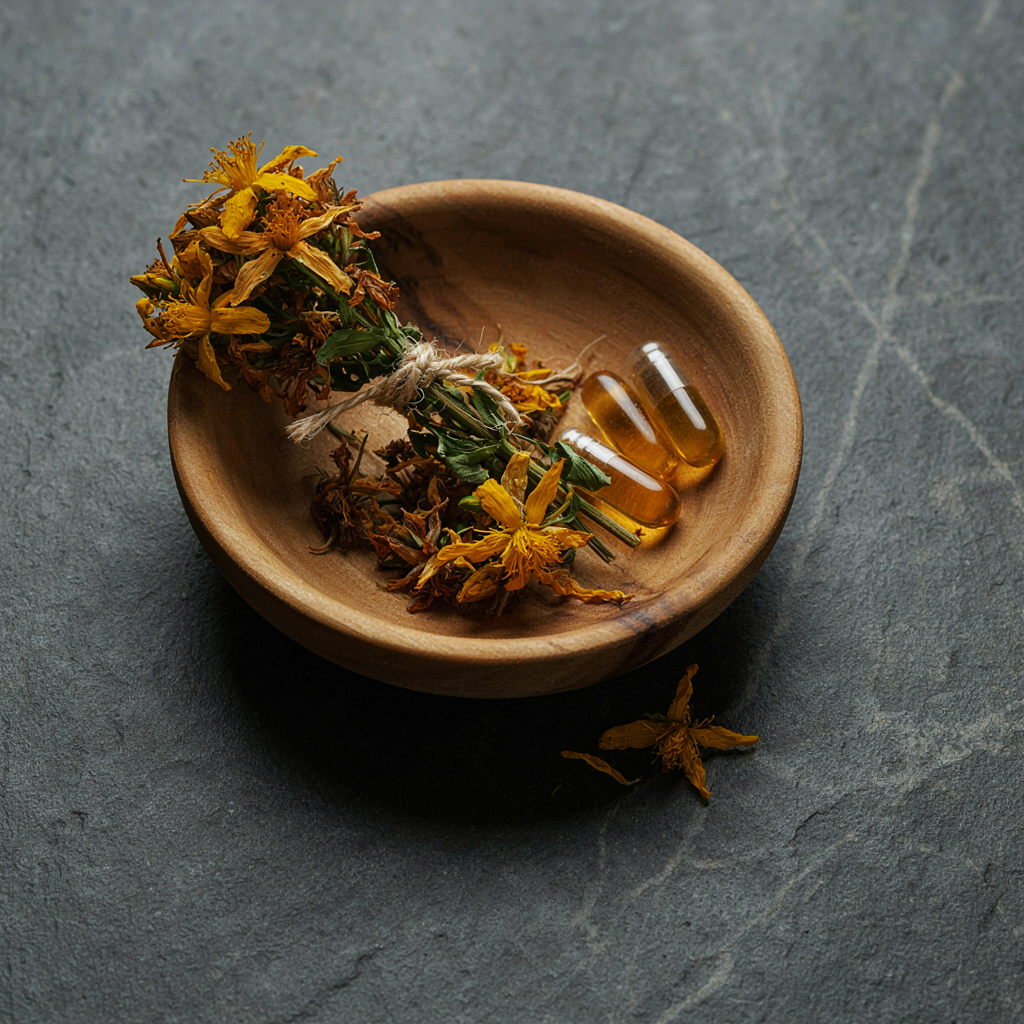
In this article, you will learn what St John’s wort is, its active compounds, its benefits, how to use it and the essential precautions to take before trying it.
What is St John’s wort?
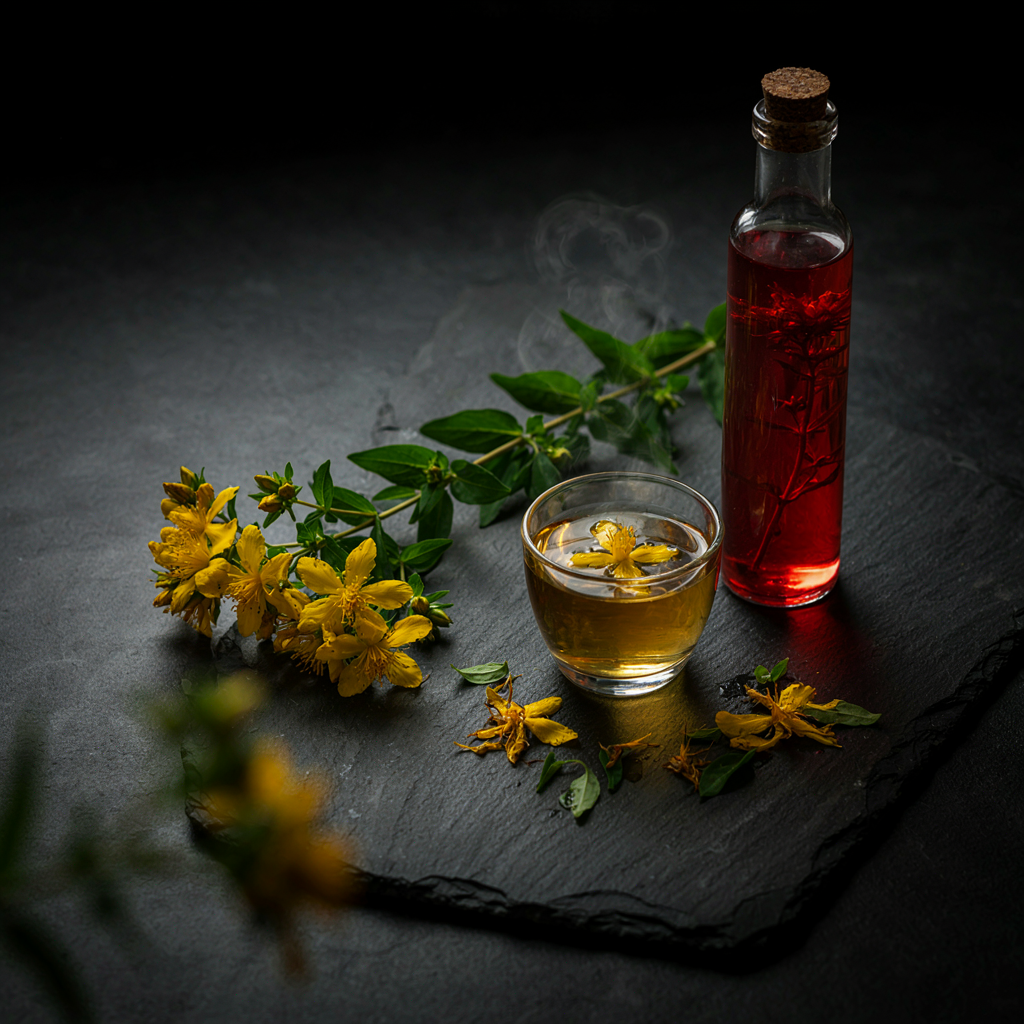
St John’s wort is a perennial plant with bright yellow flowers that blooms in summer, around the feast of Saint John, hence its English name. When its leaves are held up to the light, they appear to be pierced by thousands of tiny translucent dots: these are secretory glands, which gave the plant its French name, millepertuis (“a thousand holes”).
The flowering tops are the main part used, dried for herbal tea, as a dry extract (capsules), as a mother tincture or as a red oil obtained by macerating the flowers in oil. St John’s wort grows in the temperate regions of Europe, North Africa and Asia.
Composition and active compounds of St John’s wort
St John’s wort contains several families of noteworthy compounds:
- hypericin and pseudohypericin, red pigments responsible for the colour of the oil;
- hyperforin, a compound considered important for the effect on mood;
- flavonoids (rutin, quercetin, hyperoside) with antioxidant properties;
- tannins and small amounts of essential oils.
The benefits of St John’s wort
Mood support
The best-documented use of St John’s wort concerns mild to moderate depressive states and temporary low mood. Standardised extracts have been studied in this context, but they require medical advice: St John’s wort must never replace a prescribed treatment without your doctor’s approval.
Relaxation and sleep
Traditionally, St John’s wort has been used to ease nervousness and mild tension. It is sometimes used to support periods of stress or minor sleep problems.
External use: skin and muscles
St John’s wort oil, known as red oil, is traditionally applied to the skin to soothe minor irritations, mild sunburn (after sun exposure, never before) and muscle aches. It is also used for local massage.
An antioxidant effect
Thanks to its flavonoids, St John’s wort helps fight oxidative stress, like many plants rich in polyphenols.
How to use St John’s wort and dosage
The dosage depends on the form used. The guidelines below are for information only; always follow the product leaflet and the advice of a healthcare professional.
- Herbal tea: about 1 to 2 g of dried flowering tops (one teaspoon) steeped for 10 minutes in a cup of hot water, 1 to 3 cups a day.
- Dry extract capsules: follow the dosage stated on the packaging, usually taken in one to three doses a day with meals.
- Red oil: for external use only, as a gentle massage on healthy or slightly irritated skin.
The effects on mood are not immediate: several weeks of regular use are generally needed. A course should be limited in time and monitored by a professional.
Precautions and contraindications of St John’s wort
This is the most important part. St John’s wort stimulates liver enzymes that break down many medications, which can reduce their effectiveness or cause serious interactions.
- Medications concerned: antidepressants, the contraceptive pill, anticoagulants, anti-rejection drugs for transplants, certain HIV or cancer treatments, heart medications. Always ask your doctor or pharmacist for advice.
- Photosensitivity: St John’s wort can make the skin more sensitive to the sun. Avoid prolonged sun exposure during the course.
- Pregnancy and breastfeeding: not recommended.
- Children: avoid without medical advice.
- Possible side effects: digestive upset, headaches, fatigue, dry mouth.
Do not combine it with an antidepressant without medical advice: this combination can trigger serotonin syndrome.
FAQ about St John’s wort
Is St John’s wort a natural antidepressant?
It has been studied for its effect on mood, but “natural” does not mean risk-free. It interacts with many medications and should be used with professional advice.
How long does it take to feel the effects of St John’s wort?
When effects do occur, they generally appear after several weeks of regular use, not within a few days.
Can you take St John’s wort with the contraceptive pill?
It is not recommended: St John’s wort can reduce the effectiveness of the pill. Talk to your doctor or pharmacist.
Conclusion
St John’s wort is a valuable plant for supporting mood, relaxation and soothing the skin, but its many drug interactions call for caution. Before starting any course, ask a healthcare professional for advice and choose quality products.
Further reading
- External source: St John’s wort (Hypericum perforatum) on Wikipedia
- Passionflower: benefits, dosage and precautions
- Valerian: benefits, dosage and precautions
- Ashwagandha: benefits, dosage and precautions
This article is for information only and does not replace the advice of a doctor or pharmacist. Consult a healthcare professional before using any plant or dietary supplement.