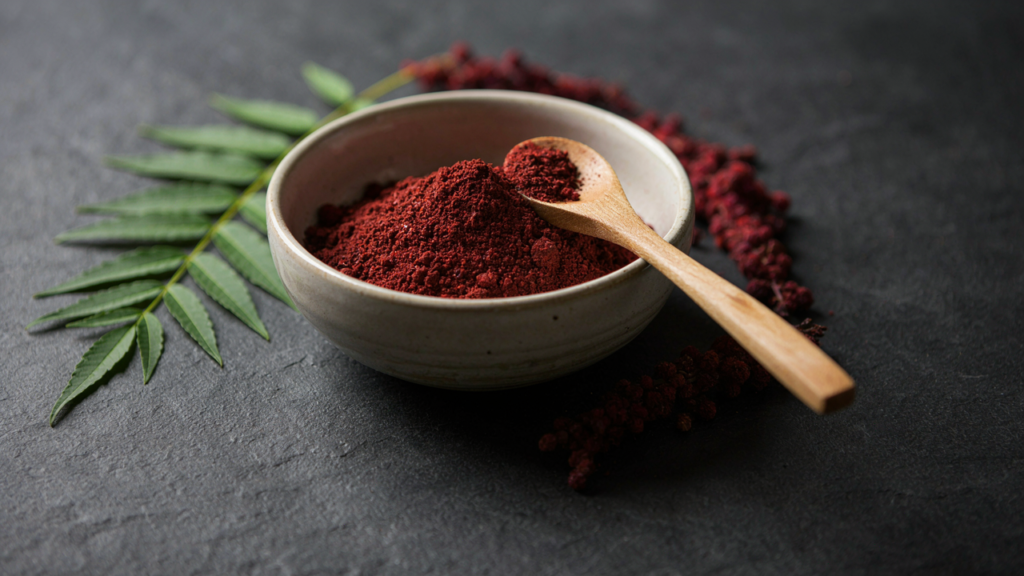
Sumac is a brick-red spice with a tangy flavour, made from the dried berries of a shrub native to the Mediterranean basin and the Middle East, Rhus coriaria. A staple of Levantine, Turkish and Iranian cuisine, it is also attracting growing interest in herbal medicine for its wealth of antioxidant compounds.
In this article, we review what is known about sumac: its composition, its potential benefits, how to use it day to day and the precautions to know before consuming it regularly.
What is sumac?
Tanner’s sumac (Rhus coriaria) belongs to the Anacardiaceae family. This shrub produces clusters of small red berries that are dried and then ground into a dark red powder. Its name comes from an Aramaic word meaning “red”.
For centuries, sumac was used as a souring agent before lemons arrived in certain regions. It is still used to season salads, grilled meats, fish, pulses and yoghurts. Its fruit and leaves also have a long history in traditional medicine.
It must not be confused with North American “poison sumac” (genus Toxicodendron), an irritant plant that has nothing to do with the edible spice.
Composition and active compounds of sumac
Research on sumac describes a profile rich in phenolic compounds. The main groups identified are as follows:
- tannins, responsible for its astringent flavour;
- flavonoids, including quercetin and myricetin;
- anthocyanins, which give the berries their red colour;
- organic acids, notably malic acid and citric acid, which account for its acidity;
- phenolic acids such as gallic acid.
These molecules explain the scientific interest in sumac for its antioxidant potential. Exact levels vary depending on the origin, the ripeness of the berries and the drying method.
The benefits of sumac
Caution is needed: most of the available data comes from laboratory studies, animal studies or small human trials. Sumac is a valuable health food, not a treatment.
A powerful antioxidant ally
Thanks to its polyphenols, sumac ranks among the spices with high antioxidant power in laboratory analyses. Antioxidants help limit oxidative stress, a process involved in cellular ageing.
Possible support for blood sugar balance
A few small clinical trials have observed a favourable effect of sumac powder on blood sugar in people with type 2 diabetes. These results remain preliminary and are in no way a substitute for medical follow-up.
Of interest for cardiovascular health
Preliminary research is looking at the effect of sumac on blood lipids and inflammatory markers. Here again, the evidence is limited and needs to be confirmed by larger studies.
Antimicrobial properties observed in the laboratory
Sumac extracts have shown activity against certain bacteria and fungi in the laboratory. This partly explains its traditional use in food preservation, but it does not prove effectiveness in humans.
A seasoning that reduces the need for salt
Its natural acidity makes it possible to season dishes with less salt, a simple advantage for a more balanced diet.
How to use sumac and what dosage?
There is no officially validated dose of sumac. In food, it is commonly used at half a teaspoon to one teaspoon per serving, sprinkled over dishes. For use beyond cooking, ask a healthcare professional for advice.
- Sprinkled over a salad, tomatoes or raw onions;
- As a seasoning on kebabs, chicken or fish;
- Mixed into yoghurt, hummus or olive oil;
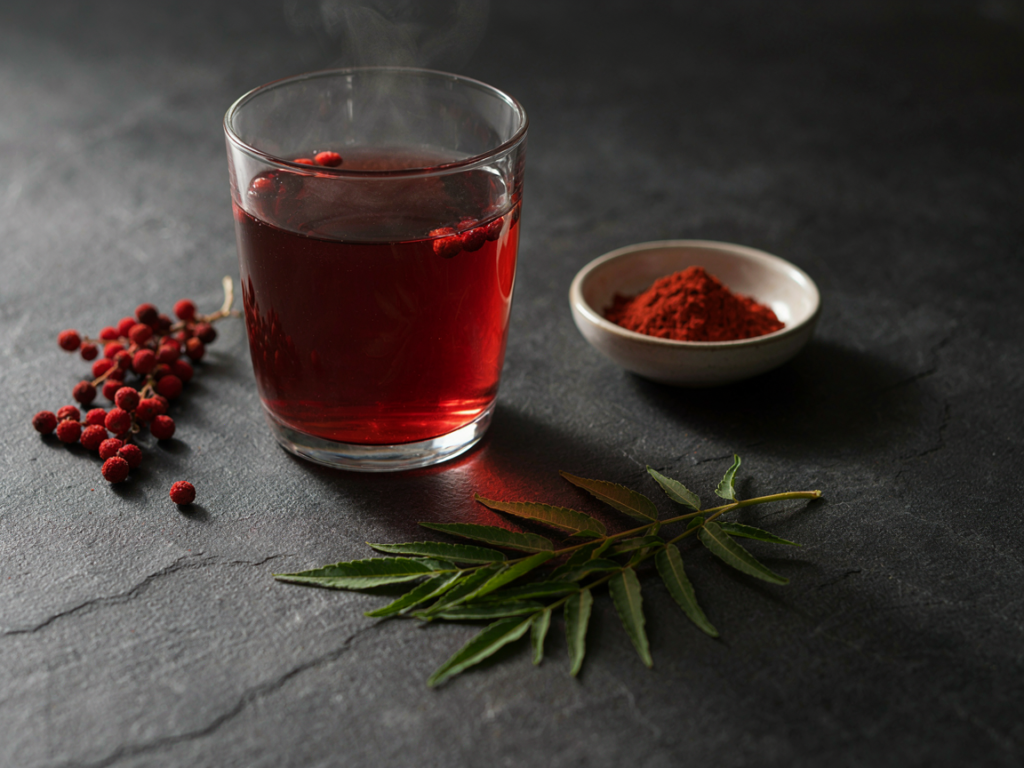
- As an infusion: about one teaspoon of powder or berries in a cup of hot water, strained after a few minutes;
- In the za’atar spice blend, of which it is a classic ingredient.
Choose pure, dark red sumac with no added salt or colouring, and store it away from light and moisture.
Precautions and contraindications
- Allergy: people allergic to plants of the Anacardiaceae family (cashew, pistachio, mango) should be careful and avoid sumac if in doubt.
- Diabetes: if you are taking diabetes medication, talk to your doctor before regular or concentrated use, as your blood sugar could be affected.
- Pregnancy and breastfeeding: due to insufficient data, limit yourself to occasional culinary use and seek advice.
- Blood pressure and treatments: if you take long-term medication, ask a healthcare professional for advice before using concentrated extracts.
- Quality: some commercial blends contain a lot of salt; read the label.
- Misidentification: never use wild-picked sumac unless the species has been identified with certainty.
FAQ about sumac
What does sumac taste like?
Sumac has a tangy, slightly fruity taste, similar to lemon but milder and rounder, with a hint of astringency.
Can sumac replace lemon?
Yes, in cooking, sumac is an excellent substitute for lemon juice in salads, marinades and grilled dishes, with the advantage of keeping for a long time in powder form.
Is sumac safe for everyday use?
In culinary amounts, sumac is generally well tolerated. However, people allergic to the Anacardiaceae family, pregnant women and people undergoing treatment should seek medical advice.
Conclusion
Sumac is a flavourful spice rich in polyphenols that is easy to include in everyday cooking. Its potential benefits are promising, but they still need to be confirmed by robust studies. Used sensibly, it adds flavour and a nutritional boost to your dishes.
Further reading
- External source: the Wikipedia entry on Tanner’s sumac
- Read also: the benefits of moringa
- Read also: the benefits of spirulina
- Read also: the benefits of ginseng
This article is provided for information only and does not replace the advice of a doctor or pharmacist. Consult a healthcare professional before any therapeutic use.