Tiger nut, known in Morocco as habb aziz (حب العزيز), is a small brown tuber found in almost every herbalist’s shop in the country. Often mistaken for a dried fruit, it is neither a nut nor an almond: it is the swollen root of a herbaceous plant, Cyperus esculentus, cultivated since Antiquity for its sweet flesh and its oil. Rich in fibre, resistant starch and unsaturated fatty acids, it is now back in the nutritional spotlight. Here is what we know about its composition, its benefits, a sensible dosage and the precautions to follow.
What is tiger nut (habb aziz)?
The edible tiger nut sedge (Cyperus esculentus L.) belongs to the Cyperaceae family, the family of rushes and sedges. Underground, the plant develops small wrinkled tubers the size of a chickpea, with a mild flavour reminiscent of almond and hazelnut. It is this similarity in taste that has earned it its many nicknames: louz el ard (“earth almond”) in Moroccan Arabic, chufa in Spain, and tiger nut in the English-speaking world.
It is eaten dried and rehydrated, roasted, ground into flour, or pressed to extract its oil. Its most famous preparation is still horchata de chufa, a milky plant-based drink born in Valencia, with equivalents found throughout North and West Africa. In Morocco, it is mostly sold loose at the attar (traditional herbalist), where it is enjoyed as a snack and as an ingredient in traditional fortifying blends.
Composition and active compounds of tiger nut
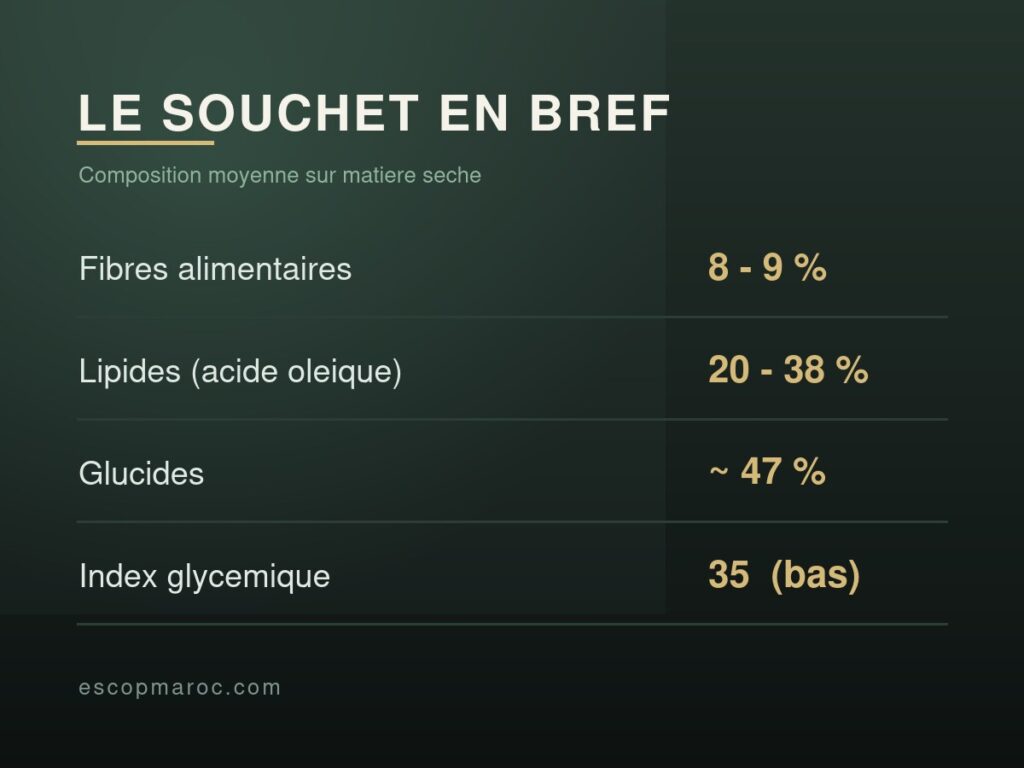
What makes it special is that it is both a tuber and a fatty food — a rare combination. Published analyses of Cyperus esculentus give the following approximate values on a dry-matter basis:
- Carbohydrates: around 47%, a large share of which is starch (14 to 37%) and resistant starch
- Fats: 20 to 38%, dominated by oleic acid, the same monounsaturated fatty acid found in olive oil
- Dietary fibre: 8 to 9% (up to 15% depending on the variety and the testing method)
- Protein: 6 to 10%, a modest content
- Minerals: potassium, phosphorus, magnesium, calcium and iron
- Vitamins and antioxidants: vitamin E, vitamin C, polyphenols and flavonoids
Two factors account for most of its nutritional value: its combination of fibre and resistant starch, which partly escapes digestion in the small intestine, and its unsaturated fat profile, protected from oxidation by vitamin E. Also worth noting: this tuber is naturally gluten-free and lactose-free, which explains its popularity in elimination diets.
The benefits of tiger nut
1. It supports digestive comfort
This is its best-documented use. Its fibre increases the bulk and moisture of the stool, which promotes regular bowel movements. This action has traditionally been used against occasional constipation, and is consistent with what is seen with other foods rich in insoluble fibre.
2. A prebiotic effect on the gut microbiota
Resistant starch and undigested fibre reach the colon intact, where they feed beneficial bacteria. In vitro studies on Caco-2 intestinal cells have shown that tuber extracts promoted the growth of Lactobacillus plantarum and helped restore epithelial barrier function in an inflammatory setting. These results are encouraging, but they come from cell studies: they are not clinical proof in humans.
3. A low glycaemic index
With an estimated glycaemic index of around 35, tiger nut falls into the low-GI food category. The combined presence of fibre, resistant starch and fats slows gastric emptying and glucose absorption. This makes it an interesting snack as part of a varied diet, without making it a treatment for diabetes.
4. A fat profile similar to olive oil
Its high oleic acid content puts tiger nut oil in the same league as the benchmark Mediterranean oils. It is used both as a cold dressing and in cosmetics, where its richness in vitamin E and its dry touch are sought after for sensitive skin and dry hair.
5. A filling snack
Fibre and fat are the two most satiating nutrients. A small handful of tiger nuts therefore keeps you full for a long time, which can help you snack less often. Be careful, though: filling does not mean low in calories, and its fat content remains high.
6. A source of useful minerals
Potassium, magnesium and phosphorus contribute to normal muscle and nerve function. Habb aziz contributes to these intakes, without being a concentrated source comparable to a dosed supplement.
7. A plant-based alternative free of gluten and lactose
Tiger nut milk offers a creamy plant-based drink for people who avoid dairy, gluten or soy. The flour, for its part, serves as a gluten-free base in baking, with a naturally sweet flavour that helps reduce added sugar.
How to use tiger nut and dosage
Habb aziz is a food rather than a therapeutic remedy: there is no officially recommended dose. The usual guidelines are as follows.
- Dried tubers: a small handful, or about 20 to 30 g per day. Soaking them for 12 to 24 hours in cool water softens them and makes them much easier to digest.
- Tiger nut milk (horchata): a 200 to 250 ml glass, as a snack or at breakfast.
- Flour: 1 to 2 tablespoons in a recipe, partly replacing regular flour.
- Oil: cold as a dressing, or applied locally to the skin and hair.
Making homemade tiger nut milk
Soak 100 g of tubers in one litre of water for 24 hours in the fridge. Rinse, blend with 750 ml of cool water, leave to rest for an hour, then strain through a fine cloth. The resulting milk keeps for two days in the fridge and separates naturally: shake it before drinking. It is traditionally flavoured with a little cinnamon or lemon zest.
Precautions and contraindications of tiger nut
Eaten as a food, it is well tolerated by most adults. A few points nevertheless deserve attention.
- Digestive discomfort: its high fibre content can cause bloating and gas in people who are not used to it. Introduce it gradually and drink enough water.
- Calorie density: with 20 to 38% fat, portions should remain moderate if you are watching your weight.
- Allergies: it is a tuber and is not one of the major allergens. Reactions are rare, but if you have a history of food allergy, ask a healthcare professional for advice before eating it.
- Diabetes and ongoing treatment: a low GI does not replace medical follow-up. If you are taking blood-sugar-lowering medication, talk to your doctor before making lasting changes to your diet.
- Chronic digestive disorders: if you have irritable bowel syndrome or inflammatory bowel disease, very high-fibre foods may be poorly tolerated. Medical advice is preferable.
- Pregnancy, breastfeeding and young children: normal dietary use poses no known problem, but whole tubers present a choking risk for toddlers. In that case, choose the liquid form or the flour.
Finally, buy your tubers from a reputable seller: poorly dried or poorly stored tubers can go mouldy, and their high fat content makes them prone to rancidity. Store them away from light, in a dry place, in an airtight container.
FAQ: your questions about tiger nut
Does tiger nut make you gain weight?
It is calorie-dense because of its fat content, but it is also very filling. In a reasonable 20 to 30 g portion, it is a good replacement for a sugary snack. What counts is your total intake over the day, not any single food on its own.
Should you soak it before eating it?
It is not compulsory, but it is strongly recommended. Dry, the tuber is very hard and tough on the teeth. Twelve to twenty-four hours of soaking restores its tender texture and makes digestion much easier.
Is it suitable for people with a tree nut allergy?
Botanically, it has no connection with almonds, walnuts or hazelnuts: it is a tuber. It is therefore not concerned by tree nut allergy. However, there is a risk of cross-contamination when it is packed loose: if you have a severe allergy, check where the product comes from and ask your doctor for advice.
Conclusion
Tiger nut is one of those forgotten foods that nutrition research is rediscovering. Its strengths are real and consistent: fibre and resistant starch for digestive comfort and the gut microbiota, a low glycaemic index, a fat profile close to that of olive oil, and all of it gluten-free and lactose-free. Its limits are just as real: human data remain scarce, and its calorie density calls for moderation. Included as a snack or plant-based drink within a balanced diet, habb aziz fully deserves its place in a Moroccan wellness routine.
Further reading
- Full botanical profile of the plant on Wikipedia: Cyperus esculentus
- Psyllium (Ispaghula): benefits, dosage and precautions — another benchmark fibre for regularity
- Chia seeds: benefits, dosage and precautions
- Flaxseed: benefits, dosage and precautions
This article is for information only and does not replace medical advice. If you have an illness, are taking medication, or are pregnant or breastfeeding, consult a healthcare professional before using any plant or dietary supplement.