Khella (Ammi visnaga), called bechnikha or bouchnikha (بشنيخة) in Morocco, is one of the most emblematic plants in Moroccan herbalism. This Mediterranean umbellifer, also nicknamed “toothpick weed”, is traditionally used for urinary tract comfort and to relax smooth muscle. This guide reviews khella’s composition, benefits, how to use it, its dosage and above all its precautions for use, because this is far from a harmless plant.
What is khella (bechnikha)?
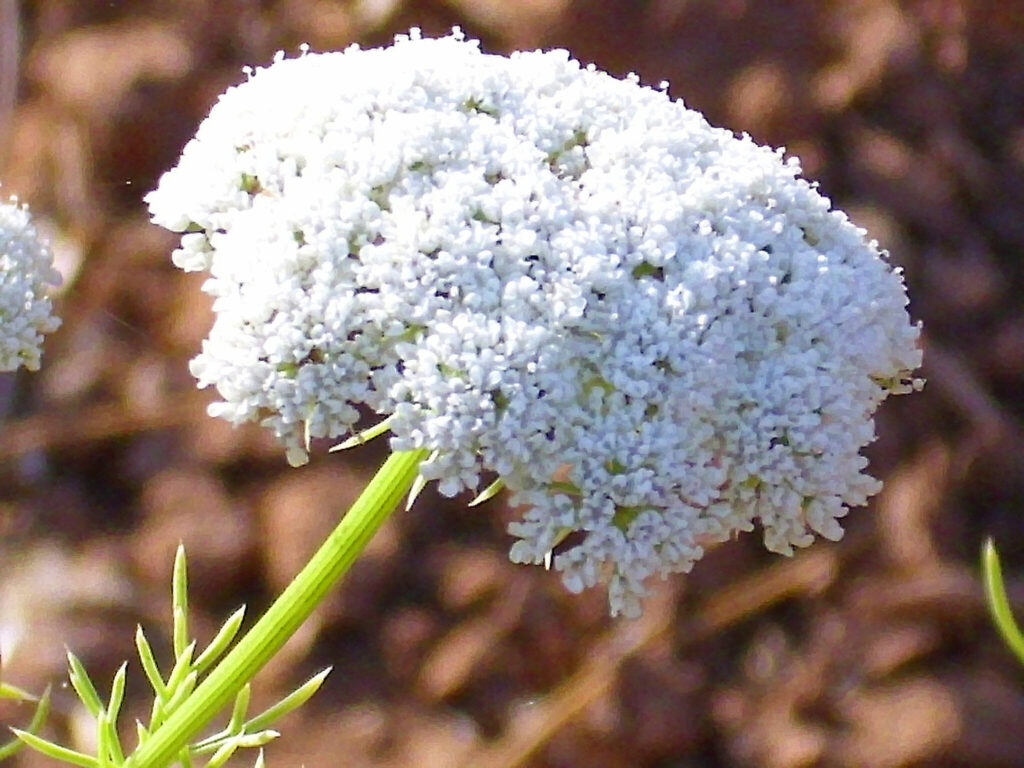
Khella is an annual plant in the Apiaceae (umbellifer) family, the same family as fennel, aniseed and carrot. It grows wild throughout the Mediterranean basin and is cultivated in particular in Morocco, Egypt and Tunisia.
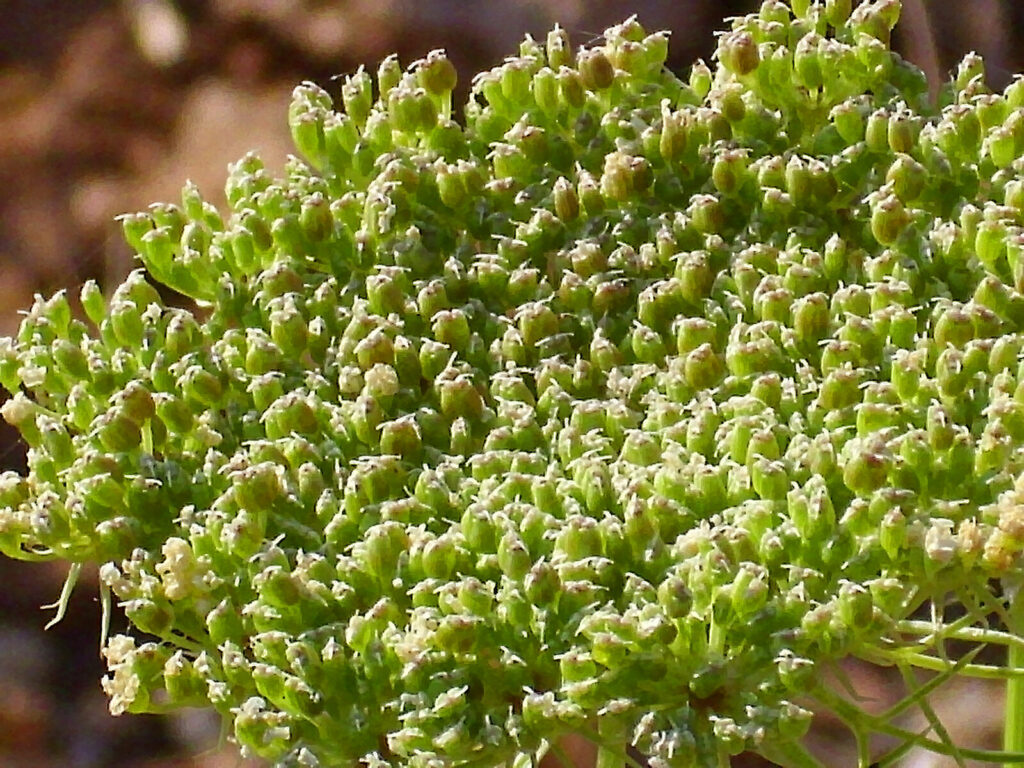
The plant is recognisable by its large white umbels made up of dozens of thin rays. As they dry, these rays harden and become rigid: this popular use earned it the nickname “toothpick weed”. The part used in herbal medicine is the dried fruit, often called “khella seed”, which is sold by every Moroccan herbalist under the name bechnikha.
In the traditional medicine of the Maghreb and the Middle East, khella is among the most widely used remedies for urinary tract complaints. This ancient use is now documented by pharmacological research, which has isolated its main active molecules.
Composition and active compounds of khella
Khella fruits contain a very distinctive combination of compounds:
- Furanochromones (about 2 to 4%): khellin and visnagin are the plant’s signature molecules and the best studied.
- Pyranocoumarins: mainly visnadin and samidin, associated with an effect on vascular smooth muscle.
- Furanocoumarins: xanthotoxin, ammidin, bergapten. These are what make the plant photosensitising.
- Essential oil: rich in monoterpene alcohols and esters, including linalool (up to about 33% depending on the analysis), with limonene, ocimene and pulegone.
- Flavonoids and phenolic compounds, responsible for antioxidant activity measured in vitro.
It is the combination of khellin + visnagin + visnadin that gives khella its particular profile: a relaxing action on smooth muscle fibres, the ones lining the ureters, bronchi and blood vessels.
The benefits of khella
Here are the main traditional uses and lines of research associated with khella. This is for information only: none of these points constitutes a promise of treatment.
1. Urinary tract comfort and kidney stones
This is bechnikha’s flagship use in Morocco. Khella is the most widely used traditional remedy in this part of the world for urinary tract complaints, a reputation attributed to its furanochromones. Experimental studies have shown that its extracts protect renal epithelial cells against calcium oxalate crystals, and may help limit the formation of these crystals.
2. Renal colic and spasms
Thanks to its relaxing action on smooth muscle, khella was traditionally taken as an infusion or decoction for renal colic and abdominal cramps. Relaxation of the ureter is the mechanism classically put forward to explain this popular use.
3. Respiratory comfort
Khellin historically served as a chemical model for the development of bronchodilator drugs. Traditionally, khella was taken as an infusion to ease breathing difficulties and asthma. This use is strictly a matter for medical supervision: a respiratory condition should never be self-treated with a plant.
4. Circulatory support
Visnadin is being studied for its effect on skin microcirculation and blood vessel diameter. Traditionally, the plant was used for angina and certain heart rhythm disorders, indications now reserved for conventional medicine.
5. Liver and gallbladder
Khella is traditionally classed among the plants for the liver and biliary system, as a complement to a healthy lifestyle and good hydration.
6. Antioxidant contribution
Extracts of Ammi visnaga roots and seeds show antioxidant activity in vitro, linked to their phenolic compound content. These laboratory results do not imply an equivalent effect in humans.
7. Strictly supervised dermatological use
In dermatology, khellin has been combined with controlled UVA exposure in the management of vitiligo and psoriasis, because of the photosensitising effect of furanocoumarins. This protocol is exclusively medical and hospital-based: it must never be reproduced at home.
How to use khella and dosage
Khella is mainly used in three forms. In all cases, short courses are preferable to prolonged use.
- Infusion or decoction: this is the traditional Moroccan form. One small teaspoon of lightly crushed fruits per cup of simmering water, left to steep for 10 minutes and then strained. In popular practice, no more than 1 to 2 cups a day.
- Standardised extracts: the pharmacological reference described in the literature corresponds to an intake of about 20 mg of khellin per day, up to the equivalent of 100 mg per day in a supervised medical setting.
- Essential oil: for supervised aromatherapy only. For skin application, dilute to a maximum of 0.4% in a vegetable oil, or about 4 drops per 50 ml, to limit the risk of photosensitisation.
Plenty of fluids naturally go hand in hand with any use of khella aimed at the urinary tract. Always buy your bechnikha fruits from an identifiable herbalist who can guarantee the exact botanical species.
Khella precautions and contraindications
Khella is an active plant, and that activity calls for real precautions.
- Photosensitisation: furanocoumarins make the skin react to sunlight. It is recommended to avoid any sun exposure for 12 hours after use, especially after skin application.
- Risk of botanical confusion: Ammi visnaga can be confused with other umbellifers, some of which are much more toxic. Never harvest it yourself without botanical expertise.
- Pregnancy and breastfeeding: not recommended, due to insufficient safety data.
- Children: avoid.
- Current treatments: if you are on cardiovascular, anticoagulant or antihypertensive treatment, or undergoing phototherapy, medical advice is essential before taking khella.
- Allergies: caution in people sensitive to Apiaceae (celery, carrot, fennel, dill).
- Severe pain: renal colic or blood in the urine is a medical emergency. No plant replaces a consultation.
FAQ: your questions about khella
Are khella and bechnikha the same plant?
Yes. Khella is the international common name, and bechnikha (or bouchnikha) the Moroccan name. The botanical name is Ammi visnaga. It is also known as “toothpick weed”.
How long can I take khella?
Tradition favours short courses, from a few days to two or three weeks, rather than continuous use. Because of the furanocoumarins it contains, prolonged unsupervised use is not recommended.
Does khella really dissolve kidney stones?
The available data mainly concern experimental models and suggest an effect on calcium oxalate crystallisation and protection of kidney cells. This does not mean that an infusion will dissolve a stone that has already formed. A kidney stone requires medical care.
Conclusion
Khella holds a special place in Moroccan herbalism: few local plants have contributed so much to modern pharmacological research. Its richness in khellin, visnagin and visnadin explains both its traditional use for the urinary tract and the need to handle it rigorously. Correctly identified, properly dosed, taken in short courses and kept away from the sun, khella remains a classic of the Maghreb pharmacopoeia.
Further reading
- Full botanical profile: Ammi visnaga on Wikipedia
- Parsley (Maadnous): benefits, dosage and precautions
- Nettle: benefits, dosage and precautions
- Psyllium (Ispaghula): benefits, dosage and precautions
This article is provided for information only and does not replace medical advice. Ask a healthcare professional before using khella, especially if you are pregnant, breastfeeding, on medication or living with a chronic condition.