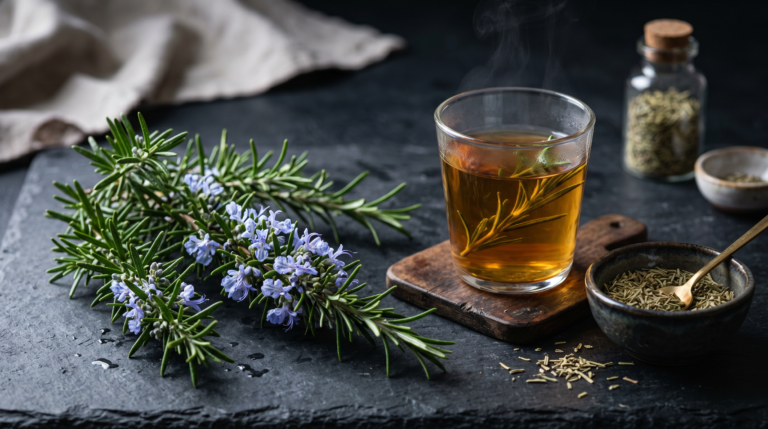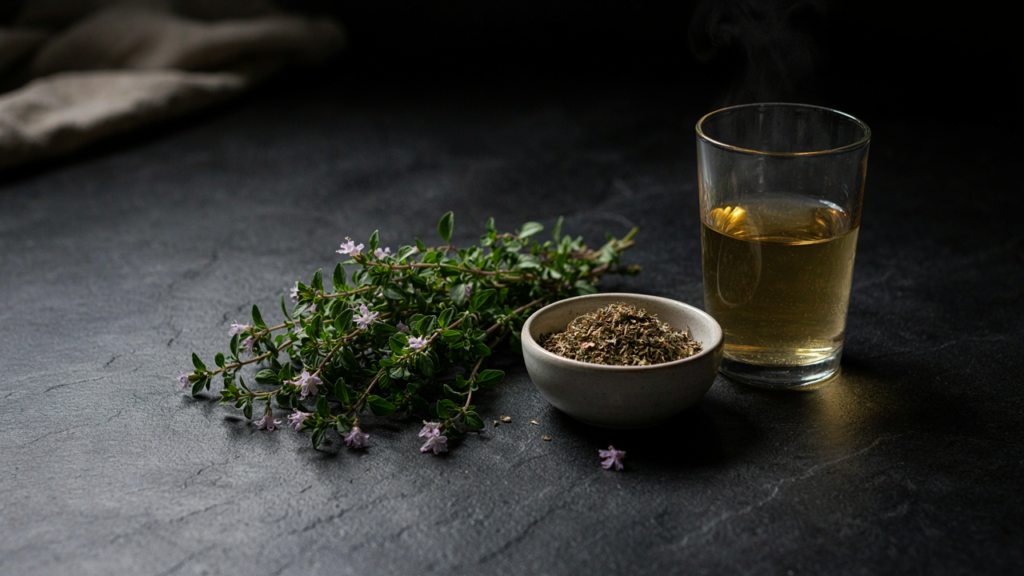
Savory is an aromatic herb of the Lamiaceae family, grown since antiquity to flavour dishes and ease digestive complaints. Known in Morocco as a kitchen and herbal-tea herb, it is now winning over people interested in herbal medicine. Here is everything you need to know before using it.
What is savory?
The genus Satureja includes more than 150 species, found mainly around the Mediterranean. Two species dominate everyday use: summer savory (Satureja hortensis), an annual plant, and winter savory (Satureja montana), a perennial subshrub.
The leaves and flowering tops are used, either fresh or dried. Since antiquity, savory has been paired with pulses, grilled meats and sauces. Germans even call it the “bean herb”, because it helps reduce bloating.
Composition and active compounds of savory
Savory essential oil is rich in phenolic compounds, mainly carvacrol and thymol. Carvacrol is the oil’s main constituent and is studied above all for its action on the membranes of micro-organisms.
Research carried out in the 1970s and 1980s on Satureja montana essential oil ranked it among the so-called major essential oils for its antibacterial and antiparasitic activity. The whole plant also contains other aromatic compounds that contribute to its powerful scent.
The benefits of savory
An ally for digestion
The oldest use of savory is digestive. As a herbal tea or a seasoning, it is traditionally used to calm digestive spasms, bloating and flatulence, especially after a meal rich in pulses.
Antiseptic properties
In vitro studies report that savory is active against several bacteria and against the fungus Candida albicans, an effect attributed mainly to carvacrol. These laboratory results are no substitute for clinical trials in humans: they explain the interest in the plant without proving a therapeutic effect.
Support for the ear, nose and throat and the urinary tract
Traditionally, savory is used to relieve the symptoms of upper respiratory tract infections. It is also used alongside medical treatment for urinary tract infections. It must never replace a prescribed antibiotic.
A traditional tonic
Dioscorides considered it an aphrodisiac, and savory has kept its reputation as a stimulant in traditional use. One animal study observed an increase in testosterone, but the human data concern combination products, so the level of evidence remains low.
How to use savory and dosage
Savory can be taken in several forms. The doses below are for guidance only; ask a healthcare professional for advice before starting any course.
- In cooking: a few fresh or dried leaves in pulse dishes, meats and sauces.
- As a herbal tea: one teaspoon of dried flowering tops steeped in a cup of hot water for a few minutes, after meals.
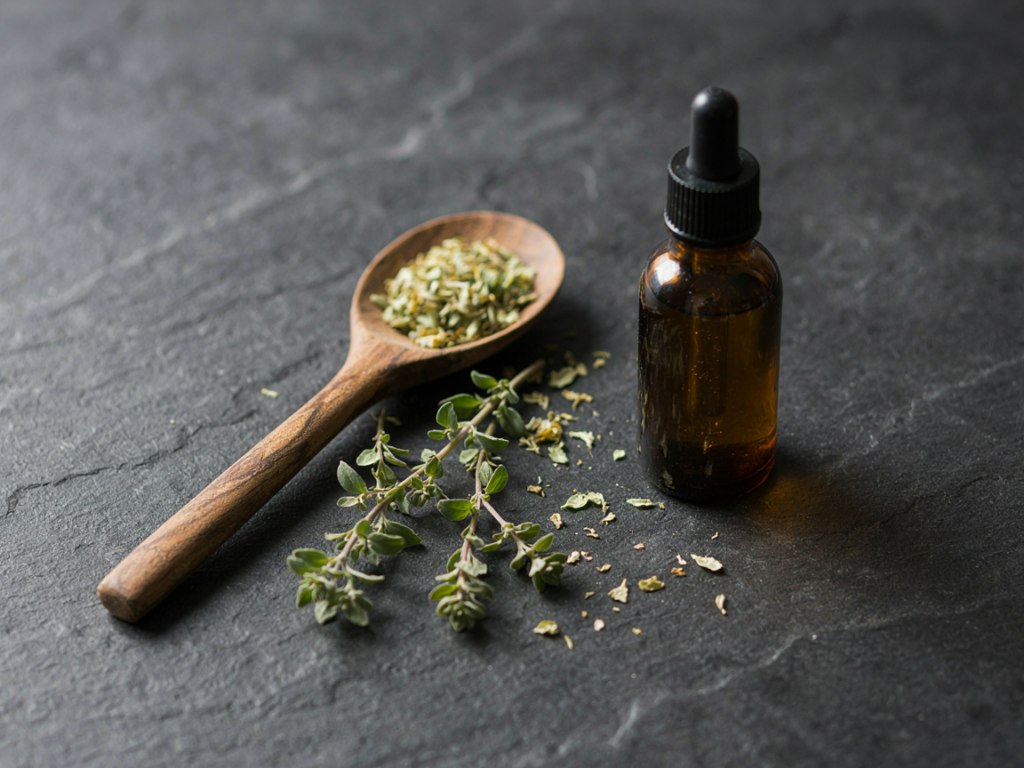
- As an essential oil (taken orally): only on professional advice. For adults, the commonly cited dosage is 1 drop, 3 to 4 times a day; for children aged 7 to 15, 1 drop, 1 to 2 times a day.
- Other forms: dry extract or capsules, according to the product leaflet.
Precautions and contraindications
Savory essential oil contains phenols and aldehydes that can irritate the skin and mucous membranes. For this reason, external use is not recommended, except in specific cases such as warts, and always diluted.
- Avoid during pregnancy and breastfeeding.
- Do not give the essential oil to children under 7.
- Ask a doctor or pharmacist for advice if you have a chronic illness or are currently on treatment.
- Stick strictly to the doses: the essential oil is highly concentrated.
Savory FAQ
What is the difference between summer savory and winter savory?
The former is an annual used mainly in cooking; the latter is a perennial, more aromatic, and is the main source of the essential oil used in herbal medicine.
Can you drink savory tea every day?
Drinking it occasionally after meals is common. For prolonged use, it is best to ask a professional for advice.
Is savory safe during pregnancy?
No, its medicinal use is not recommended during pregnancy and breastfeeding. A small amount in cooking, however, is still customary.
Conclusion
Savory is a valuable aromatic herb, both a seasoning and a traditional remedy for digestion. Its active compounds, carvacrol in particular, are promising but are documented mainly in the laboratory. Use it in moderation and with care, especially in essential-oil form.
Further reading
- External source: savory on Wikipedia
- Spirulina: benefits, dosage and precautions
- Moringa: benefits, dosage and precautions
- Thyme: benefits, dosage and precautions
Disclaimer: this article is for information only and does not replace the advice of a doctor or pharmacist.