Burdock is a traditional medicinal plant, best known for its root, which has long been used in herbal medicine to support the body’s detoxification and digestive comfort. In this article, we review its composition, its benefits, how to use it and the precautions to follow.
As with any plant, it is important to distinguish traditional uses from the effects that science has actually demonstrated. We therefore stay factual and cautious on every point.
What is burdock?
Burdock belongs to the Asteraceae family. It is a biennial plant whose prickly flower heads cling to clothing. There are several species, notably Arctium lappa, Arctium minus and Arctium tomentosum.
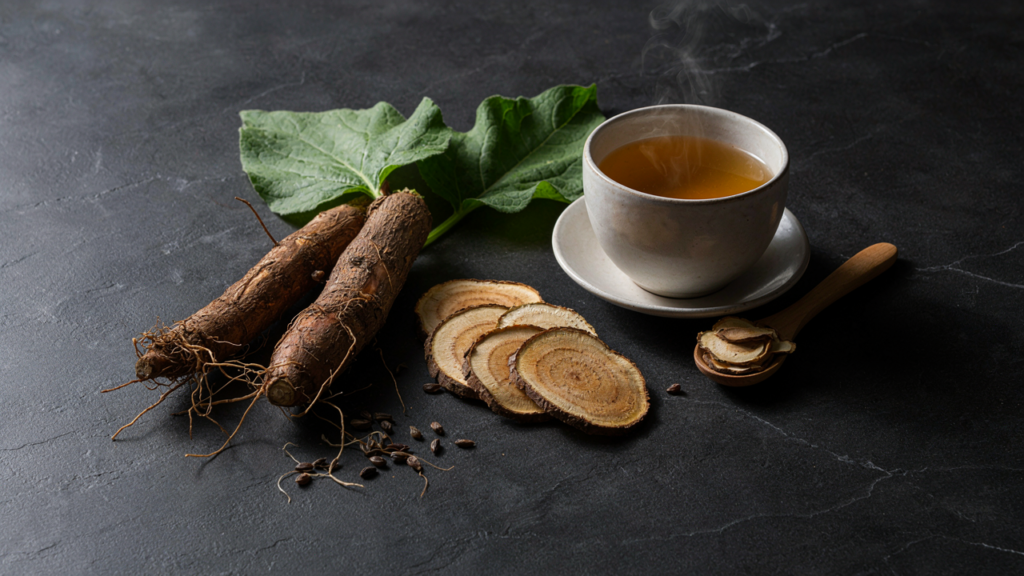
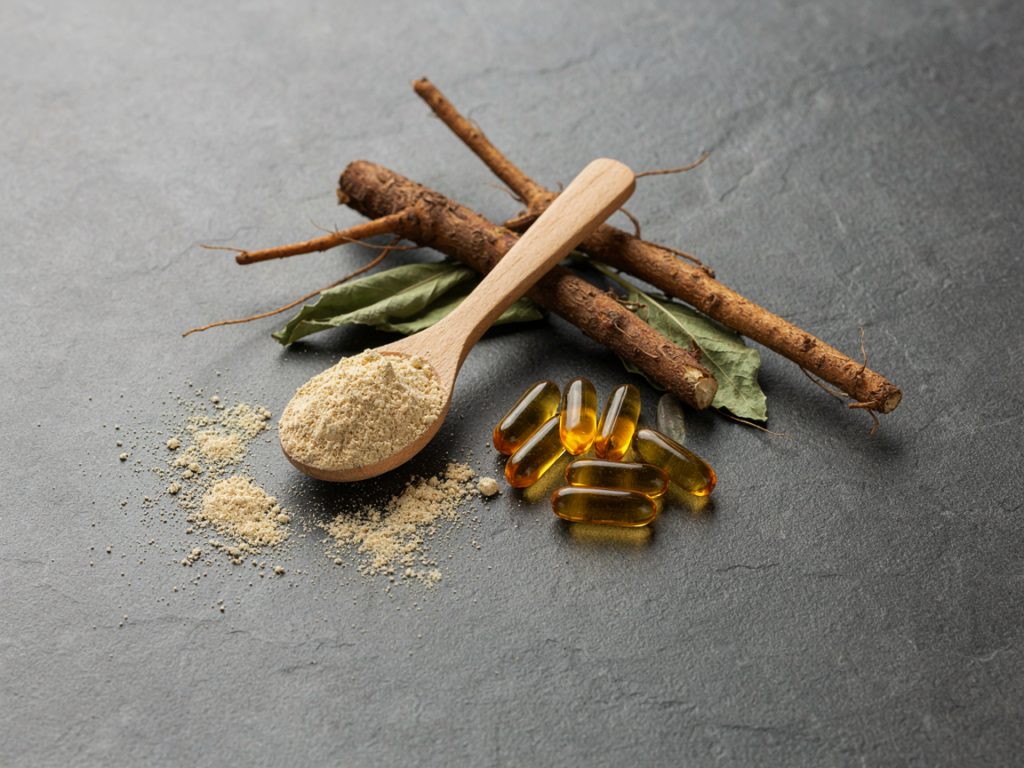
In herbal medicine, it is mainly the root that is used, in the form of powder, dry extract, mother tincture or infusion. The leaves and fruits are sometimes used as well, but more rarely.
Composition and active compounds of burdock
Burdock root is known for its high content of inulin, a soluble fibre that can make up as much as 45% of its composition. It also contains other noteworthy compounds:
- phenolic acids and flavonoids, with antioxidant properties;
- arctigenin and lignans;
- sesquiterpene lactones, including arctiopicrin, which is responsible for the bitter taste;
- sterols and tannins;
- vitamins, minerals and amino acids.
The benefits of burdock
The benefits of burdock are based mainly on traditional use. Most of the available studies were carried out in vitro or on animals; data in humans remain limited.
A cleansing and diuretic plant
Traditionally, burdock is regarded as cleansing and diuretic. It is used to support the elimination of waste from the body, particularly in cases of mild urinary complaints or gout, always alongside medical follow-up.
Support for digestion
Thanks to its bitterness and its inulin, burdock is used to stimulate digestion. It is described as choleretic (it promotes the flow of bile) and mildly laxative. Inulin, a prebiotic fibre, also feeds the gut flora.
A traditional ally for the skin
Burdock has long been associated with acne-prone skin or skin prone to eczema. A small study in women aged 39 to 65 observed a slight reduction in wrinkles around the eyes after 4 weeks with an emulsion made from fruit extract. The evidence nevertheless remains modest.
Antioxidant and protective effects under study
In vitro and animal studies suggest antioxidant, anti-inflammatory and liver-protective effects. An effect on blood sugar is also attributed to inulin. These preliminary results need to be confirmed by trials in humans.
How to use burdock and dosage
The following guidelines come from standard herbal medicine references, notably the European Medicines Agency (EMA):
- Root powder: 350 mg, 3 to 5 times a day;
- Infusion: 2 to 6 g of root, 3 times a day;
- Mother tincture: about 50 drops, 3 times a day.
For an infusion or decoction, simmer the dried root in water for a few minutes, then leave it to steep before straining. Start with small doses to test your tolerance, and preferably seek the advice of a healthcare professional or herbalist.
Precautions and contraindications
- Pregnancy and breastfeeding: avoid as a precaution, because of a possible effect on uterine contractions and the lack of data;
- Children and adolescents under 18: avoid due to insufficient data;
- Kidney stones: avoid during an attack of renal colic, as the diuretic effect can worsen the pain;
- Allergy to Asteraceae: take care if you are allergic to this plant family (chamomile, artichoke, etc.);
- Possible interactions: with anticoagulants and antiplatelet drugs (risk of bleeding) and with antidiabetic drugs (risk of hypoglycaemia).
Stop taking it and see a doctor if you experience an allergic reaction, persistent digestive problems or any unusual effect.
Burdock FAQ
Which part of burdock is used?
The root is the part most commonly used in herbal medicine. It is taken as a powder, extract, mother tincture or infusion.
Does burdock help you lose weight?
No, no solid study demonstrates a slimming effect. Its diuretic and digestive effects are no substitute for a balanced diet or regular physical activity.
Can burdock be combined with other plants?
It is often combined with other cleansing plants such as dandelion or nettle. However, ask a professional for advice before combining several plants, especially if you are on medication.
Conclusion
Burdock is an interesting traditional plant, rich in inulin and antioxidants, used for digestion, elimination and skin comfort. Its effects are documented mainly through traditional use and preliminary studies: respect the dosages and contraindications, and ask a healthcare professional for advice before adding it to your routine.
Further reading
- External source: burdock on Wikipedia
- Also read: Dandelion: benefits, dosage and precautions
- Also read: Nettle: benefits, dosage and precautions
- Also read: The benefits of spirulina
This article is provided for information only and does not replace the advice of a doctor or pharmacist. Consult a healthcare professional before using any dietary supplements or medicinal plants.