Anise (Pimpinella anisum) is one of the most common seeds in Moroccan kitchens and herbalist shops, where it is known as habbat hlawa (حبة حلاوة) or nafaa (نافع), literally “the useful one”. This small oval seed with its sweet fragrance goes into bread, festive cakes and above all the herbal teas served after a hearty meal.
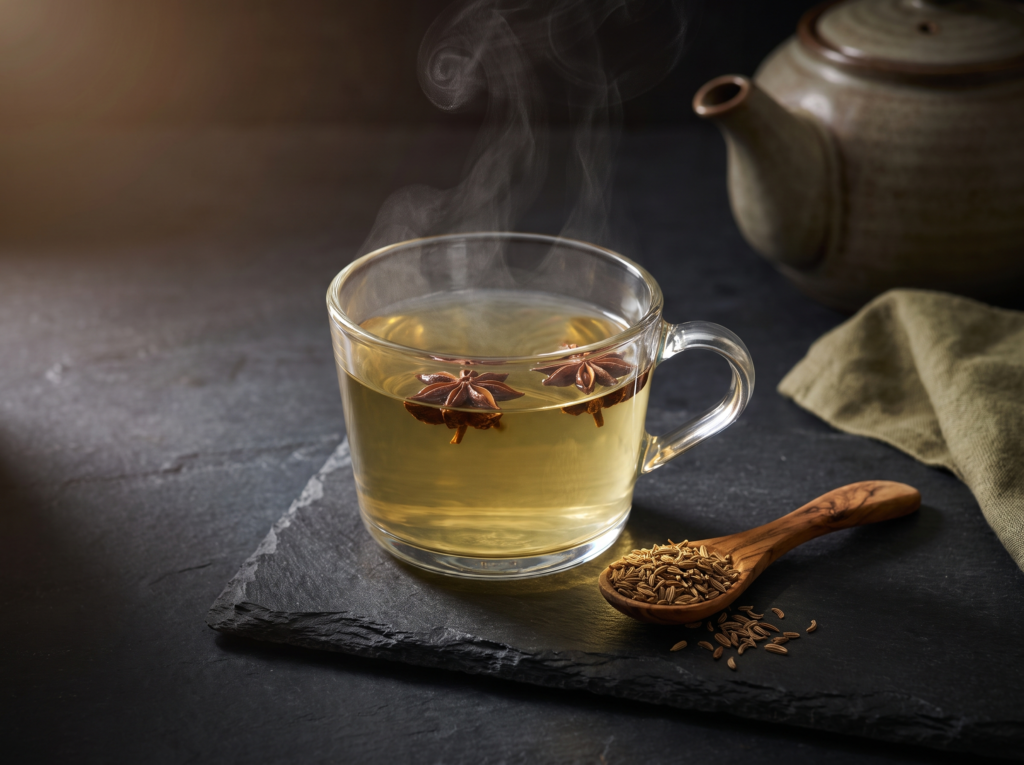
Behind this tradition lies a medicinal plant documented for more than 4,000 years, whose digestive and respiratory use is now recognised by European herbal medicine monographs. Here is what we know about its composition, its properties, a sensible dosage and the precautions to follow.
What is anise?
Anise is an annual plant of the Apiaceae family, the same family as fennel, cumin and coriander. Native to the eastern Mediterranean basin and the Near East, it has been cultivated since ancient Egyptian times and is now found in the temperate areas of Morocco.
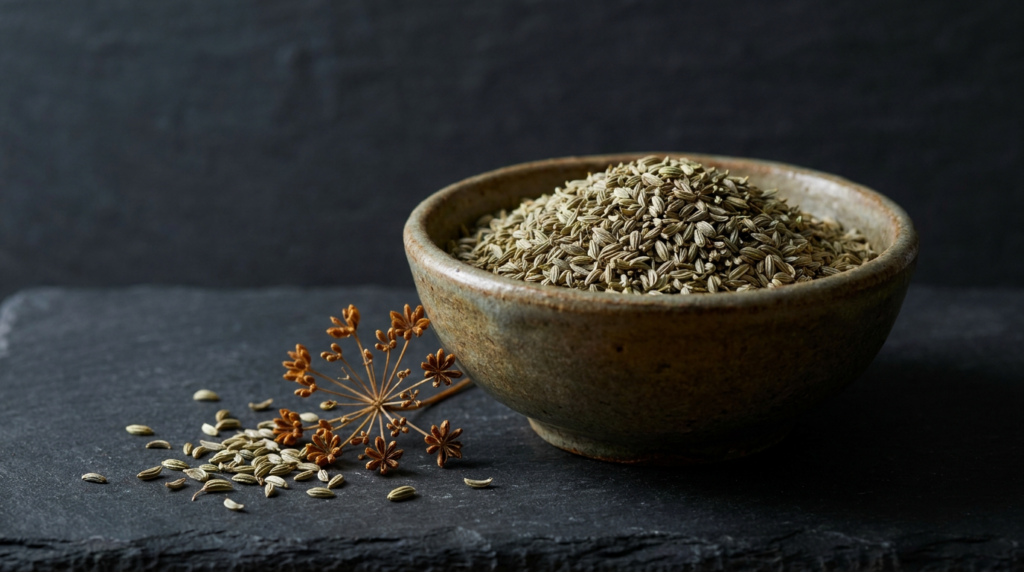
The plant has a slender stem topped with umbels of small white flowers. It is the dried fruits — commonly called “seeds” — that are harvested when ripe. Greyish to pale green, ribbed and slightly downy, they release a characteristic aniseed aroma as soon as they are crushed.
Be careful not to confuse it with two related plants: star anise and fennel. All three share the same aromatic note, but their composition and precautions for use differ.
Composition and active compounds
The therapeutic value of the seeds lies mainly in their essential oil, present in small quantities but highly concentrated in active molecules.
- Anethole: the main compound, making up 80 to 90% of the essential oil. It is responsible for the typical sweet scent and for most of the carminative and antispasmodic effects.
- Flavonoids: antioxidant compounds with recognised anti-inflammatory properties.
- Phenolic acids: other antioxidants that contribute to cell protection.
- Fibre, lipids and minerals: present in the whole seed, they partly explain its nutritional value in cooking.
It is this dominance of anethole that explains both the plant’s effectiveness on the digestive system and the need not to overuse it, since this molecule is not harmless at high doses.
The benefits of anise
1. Easing digestion
This is its main and best-documented use. Anise is traditionally used for sluggish digestion, heaviness after a meal and mild stomach discomfort. In Morocco, the herbal tea served after a tagine or a pastilla follows exactly this logic.
2. Reducing bloating and gas
The so-called “carminative” properties of anethole help expel intestinal gas and reduce the feeling of a swollen belly. Aerophagia, intestinal gas and flatulence are among the most consistent traditional indications for this plant.
3. Calming digestive spasms
Anethole has an antispasmodic action on the smooth muscles of the intestine. In practical terms, this means calming the irregular contractions responsible for abdominal cramps and mild intestinal pain.
4. Soothing coughs and the airways
Beyond the digestive system, anise has long been used as a mild expectorant. It is an ingredient in many chest teas intended to ease coughs, bronchial congestion and cold symptoms.
5. Supporting breastfeeding
Traditional use credits it with a galactagogue effect, meaning it supports milk supply after childbirth. This use is deeply rooted in Morocco, but it must always be approved by a midwife or doctor, as scientific data remain limited and anethole passes into breast milk.
6. Providing antioxidants
The flavonoids and phenolic acids in the seed help combat oxidative stress. This contribution remains modest at dietary doses, but fits well into a diet rich in spices and aromatic herbs.
7. Freshening the breath
Chewing a few seeds at the end of a meal is a widespread habit throughout the Mediterranean region. The aniseed aroma masks food odours while getting digestion started.
How to use it and dosage
As an infusion
This is the simplest and safest form. Lightly crush the seeds in a mortar just before infusing: the essential oil is volatile and is released the moment the seed breaks.
- Single dose: 1 to 3 g of crushed seeds (about one teaspoon) per 150 ml of boiling water.
- Steeping time: 10 minutes, covered, to prevent the aromatic compounds from escaping with the steam.
- Frequency: up to three cups a day for adults, preferably after meals. European monographs set an average daily dose of about 3 g of fruit.
- Duration: for regular use, limit yourself to courses of 2 to 3 weeks, with breaks in between.
As whole seeds
A few seeds chewed at the end of a meal are enough. In cooking, these seeds flavour breads, biscuits (such as fekkas), jams and certain milk-based dishes. At these culinary doses, there is no particular restriction for a healthy adult.
Essential oil: restricted use
Anise essential oil is a highly concentrated product, in no way comparable to herbal tea. It should never be used for self-medication, nor taken orally without the supervision of a professional trained in aromatherapy.
Precautions and contraindications of anise
At herbal tea doses, anise is well tolerated and side effects are rare. Certain situations, however, call for caution or even avoidance.
- Pregnancy: anethole has hormone-like effects. The essential oil is contraindicated in pregnant women, and the herbal tea should only be taken on medical advice.
- Allergies: a known allergy to anise, anethole or the Apiaceae family (fennel, celery, carrot, coriander) rules out its use.
- Epilepsy and neurological disorders: the essential oil is neurotoxic at high doses and can trigger seizures. It is strictly not recommended for people with a history of epilepsy.
- Essential oil overdose: cases of nausea, vomiting, seizures and pulmonary oedema have been reported. This form is not an everyday consumer product.
- Hormone-dependent cancers: as a precaution, because of the oestrogenic activity of anethole, medical advice is necessary.
- Young children: the essential oil must be avoided. The herbal tea, well diluted, should only be given after paediatric advice.
Finally, buy your seeds from a herbalist or a reputable shop: old, poorly stored or adulterated seeds lose their essential oil and therefore their value.
Frequently asked questions
What is the difference between anise and fennel?
Both belong to the Apiaceae family and contain anethole, which explains their similar taste and digestive uses. Fennel, however, is a larger biennial plant whose bulb is also eaten, and its seeds are longer and greener.
Can you drink anise tea every day?
One cup a day for a few weeks is reasonable for a healthy adult. Beyond that, it is better to take it in courses of 2 to 3 weeks with breaks, rather than drinking it continuously all year round.
Does anise help you lose weight?
No. There is no solid evidence of a slimming effect. The flatter stomach sometimes reported comes from reduced bloating, not from a loss of body fat.
Conclusion
Anise is a good example of a practical, everyday plant: accessible, inexpensive, effective in a specific area — digestive and respiratory comfort — and safe as long as the form and dose are respected. A tea made from crushed seeds remains the best place to start. The essential oil, on the other hand, is for supervised professional use.
Further reading
- Full botanical profile of anise on Wikipedia.
- Fennel: benefits, dosage and precautions — the related plant, also rich in anethole.
- Cumin: benefits, dosage and precautions — another major Apiaceae of Moroccan cooking.
- Spearmint: benefits, dosage and precautions — a good match in a digestive infusion.
This article is for information only and does not replace medical advice. Consult a healthcare professional before any use, especially if you are pregnant, breastfeeding, on medication or living with a chronic condition.