
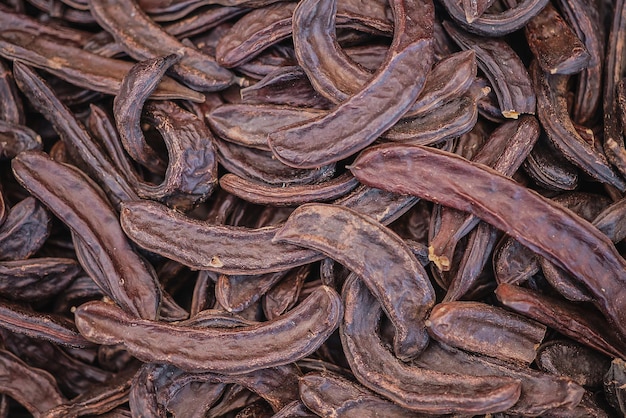
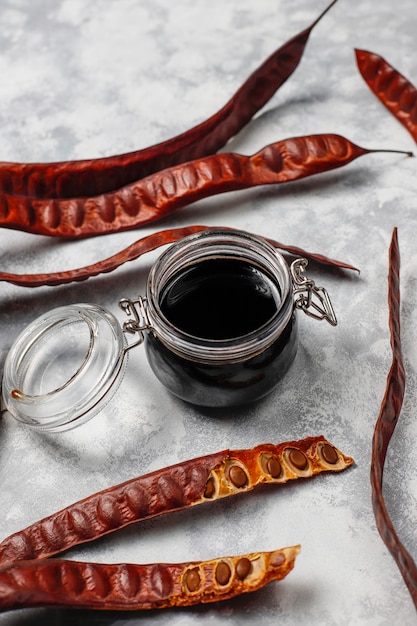
Carob, the fruit of the carob tree (Ceratonia siliqua), is a Mediterranean treasure being rediscovered today for its many health virtues. Known in Morocco as kharroub, carob comes in the form of long brown pods from which a sweet, naturally sugary powder is made, often used as an alternative to cocoa. Rich in fibre, polyphenols and minerals, it appeals to lovers of healthy cooking and followers of herbal medicine alike. In this article, we review the composition of carob, its benefits, its dosage and the precautions to observe.
What is carob?
The carob tree is a hardy Mediterranean tree that grows notably in Spain, Portugal, Greece, Italy and right across the Maghreb, including Morocco. Its name comes from the Arabic “kharroub” and the Hebrew “kharouv”. The tree produces fleshy pods which, once dried and ground, give the famous carob powder.
Two parts of the fruit are put to use: the pulp, turned into a sweet flour or powder whose taste recalls chocolate, and the seeds, from which locust bean gum (additive E410) is extracted and used as a natural thickener in the food industry. In Morocco and across the Maghreb, the pods have long been drunk as a decoction to calm digestive upsets.
Composition and active compounds of carob
The nutritional richness of carob explains a large part of its beneficial effects. Its pulp stands out for a particularly high content of fibre and antioxidant compounds.
- Dietary fibre: the pulp contains a large proportion of it (in the region of 27 to 50%), which supports transit and satiety.
- Polyphenols and tannins: antioxidant compounds (quercetin, myricetin) representing up to 16 to 20% of the pulp.
- Minerals and trace elements: potassium, calcium, magnesium, iron, zinc, copper, phosphorus and manganese.
- D-pinitol: a molecule that helps improve insulin sensitivity.
- No caffeine and no theobromine: unlike cocoa, carob is not a stimulant.
The health benefits of carob
Used around the Mediterranean since antiquity, carob is now attracting growing interest. Here are its main strengths, backed both by tradition and by a number of scientific observations.
1. An ally for digestion
Carob has been used traditionally for centuries against diarrhoea. Its fibre regulates intestinal transit, while its pectin forms a protective film over the gastric mucosa and the intestinal walls. It is therefore used to soothe intestinal inflammation and to calm certain kinds of reflux.
2. An action on cholesterol
Eaten regularly in moderate amounts (4 to 15 g a day) over several weeks, carob pulp has been associated with a fall in total cholesterol and in bad cholesterol (LDL). Some observations report a drop in triglycerides and LDL after a month, an effect attributed to the soluble fibre and the polyphenols, which also help protect cholesterol from oxidation.
3. An interest for blood sugar
Thanks to its high fibre content, carob has a low glycaemic index and helps limit the absorption of fast sugars. The D-pinitol it contains is also thought to have a favourable effect on insulin sensitivity, which makes it a food watched closely by people who keep an eye on their sugar levels.
4. Antioxidant power
The polyphenols and flavonoids in carob help protect cells against oxidative stress, a phenomenon involved in cellular ageing. This antioxidant action adds to its mineral content in supporting the overall balance of the body.
5. A delicious alternative to cocoa
Naturally sweet and free of both caffeine and theobromine, carob powder is an ideal substitute for chocolate for people sensitive to stimulants, for children, or for anyone looking for a gluten-free option. It brings sweetness to drinks and baking without the stimulating side of cocoa.
How to use carob and at what dosage
Carob is most often eaten as a powder, worked into the everyday diet. It goes perfectly with plant milk, smoothies, yoghurt, pancakes or baked goods, where it replaces some or all of the cocoa.
- As a drink: 1 to 2 teaspoons of powder stirred into a cup of hot milk or water.
- In cooking: replace cocoa with carob powder, measure for measure, in your recipes.
- As a traditional decoction: the pods can be simmered to make a digestive drink.
As a guide, traditional use suggests around 20 to 30 g of carob powder a day, spread across the day. It is best to start with small amounts and increase gradually to gauge how well your digestion tolerates it.
Precautions and contraindications
Although carob is a natural food that is generally well tolerated, a few precautions apply:
- Diabetes: because carob can influence blood sugar and insulin sensitivity, people with diabetes should monitor their levels regularly.
- Cholesterol-lowering treatments: locust bean gum may potentiate the effect of statins; medical advice is recommended if you are on treatment.
- Pregnancy and breastfeeding: as a precaution, prolonged consumption is best avoided during these periods.
- Too much fibre: eaten in excess, it can cause digestive discomfort (bloating).
FAQ about carob
Does carob make you gain weight?
Carob is naturally sweet but stays moderate in calories and, above all, very rich in fibre, which promotes satiety. Eaten in moderation in place of sweetened cocoa, there is no reason for it to cause weight gain; what needs watching is the added sugar in the preparations.
What is the difference between carob and cocoa?
Carob powder is naturally sweet and contains neither caffeine nor theobromine, unlike cocoa. It is therefore less bitter, not stimulating, and suits children and people sensitive to stimulants well.
Is carob suitable for children?
Because it contains no stimulants and tastes mild, carob is often a hit with children as an alternative to chocolate. It can be introduced gradually into their diet, in reasonable amounts and as part of a balanced way of eating.
Conclusion
Carob is a Mediterranean food as ancient as it is versatile. Rich in fibre, polyphenols and minerals, it supports digestion and contributes to the balance of cholesterol and blood sugar, while offering a delicious caffeine-free alternative to cocoa. Worked in moderation into a varied diet, carob has every right to a place in a natural well-being routine.
To go further
To deepen your knowledge of the carob tree and its botany, see the reference entry: Carob tree on Wikipedia.
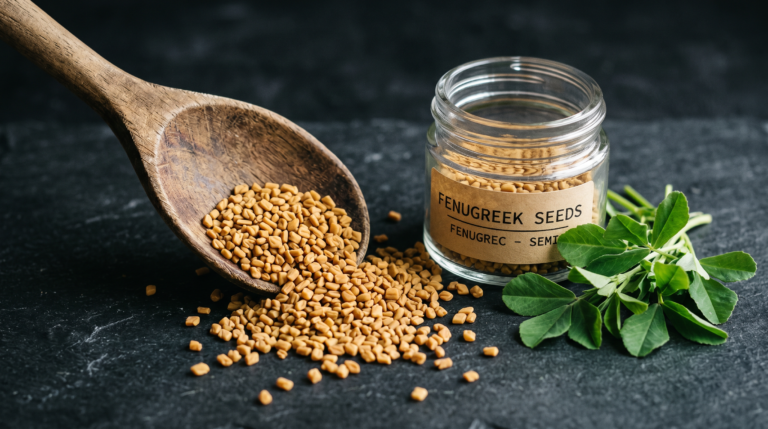
Also discover other superfoods and beneficial plants on our blog: the benefits of spirulina, the benefits of moringa and the benefits of fenugreek.
This article is provided for informational purposes and in no way replaces medical advice. If you are in doubt, on ongoing treatment or living with a health condition, consult a qualified healthcare professional before using carob or any food supplement.

Leave a Reply