
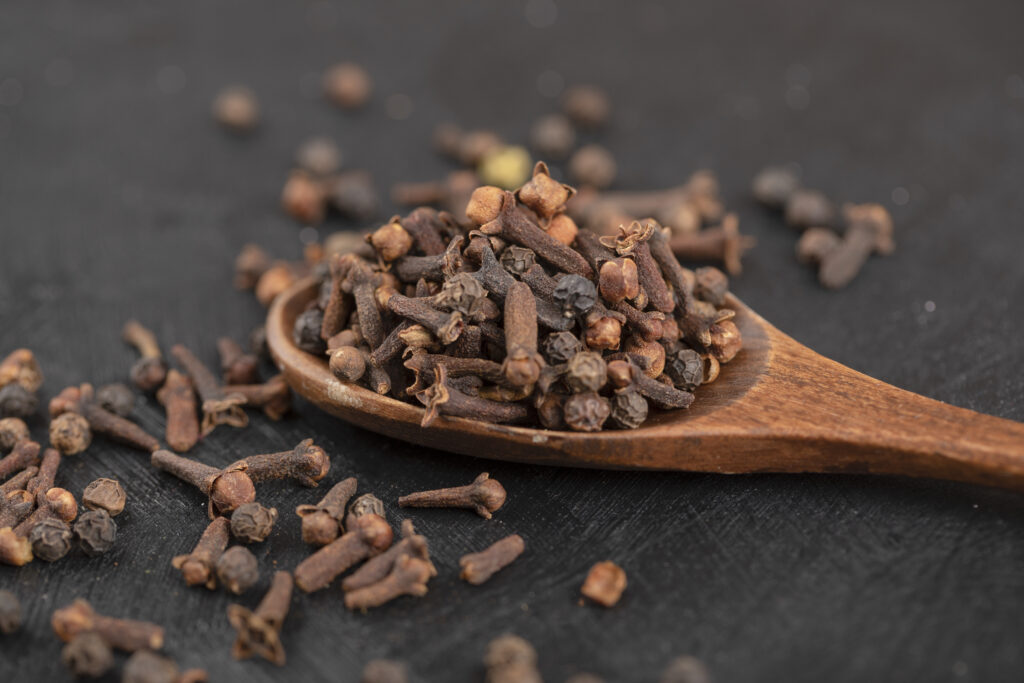

Clove is one of the most appreciated medicinal spices in Morocco, in the kitchen as much as in home remedies. Behind this small dried flower bud hides an exceptional concentration of active compounds, starting with eugenol, which explains the pain-relieving and antiseptic virtues it has been credited with for centuries. In this guide, discover the benefits of clove, its composition, how to use it, the recommended dosage and the essential precautions before taking it.
What is clove?
Clove is the dried flower bud of the clove tree (Syzygium aromaticum), a tropical tree native to the Moluccas and now grown in Madagascar, Indonesia and Zanzibar. Harvested before they open and then sun-dried, these buds take on their characteristic little brown nail shape and give off a warm, powerful fragrance.
In Morocco, it turns up in many spice blends, in tea and in the traditional pharmacopoeia, where it is known above all for relieving toothache. Used whole, ground or as an essential oil, clove is both a culinary spice and a medicinal plant in its own right.
Composition and active compounds of clove
The richness of clove lies in the remarkable concentration of active compounds in its essential oil. It is one of the plant foods richest in antioxidants among all herbs and spices.
- Eugenol: 70 to 90% of the essential oil, responsible for the pain-relieving, anaesthetic and antiseptic properties.
- Beta-caryophyllene: around 13%, with anti-inflammatory properties, acting on the CB2 receptor of the endocannabinoid system.
- Eugenyl acetate, flavonoids and tannins, which reinforce the antioxidant and astringent action.
The benefits of clove
The virtues of clove are many and well documented. Here are the main benefits observed with traditional, sensible use.
A recognised dental painkiller
This is clove’s most famous use. Thanks to eugenol, it has an immediate pain-relieving and numbing action on toothache and irritated gums. Applying diluted essential oil locally, or gently biting on a whole clove next to the painful tooth, temporarily eases the pain while you wait for a dental appointment.
An antibacterial and antiseptic action
Clove extract is highly active against many germs, notably Staphylococcus aureus, Escherichia coli and certain salmonellae. These antiseptic properties explain its traditional use to cleanse the mouth, soothe sore throats and support oral hygiene.
A powerful antioxidant
Among all spices, clove shows one of the highest antioxidant contents. These compounds help counter oxidative stress and protect cells, while naturally supporting the body’s defences.
An ally for digestion
As a warm infusion, clove stimulates the digestive enzymes and helps reduce bloating and intestinal discomfort. It is a gentle remedy often used after a hearty meal to restore digestive comfort.
How to use it and at what dosage
Clove is most often taken as a herbal tea. The classic preparation is to lightly crush 3 to 5 whole cloves in a 250 ml cup of hot water at around 95 °C, steep for 8 to 10 minutes, then strain.
- Infusion: 3 to 5 cloves per cup, 2 to 3 cups a day at most.
- Eugenol dose: EFSA sets an acceptable daily intake of 2.5 mg per kilo of body weight, that is about 150 mg for a 60 kg person, the equivalent of 2 to 3 whole cloves.
- Dental use: essential oil always diluted, applied locally and occasionally.
It is best not to exceed these amounts and to keep use to short courses rather than prolonged daily consumption.
Precautions and contraindications
Despite its virtues, clove is not harmless and an overdose can be damaging. Certain precautions should be respected.
- At high doses or over a prolonged period, eugenol can be toxic to the liver and damage liver cells.
- Eugenol slows blood clotting: you must stop taking it at least two weeks before surgery.
- Avoid combining it with anticoagulants without medical advice.
- The essential oil is not advised for pregnant or breastfeeding women or for children under 12.
If you are in doubt, live with a chronic condition or are on treatment, medical or pharmaceutical advice remains essential before using clove.
FAQ about clove
How many cloves a day can you take?
For a 60 kg adult, the equivalent of 2 to 3 whole cloves a day remains reasonable, that is 2 to 3 cups of infusion at most. It is better not to exceed that amount.
Does clove really relieve toothache?
Yes, thanks to eugenol, which has a local numbing and pain-relieving action. It is, however, temporary relief that does not replace a dental appointment.
Who should avoid clove?
Pregnant or breastfeeding women, children under 12, people on anticoagulants and those with liver disorders should avoid clove, particularly as an essential oil.
Conclusion
Clove is a spice with many virtues: a dental painkiller, antibacterial, antioxidant and an ally for digestion. Used in moderation, as a herbal tea or applied locally, it makes a precious natural remedy in the Moroccan pharmacopoeia. As with any active plant, the key lies in respecting the dosage and the precautions so as to draw on its benefits without risk.
To go further
To deepen your knowledge of this spice, see the full botanical entry for the clove tree on Wikipedia. Also discover other medicinal plants and spices on our blog:
- Cinnamon: benefits, dosage and precautions
- Ginger: benefits, dosage and precautions
- Black Seed (Habba Sawda): benefits, dosage and precautions
This article is provided for informational purposes and does not replace medical advice. In case of illness, pregnancy, ongoing treatment or persistent symptoms, consult a healthcare professional before using clove.



Leave a Reply