
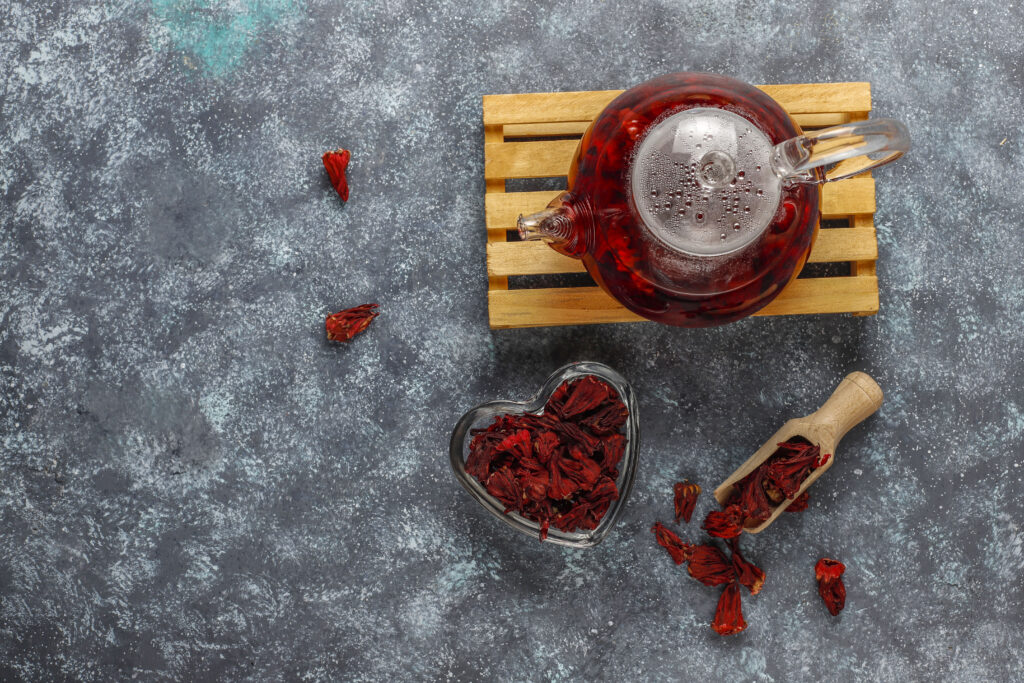
Hibiscus, known in Morocco as karkade, is a plant whose bright red calyces are used to brew a tart herbal tea celebrated for its effects on blood pressure and its antioxidant power. A refreshing drink enjoyed right across the Maghreb, hibiscus is now attracting researchers for its effects on cardiovascular health. Here is a complete, factual overview of its benefits, its dosage and the precautions to respect.
What is hibiscus (karkade)?
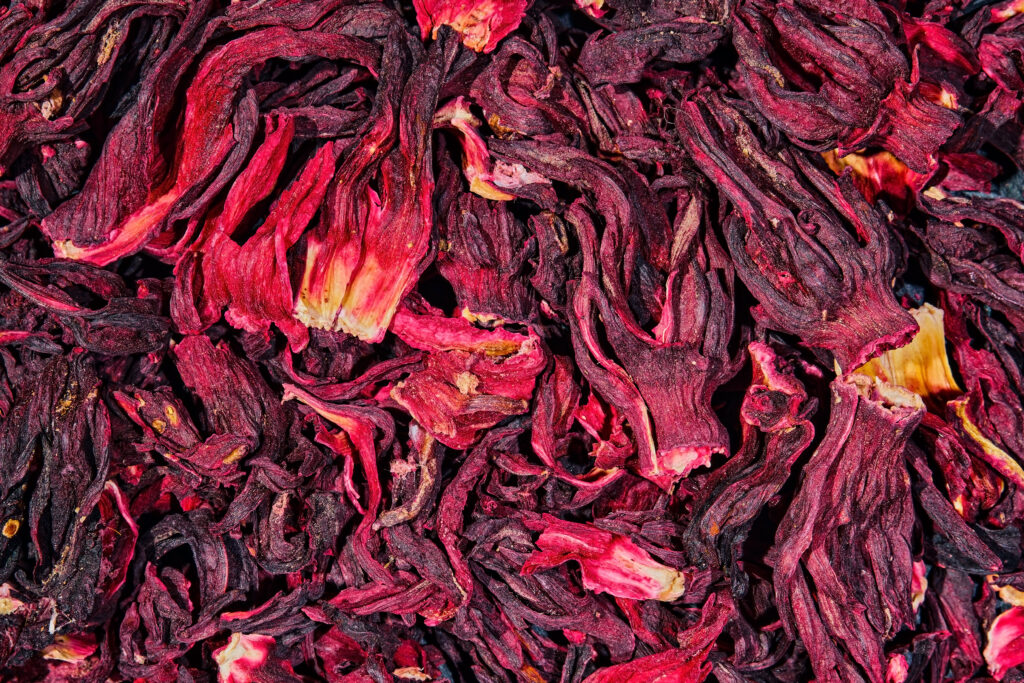
The hibiscus used in herbal tea is the species Hibiscus sabdariffa, also called roselle, bissap in West Africa and karkade in the Arab world. It is the fleshy, deep red calyces that are dried and then steeped to give a ruby-red drink with a tart flavour.
Grown in hot regions, hibiscus is drunk hot, like a herbal tea, and cold, like a thirst-quenching juice. In Morocco it is one of the plants traditionally infused for its cooling properties and to help regulate blood pressure.
Composition and active compounds of hibiscus
The intense colour and characteristic acidity of hibiscus are explained by its wealth of active compounds. The calyces concentrate in particular:
- Anthocyanins: these red pigments are powerful antioxidants and are responsible for the ruby colour of the infusion.
- Organic acids: citric acid, malic acid and hibiscic acid, which give it its tart taste. The calyces contain at least 13% acids.
- Polyphenols and flavonoids with antioxidant properties that protect the blood vessels.
- Mucilage, which explains its traditional soothing effect.
It is the combination of these anthocyanins, organic acids and polyphenols that gives hibiscus most of its effects on health.
The health benefits of hibiscus
Hibiscus is one of the few plants whose effects are supported by clinical studies. Here are the main documented benefits.
An effect on blood pressure
This is the best-studied benefit of hibiscus. A meta-analysis pooling 22 randomised trials and 1,457 participants confirmed a significant reduction in systolic and diastolic blood pressure after 4 to 6 weeks of regular consumption. The anthocyanins and polyphenols are thought to help the arteries dilate, encouraging a measurable drop in pressure.
Support for cholesterol
Several pieces of work suggest that regularly drinking two to three cups of the infusion a day could help raise good cholesterol (HDL) and lower bad cholesterol (LDL) as well as triglycerides, thereby contributing to cardiovascular protection.
A wealth of antioxidants
Thanks to its anthocyanins and polyphenols, hibiscus ranks among the most antioxidant of infusions. These compounds help neutralise the free radicals involved in cellular ageing and oxidative stress.
Digestion, hydration and a diuretic effect
Traditionally, hibiscus is used as a mild diuretic and to support digestion. Drunk chilled and unsweetened, the tea also makes an ideal thirst-quencher for staying hydrated during the intense heat that is common in Morocco.
How to use hibiscus and at what dosage
The simplest way to enjoy hibiscus is an infusion of dried calyces. Here are the usual benchmarks:
- Quantity: about 1 tablespoon of dried calyces (that is 1.5 to 2 g) per 250 ml cup.
- Preparation: pour on hot water (around 95 °C) and steep for 8 to 10 minutes, then strain.
- Frequency: for an effect on blood pressure, studies point to 2 to 3 cups a day for 4 to 6 weeks.
- Cold version: steep for longer, then chill, without piling on the sugar.
It is advisable to keep consumption reasonable and to stay below 2 litres a day, as a very large amount can put strain on the liver.
Precautions and contraindications of hibiscus
Despite its favourable profile, hibiscus is not harmless and calls for a few precautions:
- Low blood pressure: because of its hypotensive effect, hibiscus is not advised for people with hypotension.
- Pregnancy and breastfeeding: as a precaution, hibiscus should be avoided during pregnancy given its traditionally emmenagogue effects.
- Medication: it can potentiate antihypertensive drugs, add to the effect of diuretics and reduce the efficacy of certain treatments such as chloroquine.
- Excess: drunk in very large quantities, it could be harmful to the liver.
If you are on medical treatment or live with a chronic condition, it is wise to ask a healthcare professional before adding hibiscus to your daily routine.
FAQ: your questions about hibiscus
Does hibiscus really lower blood pressure?
Yes. Several clinical studies have shown a moderate but real drop in blood pressure after a few weeks of regularly drinking 2 to 3 cups a day. The effect remains complementary and does not replace a prescribed treatment.
How many cups of hibiscus a day can you drink?
Two to three cups a day is common and well tolerated by healthy adults. It is best not to exceed 2 litres daily and to avoid adding too much sugar.
Does hibiscus have side effects?
For most people, hibiscus is well tolerated. It can, however, lower blood pressure too far in people with hypotension and interact with certain medicines. Caution is called for during pregnancy.
Conclusion
Hibiscus is far more than a colourful drink: it is an antioxidant-rich herbal tea whose effects on blood pressure and cholesterol are backed by science. Drunk sensibly, a few cups a day, karkade makes a natural and refreshing ally for looking after your heart, provided you respect the usual precautions.
To go further
To dig deeper into the subject, see the plant’s botanical entry on Wikipedia (Hibiscus sabdariffa). Also discover other plants and supplements on our blog:
- Carob: benefits, dosage and precautions
- Verbena: benefits, dosage and precautions
- Spirulina: benefits, dosage and precautions
This article is provided for informational purposes and does not replace medical advice. If you are in doubt, on ongoing treatment or living with a health condition, consult a qualified healthcare professional.
Leave a Reply