Purslane, known as rejla (رجلة) in Morocco, is a small plant with fleshy leaves that you come across in gardens, fields and on souk stalls at the end of summer. Long regarded as a weed, it is now recognised as one of the leafy greens richest in plant-based omega-3s. Here is everything you need to know about its benefits, how to eat it and the precautions to take.
What is purslane?
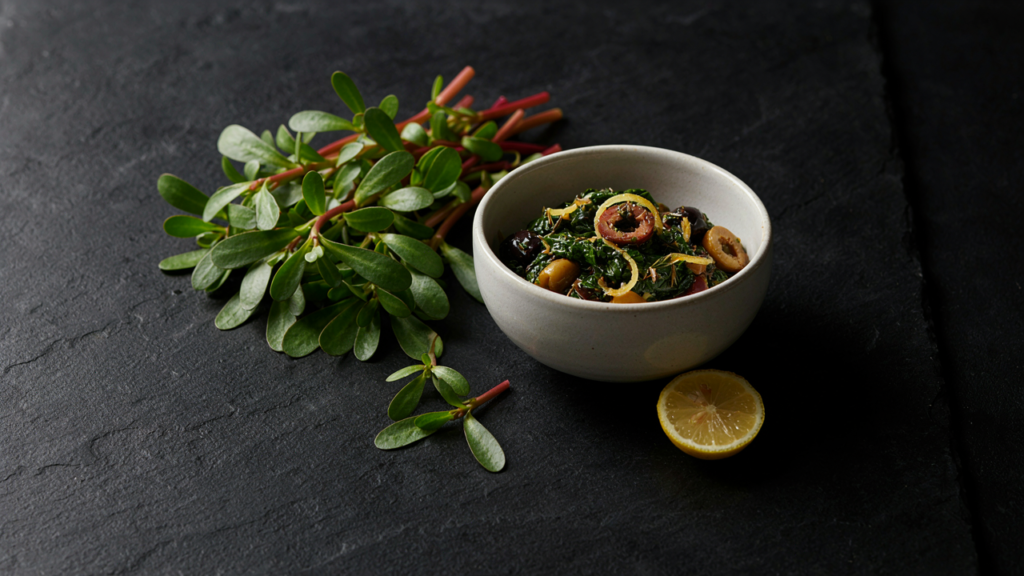
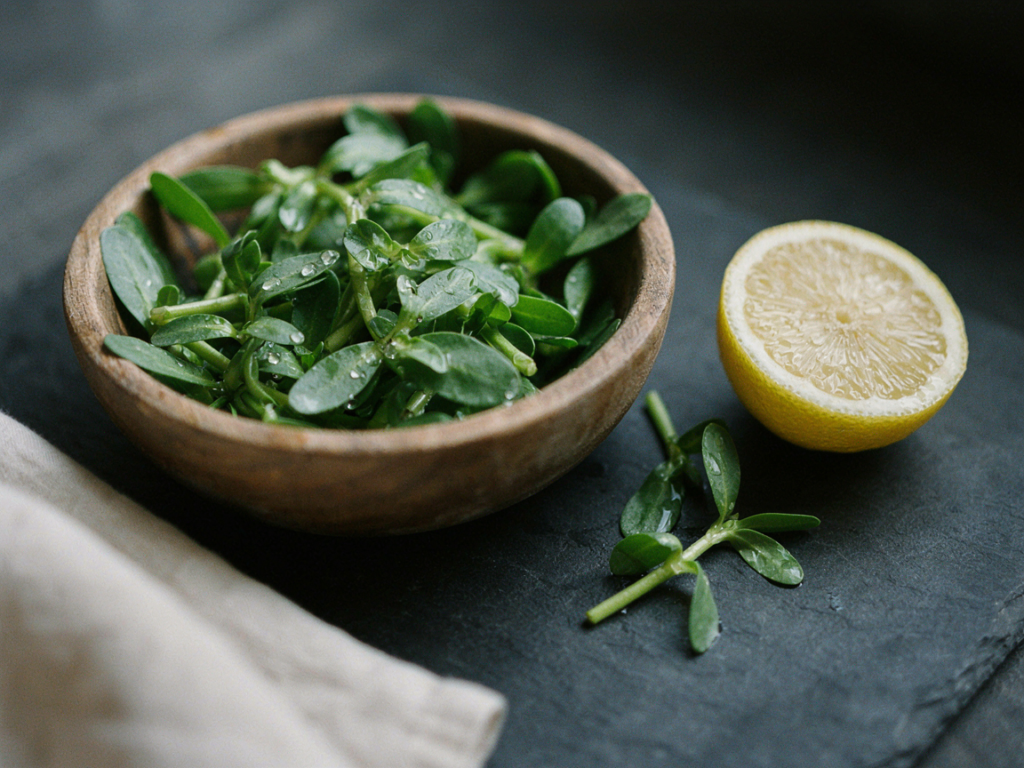
Common purslane (Portulaca oleracea) is an annual succulent of the Portulacaceae family. Its creeping, often reddish stems bear oval, thick and glossy leaves with a slightly tangy, lemony taste.
In Morocco it is called rejla, and berbcha in several regions of the North and the Souss. It is used in the kitchen in much the same way as mallow (bakoula) or Swiss chard. The harvest season usually runs from July to October, which makes it an ideal seasonal vegetable right now.
Composition and active compounds of purslane
Purslane’s richness lies in a nutritional profile that is rare for a green plant. Published data notably show:
- Omega-3 (alpha-linolenic acid, ALA): around 300 to 400 mg per 100 g of fresh leaves, one of the highest levels among leafy greens.
- Minerals: potassium (around 494 mg/100 g), magnesium (around 68 mg/100 g) and calcium (around 65 mg/100 g).
- Vitamins: vitamin C, vitamin E, provitamin A and several B vitamins.
- Antioxidants: phenolic compounds, flavonoids and betalains (the pigments in the red stems).
- Mucilage: soft fibres responsible for the slightly slimy texture of the cooked plant.
- Oxalates: present in significant amounts in the leaves (worth knowing, see the precautions).
The health benefits of purslane
The virtues attributed to purslane are based on its composition and on traditional uses. Some studies, mostly preclinical, are encouraging, but evidence in humans remains limited.
1. A plant source of omega-3
ALA is an essential fatty acid: the body cannot make it on its own. Adding purslane to your meals helps enrich your diet with omega-3s, alongside flaxseed, chia seeds or walnuts. It should be remembered, however, that the conversion of ALA into EPA and DHA remains low in humans.
2. Support for the heart and blood pressure
The combination of omega-3s, potassium and magnesium is consistent with a diet that supports cardiovascular health. Potassium contributes to the maintenance of normal blood pressure, as part of a balanced, low-salt diet.
3. Antioxidant action
Vitamins C and E, flavonoids and betalains help neutralise free radicals. Laboratory studies have also shown anti-inflammatory effects of purslane extracts, although no firm clinical conclusion can yet be drawn.
4. An ally for blood sugar
A few small clinical trials suggest a modest effect of purslane extracts on blood sugar in people with type 2 diabetes. These results remain preliminary and are in no way a substitute for treatment.
5. Good digestive comfort
Thanks to its mucilage and fibre, purslane is traditionally used as an emollient plant that soothes the digestive lining. In large amounts, it has a mild laxative effect.
6. Diuretic and cleansing according to tradition
Traditional Mediterranean medicine credits it with diuretic and cleansing properties. Externally, the crushed leaves were applied as a poultice to minor skin irritations.
How to eat purslane: use and dosage
Purslane is first and foremost a food. There is no official dose: it is eaten like any other leafy green, in reasonable portions and as part of a varied diet.
- Raw: young leaves and tender stems in a salad, with tomato, onion, olive oil and lemon. This is the form that best preserves vitamin C and omega-3s.
- Cooked the Moroccan way: prepared like a bakoula salad, with garlic, coriander, parsley, cumin, paprika, olives and preserved lemon.
- Pan-fried or in a tagine: sautéed like spinach, or added at the end of cooking to a stew.
- Supplements: purslane extracts are available as capsules; in that case, strictly follow the dosage indicated by the manufacturer and ask a healthcare professional for advice.
Tip: pairing purslane with a calcium-rich food (yoghurt, lben, cheese) helps limit the absorption of oxalates. Wash it thoroughly, as it grows close to the ground.
Precautions and contraindications
Eaten in moderation, purslane is a safe food for most adults. Some situations do, however, call for caution:
- Kidney stones: the leaves contain around 670 to 870 mg of oxalates per 100 g fresh weight. People prone to calcium oxalate stones should limit their intake.
- Kidney failure: its potassium content means medical advice is needed if you are on a low-potassium diet.
- Treated diabetes: since an effect on blood sugar is possible, monitor your levels if you take concentrated extracts alongside diabetes medication.
- Pregnancy and breastfeeding: as a precaution, avoid concentrated extracts; occasional consumption as food should be discussed with your doctor.
- Risk of confusion: do not pick it at random. Some creeping spurges, which are toxic, look similar; unlike purslane, they release a white latex when the stem is broken.
Purslane FAQ
Can purslane be eaten raw?
Yes. The young leaves and stems can be eaten raw in a salad. Their tangy taste and crunchy texture go well with tomato and lemon.
What is the difference between rejla and bakoula?
Rejla is purslane, a succulent plant rich in omega-3s. Bakoula is mallow (khoubiza). Both are cooked in a similar way in Morocco, but they are two distinct plants.
Can purslane replace fish as a source of omega-3s?
No. It provides ALA, a plant-based omega-3, whereas oily fish directly supply EPA and DHA. Purslane therefore complements a balanced diet without replacing it.
Conclusion
Purslane is a humble yet remarkable seasonal vegetable: its omega-3s, minerals and antioxidants make it a welcome addition to the Moroccan table, raw or cooked. Eaten in moderation and with the oxalates in mind, rejla deserves a regular place in a varied late-summer diet.
Further reading
- Common purslane on Wikipedia
- Mallow (Khoubiza): benefits, dosage and precautions
- Flaxseed: benefits, dosage and precautions
- Spirulina: benefits and use
This article is provided for information purposes only and does not replace the advice of a doctor or healthcare professional. Consult one before any regular consumption for therapeutic purposes, especially in the case of illness, ongoing treatment, pregnancy or breastfeeding.