
Saffron is far more than a simple culinary spice: this red powder derived from the Crocus sativus flower is today one of the most extensively studied natural supplements for mood, sleep, and vitality. In Morocco, saffron from Taliouine, renowned for its exceptional quality, is part of the heritage of traditional herbalism. In this comprehensive guide, we review what saffron really is, its composition, its scientifically proven benefits, how to use it, its dosage, and the precautions to know.
What is saffron?
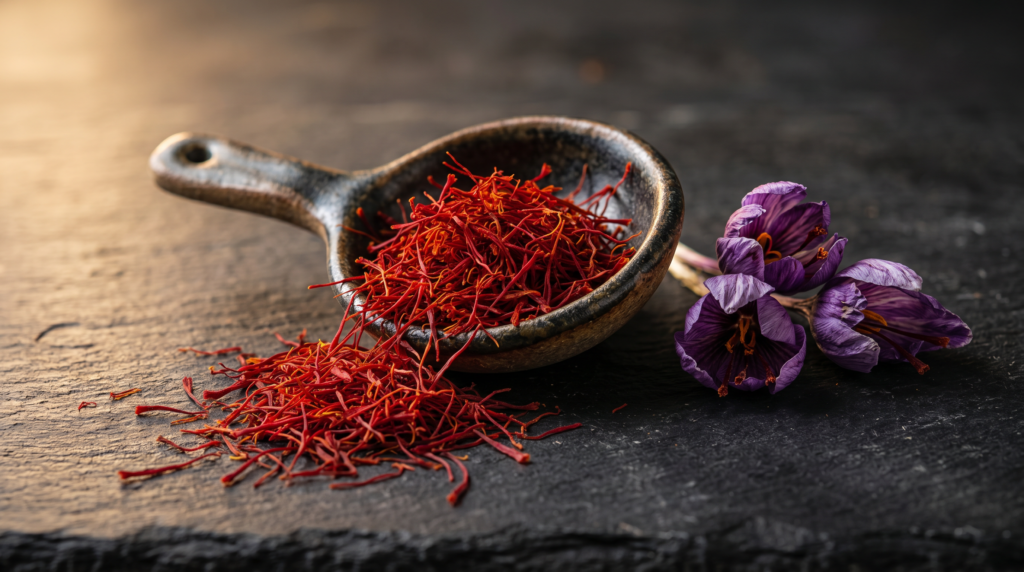
Saffron is the spice obtained from the dried stigmas of the Crocus sativus flower, a plant of the Iridaceae family. Each flower produces only three red stigmas, hand-harvested, which explains why saffron is the most expensive spice in the world: it takes about 150,000 flowers to obtain one kilogram of dried saffron.
In Morocco, the Taliouine region, in the Souss, is the historic birthplace of saffron cultivation. Grown at high altitude, this Moroccan saffron holds a protected designation of origin and is prized for its intense color and powerful aroma. Beyond gastronomy, saffron has been used for centuries in traditional medicine for its calming and tonic properties.
Composition and active compounds of saffron
Saffron’s strength rests on three main molecules, responsible for its color, its aroma, and its effects on the body:
- Crocin: a carotenoid that gives saffron its intense red color and has powerful antioxidant properties.
- Crocetin: derived from crocin, it contributes to antioxidant action and cardiovascular support.
- Safranal: a volatile aromatic compound responsible for saffron’s characteristic scent and associated with relaxing effects.
These bioactive compounds act in synergy. It is notably their ability to influence certain neurotransmitters, such as serotonin, that explains the growing scientific interest in this spice.
The benefits of saffron proven by science
1. Supporting mood and reducing depressive symptoms
This is the best-documented benefit. Several clinical trials have shown that a daily supplementation of about 30 mg of saffron extract can reduce symptoms of mild to moderate depression. A 2013 meta-analysis covering several controlled trials even reported significant efficacy compared to placebo. Researchers attribute this effect to crocin and safranal, which appear to support serotonin, dopamine, and noradrenaline levels.
2. Improving sleep quality
Thanks to its relaxing properties, saffron is being studied for its effect on sleep. Taken as a regular course, it may help improve sleep quality in people who are anxious or experiencing mood disturbances, by promoting falling asleep and achieving more restorative rest.
3. Protecting cells through its antioxidant action
Crocin and crocetin are powerful antioxidants that help neutralize the free radicals responsible for cellular aging. This antioxidant action helps protect the body from oxidative stress and indirectly supports cardiovascular health.
4. Supporting memory and cognitive function
Several studies suggest that crocin helps preserve cognitive function, particularly memory and concentration, by supporting neuronal health. Saffron is thus the subject of research in the context of brain aging.
5. Preserving eye health
Saffron’s antioxidant and anti-inflammatory action may support eye health, particularly retinal protection. This is a promising area of research, notably around age-related degeneration.
6. Easing premenstrual syndrome symptoms
Saffron is traditionally used to soothe the physical and emotional manifestations of premenstrual syndrome (PMS). Its effect on mood makes it an interesting option for reducing irritability and discomfort during this period.
7. Reducing inflammation
Saffron’s compounds have anti-inflammatory properties that complement its antioxidant action, contributing to the body’s overall well-being.
How to use saffron and dosage
To benefit from saffron’s effects on mood and sleep, clinical studies rely on a precise, standardized dosage:
- Recommended dose: 30 mg of standardized saffron extract per day, ideally split into two doses of 15 mg.
- Duration: effects on mood are generally observed after 6 to 8 weeks of regular use.
- Form: standardized extract in capsules for precise dosing, or as an infusion (a few threads in hot water) for more traditional use.
In cooking, saffron is used in very small amounts: a few threads are enough to flavor and color a dish. To release its aromas, it is best to steep the threads in a little warm water before adding them.
Precautions and contraindications
At culinary doses and at the doses used in studies (30 mg per day), saffron has a favorable tolerance profile. However, some precautions should be taken:
- Pregnancy: high-dose saffron is not recommended during pregnancy due to a possible uterotonic effect that could trigger contractions.
- Anticoagulants: as a precaution, avoid supplementation if you are on anticoagulant therapy.
- High doses: beyond several grams per day, saffron can cause digestive upset, headaches, drowsiness, or a feeling of fatigue. The recommended doses should never be exceeded.
- Quality: choose pure saffron, ideally from a reliable origin such as Taliouine, to avoid adulterated products.
If undergoing medical treatment, pregnant, breastfeeding, or living with a chronic condition, always seek advice from a healthcare professional before starting a course.
FAQ: your questions about saffron
How long does it take to feel the effects of saffron?
For effects on mood and sleep, it generally takes 6 to 8 weeks of regular use at a rate of 30 mg per day. Consistency is essential to observe a benefit.
Can saffron replace an antidepressant?
Some studies show efficacy comparable to low doses of antidepressants for mild to moderate depression, but saffron should never replace a prescribed treatment without medical advice. It is a supplement, not a medication.
Is Moroccan saffron good quality?
Yes, saffron from Taliouine is regarded as among the best in the world for its intense color, aroma, and high crocin content. It is an emblematic product of Moroccan terroir.
Conclusion
Saffron is a precious spice whose benefits go well beyond the kitchen. A support for mood, an ally for sleep, a powerful antioxidant: its active compounds make it a natural supplement seriously studied by science. Provided the dosage of 30 mg per day and the usage precautions are respected, saffron, and Moroccan saffron from Taliouine in particular, deserves a place of choice in a natural wellness routine.
To learn more
To explore the topic further, see the reference entry on saffron on Wikipedia. Also discover our other guides on plants and natural supplements:
- Spirulina: benefits, dosage, and precautions
- Moringa: benefits, dosage, and precautions
- Ginseng: benefits, dosage, and precautions
This article is provided for informational purposes only and does not replace medical advice. Consult a healthcare professional before starting any course of use, especially in cases of pregnancy, breastfeeding, medical treatment, or chronic illness.