Sage (Salvia officinalis) is one of the oldest and most respected medicinal plants of the Mediterranean basin, and it holds a strong place in Moroccan tradition, where it is often called “salmia.” Valued for its digestive, hormonal, and cognitive properties, sage appears both in everyday herbal infusions and in modern dietary supplements. This article takes a factual look at its benefits, how to use it, dosage, and precautions.

What is common sage?
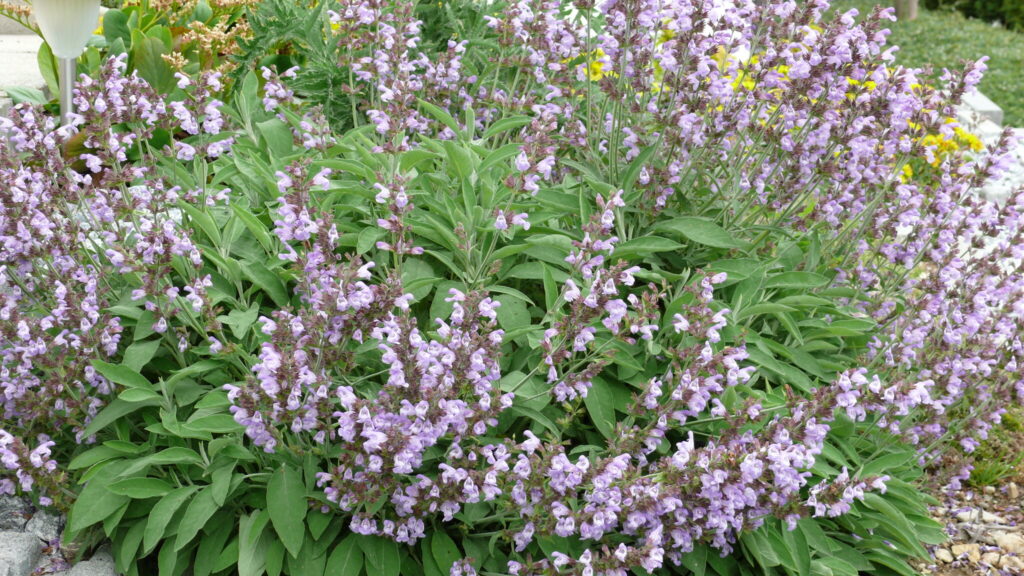
Common sage is a perennial subshrub of the Lamiaceae family, the same family as rosemary, thyme, and mint. Native to the Mediterranean region, it is recognizable by its elongated, grey-green, slightly downy leaves and its purple flowers. Its Latin name, Salvia, comes from the verb “salvare” (to save, to heal), a hint at the prestige it already enjoyed in antiquity.
In Morocco, its dried leaves are easy to find at herbalists’ shops and are traditionally consumed as a tisane, either on their own or blended with green tea and mint.
Composition and active compounds of sage
Sage’s richness comes from the diversity of its compounds. Its phytochemical profile rests mainly on:
- phenolic acids, including rosmarinic acid, a polyphenol with antioxidant and anti-inflammatory properties;
- carnosic acid and carnosol, antioxidant diterpenes;
- flavonoids such as luteolin and apigenin;
- essential oil terpenes, notably thujone, camphor, and 1,8-cineole;
- salviol, a diterpenol credited with estrogen-like activity.
It is this combination that gives the plant its antioxidant, anti-inflammatory, and antiseptic properties.
The benefits of sage
Relieving menopausal hot flashes
This is sage’s best-documented use. Thanks to its estrogen-like compounds, it is traditionally used to ease hot flashes and night sweats. A meta-analysis published in 2023 found a favorable effect of sage on the frequency and intensity of menopausal hot flashes.
Supporting digestion
Sage is a bitter, aromatic plant classically used to stimulate digestion and reduce bloating and digestive spasms. Taken as an infusion after meals, it is one of the traditional remedies for a heavy stomach.
Soothing sore throats
Its antiseptic and anti-inflammatory properties explain its use as a gargle for sore throats and mouth irritation. A cooled infusion serves as a soothing mouth rinse.
Supporting memory and concentration
Several studies have looked at sage’s effect on cognitive function. Preliminary research suggests it may support memory and alertness, a promising area of research that is still being validated.
Helping with blood sugar control
Some data point to a potential role for sage in blood sugar control. These results still need to be confirmed and in no way replace medical treatment for diabetes.
How to use sage and dosage
The simplest and safest form remains an infusion of dried leaves:
- Infusion: 1 to 1.5 g of dried leaves (about one scant tablespoon) per 250 ml of near-boiling water; let steep for 10 minutes covered to preserve the essential oils.
- Frequency: up to 3 cups per day maximum, over short courses.
- Gargle: a more concentrated infusion, cooled, used as a mouth rinse for the throat.
Common sage essential oil is highly concentrated in thujone: it should never be taken orally without the supervision of a healthcare professional.
Precautions and contraindications
Despite its virtues, sage is not without risk. The main concern comes from thujone, a compound that is neurotoxic at high doses and can cause convulsions and neurological disturbances in excess, particularly via the essential oil.
- Not recommended for pregnant or breastfeeding women.
- To be avoided in cases of hormone-dependent cancer (breast, uterus) due to its estrogen-like activity.
- Caution advised for people with epilepsy and those on treatment (diabetes, hypertension, sedatives).
- Respect recommended doses and favor short courses; avoid prolonged use at high doses.
If in doubt, medical advice or that of a qualified herbalist is recommended before starting any course.
FAQ about sage
Does sage reduce hot flashes?
Yes, this is its best-supported use. Its estrogen-like compounds help reduce the frequency and intensity of hot flashes linked to menopause.
How many cups of sage tea per day?
Three cups per day maximum, each prepared with 1 to 1.5 g of dried leaves, over short courses rather than continuous use.
Who should not take sage?
Pregnant or breastfeeding women, people with hormone-dependent cancers, and people with epilepsy should avoid sage, especially in essential oil form.
Conclusion
Sage is a versatile medicinal plant, valuable for supporting menopause, aiding digestion, and soothing the throat. Like any active plant, it calls for discerning use: reasonable doses, short courses, and respect for contraindications allow you to get the best from it safely.
Further reading
- Reference source: Common sage on Wikipedia
- Also read: Rosemary: benefits, dosage, and precautions
- Also read: Spirulina: benefits, dosage, and precautions
- Also read: Moringa: benefits, dosage, and precautions
This article is provided for informational purposes only and does not replace medical advice. Consult a healthcare professional before starting any course, especially in cases of pregnancy, ongoing treatment, or chronic illness.