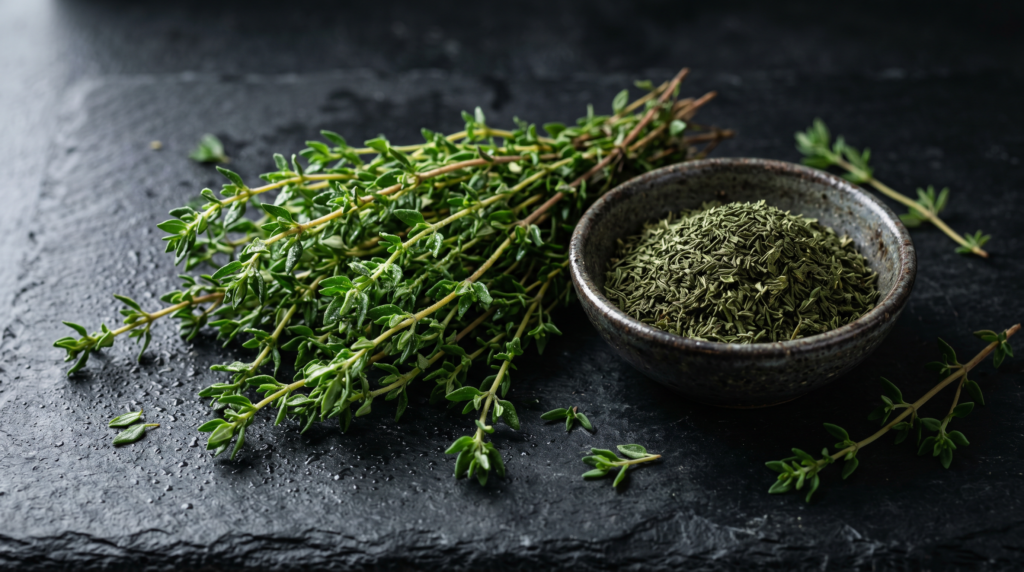
Thyme is one of the medicinal plants most commonly found in Moroccan homes, where it is traditionally known as “zaâitra.” From the first chills of winter, a cup of thyme tea is often the very first reflex. Behind this age-old habit lies an aromatic plant remarkably rich in active compounds, studied by modern science for its antiseptic, expectorant, and digestive properties. In this article, we review its benefits, how to use it, its dosage, and its precautions.

What is thyme?
Thyme (Thymus vulgaris) is a small perennial aromatic plant of the Lamiaceae family, native to the Mediterranean basin. In Morocco, it grows wild in the dry, sun-drenched soils of mountainous regions and is an integral part of traditional folk medicine.
There is a useful linguistic nuance worth noting: in Morocco, true thyme is called “zaâitra,” a diminutive that evokes the delicacy of its small leaves, while the term “zaâtar” more often refers to oregano. Beyond its culinary use, thyme has been used for centuries to relieve winter ailments and aid digestion.
In many Moroccan households, “zaâitra” serves as a small natural pharmacy, always within reach in the kitchen. Dried and stored away from light, thyme keeps its aromas and properties for a long time, which explains its lasting popularity in local traditional medicine.
Composition and active compounds of thyme
Thyme’s strength lies in the concentration of its essential oil. The leaves contain between 1 and 2.5%, depending on the variety and growing conditions. This essential oil is dominated by two major phenols: thymol and carvacrol.
- Thymol and carvacrol: two phenols responsible for most of the antiseptic and antibacterial activity.
- Flavonoids: compounds with antioxidant properties.
- Phenolic acids: which reinforce the plant’s protective action.
- Vitamin C: present in small amounts, contributing to overall body support.
Thymol and carvacrol show remarkable antibacterial activity against many pathogens by disrupting the integrity of bacterial cell membranes. This chemical signature explains thyme’s reputation as a natural antiseptic.
Health benefits of thyme
An ally for the respiratory tract
This is the best-known use. Thanks to its expectorant, antitussive, and antispasmodic properties, thyme helps clear the bronchi and soothe coughing. The European Medicines Agency (EMA) and the German Commission E recognize its value in relieving the symptoms of bronchitis, colds, and chesty coughs.
Support for digestion
Thyme is traditionally used to improve digestion and soothe gastrointestinal discomfort. Its antispasmodic action helps relax the muscles of the digestive tract, which can relieve bloating and discomfort after a heavy meal. An infusion taken after dinner is a common practice to support calm digestion and a certain intestinal comfort.
An antiseptic and antioxidant action
Thyme’s antibacterial and antiviral activity makes it a powerful ally during the cold season. Used as a gargle, it helps cleanse the throat and mouth. Its flavonoids also give it antioxidant power that helps protect cells against oxidative stress.
Support during the cold season
In the depths of winter, thyme tea remains the most popular way to support the body against seasonal chills. Combined with honey and lemon, thyme becomes a comforting drink that soothes an irritated throat and helps you breathe more easily. This tradition, widespread in Morocco, illustrates the central place of this plant in grandmother’s remedies.
How to use thyme and its dosage
The simplest and most common form remains the infusion. To prepare thyme tea, use 1 to 2 teaspoons of dried thyme (about 1.5 to 2 g) per 250 ml of hot, near-boiling water. Cover and let steep for about ten minutes before straining.
- Tea: up to 3 cups a day, ideally over a 7 to 10 day course.
- Gargle: a cooled infusion, used as a mouth rinse, to soothe sore throats.
- Honey and lemon: a touch of honey sweetens the tea and enhances its soothing effect on the throat.
Thyme essential oil is far more concentrated and potent. It should never be used without professional advice, as it requires strict dilution and dosage precautions.
To get the most out of its aromas, choose whole leaves rather than powder, and store them in an airtight container, away from heat and moisture. Keeping the infusion well covered while steeping preserves the volatile compounds, which are precisely what give the plant its value. You can also blend it with other mild herbs, such as verbena or mint, to vary the flavors across different courses.
Precautions and contraindications
Under normal conditions of use as a tea, thyme presents no particular toxicity. Some precautions are nonetheless warranted, especially with concentrated forms such as essential oil.
- Pregnancy and breastfeeding: medicinal use of thyme (concentrated tea, supplement, essential oil) is not recommended. Only culinary use remains permitted.
- Young children: essential oil is contraindicated for infants and young children.
- Allergies: people sensitive to plants of the Lamiaceae family should exercise caution.
- Extended courses: avoid intensive, continuous use; short courses are preferable.
If you are undergoing medical treatment, have a chronic condition, or are in any doubt, always ask a doctor or pharmacist for advice before starting a course.
Frequently asked questions about thyme
How many cups of thyme tea per day?
Up to 3 cups a day is generally recommended, over a 7 to 10 day course. Beyond that, it is best to take a break to avoid overly prolonged use.
Is thyme good for coughs?
Yes. Thanks to its expectorant and antitussive properties, thyme is one of the plants recognized for relieving chesty coughs and clearing the airways, making it a classic winter remedy.
Can you drink thyme tea while pregnant?
As a precaution, medicinal use of thyme is not recommended during pregnancy, in any form. Culinary use in small amounts remains possible, but advice from a healthcare professional is recommended.
Conclusion
Thyme is a valuable medicinal plant, both accessible and widely validated by tradition as well as by research. Antiseptic, expectorant, and digestive, it is an ideal companion for the cold season in infusion form. Provided the dosages and precautions are respected, especially for pregnant women and young children, thyme tea remains a simple and natural gesture of everyday self-care.
To learn more
To explore the topic further, see the reference entry on thyme (Thymus vulgaris) on Wikipedia. Also discover other plants and supplements on our blog:
- Spirulina: benefits, dosage, and precautions
- Moringa: benefits, dosage, and precautions
- Ginseng: benefits, dosage, and precautions
This article is provided for informational purposes only and is in no way a substitute for medical advice. Consult a healthcare professional before any use, especially in cases of pregnancy, breastfeeding, ongoing medical treatment, or chronic illness.