Green tea is probably the most widely drunk beverage in Morocco, where it accompanies every moment of social life in the form of mint atay. Behind this daily ritual lies one of the most studied plants in modern research: several thousand scientific studies have explored its catechins, its heart-protecting effects and its effect on alertness. Here is a complete guide to its composition, its real benefits, the right way to prepare it and the precautions you should know.
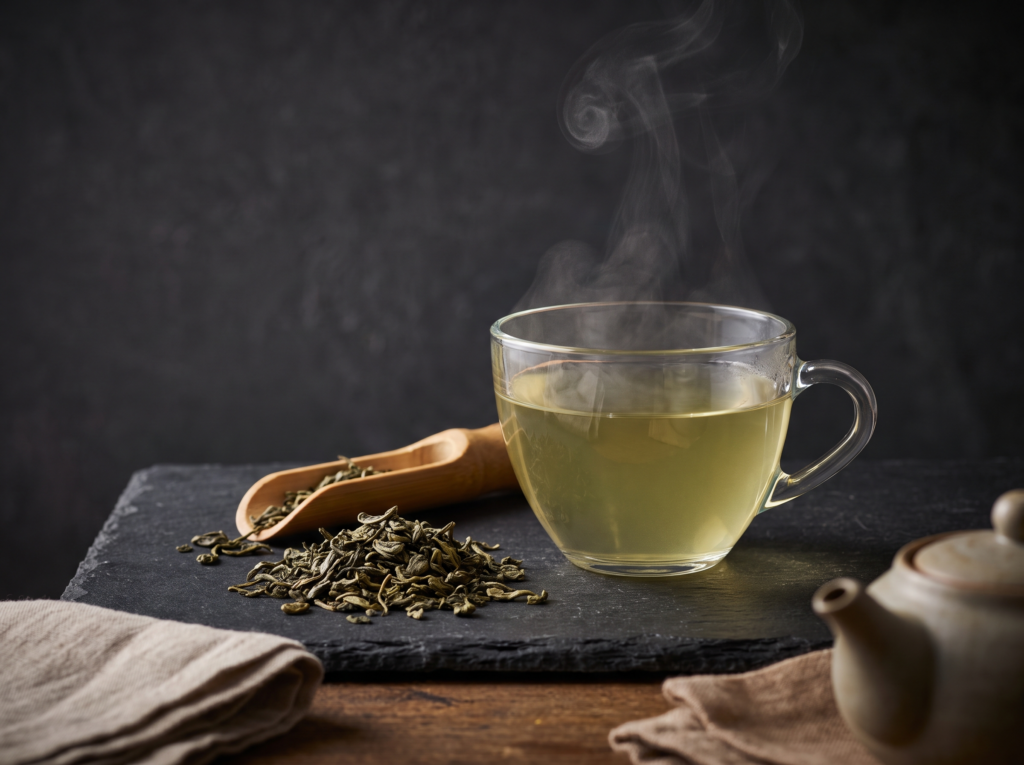
What is green tea?
Green tea comes from the leaves of the tea plant, Camellia sinensis, a shrub of the Theaceae family grown mainly in China, Japan and India. Green tea, black tea and oolong tea all come from the same plant: what sets them apart is how the leaf is processed after harvest.
What makes green tea special is that it is not fermented. The fresh leaves are quickly heated — steamed in Japan, pan-fired in China — to stop enzymatic oxidation. This step keeps the leaf’s antioxidant molecules intact: green tea is therefore about six times richer in catechins than black tea.
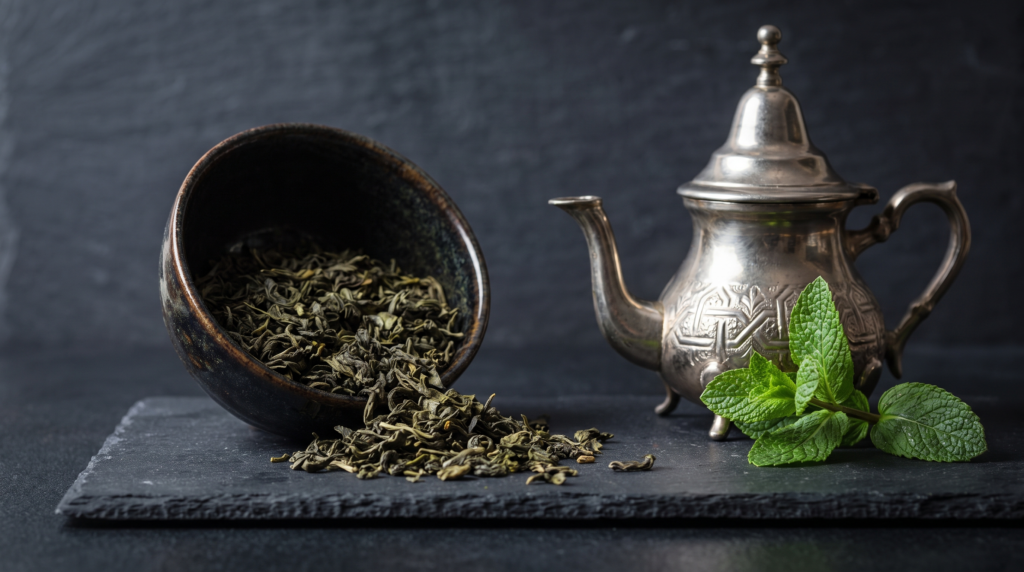
In Morocco, the dominant variety is Chinese gunpowder, whose leaves are rolled into small pellets, traditionally brewed with fresh spearmint and sugar. The country is one of the world’s largest importers of green tea.
Composition and active compounds of green tea
The green tea leaf concentrates several families of molecules whose actions combine.
- Catechins: flavonoids responsible for most of the antioxidant activity. A 150 ml cup generally provides between 50 and 100 mg.
- EGCG (epigallocatechin gallate): the main and most studied catechin, credited with the drink’s heart-protecting activity.
- L-theanine: an amino acid derived from glutamine, found almost exclusively in the tea plant, able to cross the blood-brain barrier and act directly on the central nervous system.
- Caffeine (theine): chemically identical to the caffeine in coffee, but released more gradually in the body.
- Theobromine and theophylline, methylxanthines present in smaller amounts.
- Tannins, minerals (potassium, manganese, fluoride) and small amounts of B vitamins.
The L-theanine + caffeine pairing is green tea’s signature: it explains that feeling of calm alertness, without the spike and sudden crash associated with coffee.
The health benefits of green tea
1. A major source of antioxidants
This is the best-established benefit. Catechins, led by EGCG, neutralise free radicals and help protect cells against oxidative stress. For many households, a few cups a day are one of the main sources of polyphenols in the diet.
2. Supporting cardiovascular health
EGCG is credited with the heart-protecting activity attributed to green tea. The available studies look at its action on the oxidation of blood lipids and on the flexibility of the vascular endothelium. Here, green tea is a long-term habit within a balanced diet — not a treatment.
3. Focus and calm alertness
L-theanine increases alpha brain waves and promotes a state of calm attentiveness without drowsiness. Combined with the caffeine naturally present, it produces gentle, long-lasting energy. That is why many people who are prone to nervousness tolerate green tea better than coffee.
4. Sugar metabolism
EGCG has been researched for reducing the risk of type 2 diabetes and for insulin resistance. The data still need to be consolidated, but they explain the interest in green tea for metabolic prevention strategies. Be careful, though: very sweet mint tea largely cancels out this benefit.
5. Support for weight management
Catechins and caffeine are studied for their mild thermogenic effect. The measured effect remains modest and is no substitute for dietary changes: green tea is a helping hand, not a slimming solution. Its real value often lies in replacing sugary drinks.
6. Digestive comfort and hydration
Drunk warm and with little sugar, especially with mint, green tea is traditionally enjoyed after heavy meals. It also contributes to daily fluid intake, a point that is often overlooked in the Moroccan climate.
7. Oral health
Green tea naturally provides fluoride and polyphenols studied for their action on the oral flora. Drunk without sugar, it is therefore rather good for oral health — the only caveat comes from the sugar added in the traditional preparation.
How to prepare green tea and dosage
Water temperature is the decisive factor: if it is too hot, it extracts too many tannins, making the brew bitter while breaking down some of the catechins.
- Classic infusion: about 2 g of leaves (one teaspoon) for 200 to 250 ml of water at 70-80 °C, for 2 to 3 minutes.
- Frequency: 2 to 3 cups a day is the most commonly recommended amount.
- Timing: preferably in the morning and early afternoon. Avoid it in the evening if you are sensitive to caffeine.
- Extract supplements: common doses range from 100 to 400 mg of EGCG per day. EFSA has identified 800 mg of EGCG per day as the threshold above which there is a risk to the liver.
- Moroccan version: gradually reduce the sugar and make up for it with more fresh mint or a pinch of lemon verbena.
To preserve dietary iron, drink your green tea between meals rather than with them.
Precautions and contraindications
Although millions of people drink it every day, green tea is not without limits, especially in the form of concentrated extracts.
- Concentrated EGCG supplements: cases of liver damage have been reported at high doses. Never exceed the stated dose and avoid taking them on an empty stomach.
- Iron deficiency or anaemia: tannins reduce the absorption of non-haem iron. Drink it at least an hour away from meals.
- Pregnancy and breastfeeding: limit your intake because of the caffeine, and ask for medical advice before taking any supplement.
- Caffeine sensitivity, sleep problems, anxiety, palpitations: reduce the amount and avoid drinking it late in the day.
- Anticoagulant treatment: green tea contains vitamin K; medical advice is needed.
- Known liver disease: avoid concentrated extracts without medical supervision.
Green tea can also alter the absorption of certain medicines: leave at least two hours between them.
Green tea FAQ
Does green tea help you lose weight?
Not on its own. Its catechins and caffeine are associated with a mild thermogenic effect, but the effect is modest and depends entirely on your overall diet. Its main advantage in a weight-loss plan is replacing sugary drinks — provided it is drunk without sugar.
How many cups a day can you drink?
Two to three cups a day is a reasonable amount for a healthy adult. Beyond that, the caffeine and tannin intake becomes significant and can disrupt sleep or iron absorption. Sensitive people would do well to stick to one cup in the morning.
Green tea or black tea: which should you choose?
Both come from the same shrub. Green tea, which is not fermented, retains far more catechins — about six times more than black tea. If your goal is antioxidant intake, green tea has the edge; black tea remains popular for its rounder taste and lower astringency.
Conclusion: getting the most out of green tea
A social ritual in Morocco and a subject of study in laboratories around the world, green tea brings together a rare number of assets in a single cup: antioxidant catechins, heart-protecting EGCG and calming L-theanine. It all comes down to three simple habits — water at 70-80 °C, two to three cups a day, and as little sugar as possible. For concentrated extracts, caution is essential: follow the doses and ask a healthcare professional for advice.
Further reading
- Full profile: Green tea on Wikipedia
- Spearmint: benefits, dosage and precautions — the inseparable companion of Moroccan tea
- Lemon verbena: benefits, dosage and precautions
- Hibiscus: benefits, dosage and precautions
- Spirulina: benefits, dosage and precautions
This article is provided for information purposes only and is in no way a substitute for medical advice. Consult a healthcare professional before starting a course, especially if you are pregnant, breastfeeding, taking medication or living with a chronic condition.