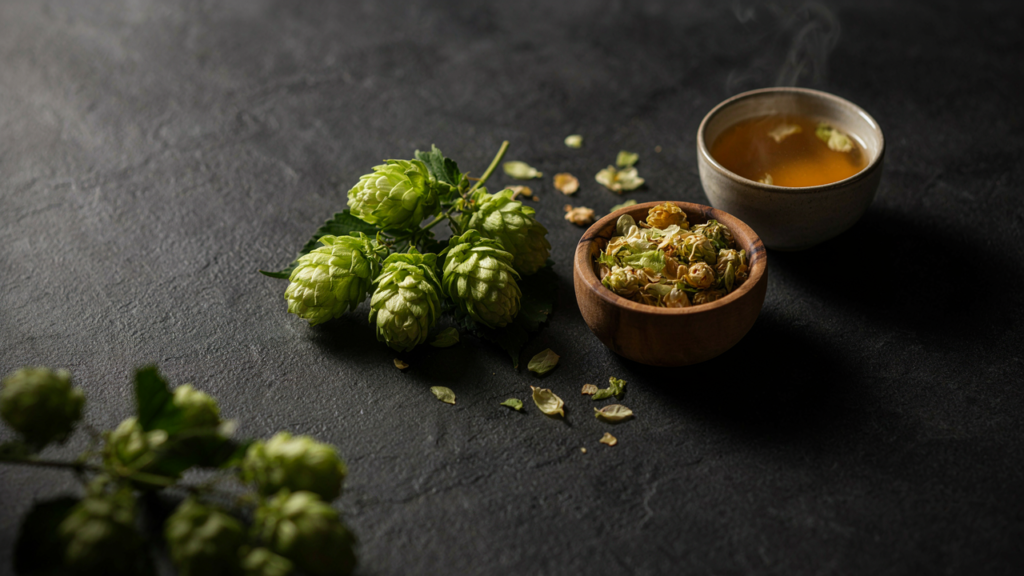
Hops (Humulus lupulus) are an aromatic climbing plant best known for brewing beer, but they are also a recognised medicinal plant in traditional herbal medicine. Used for centuries to ease nervousness and help people fall asleep, hops are now winning over more and more fans of herbal teas and dietary supplements in Morocco.
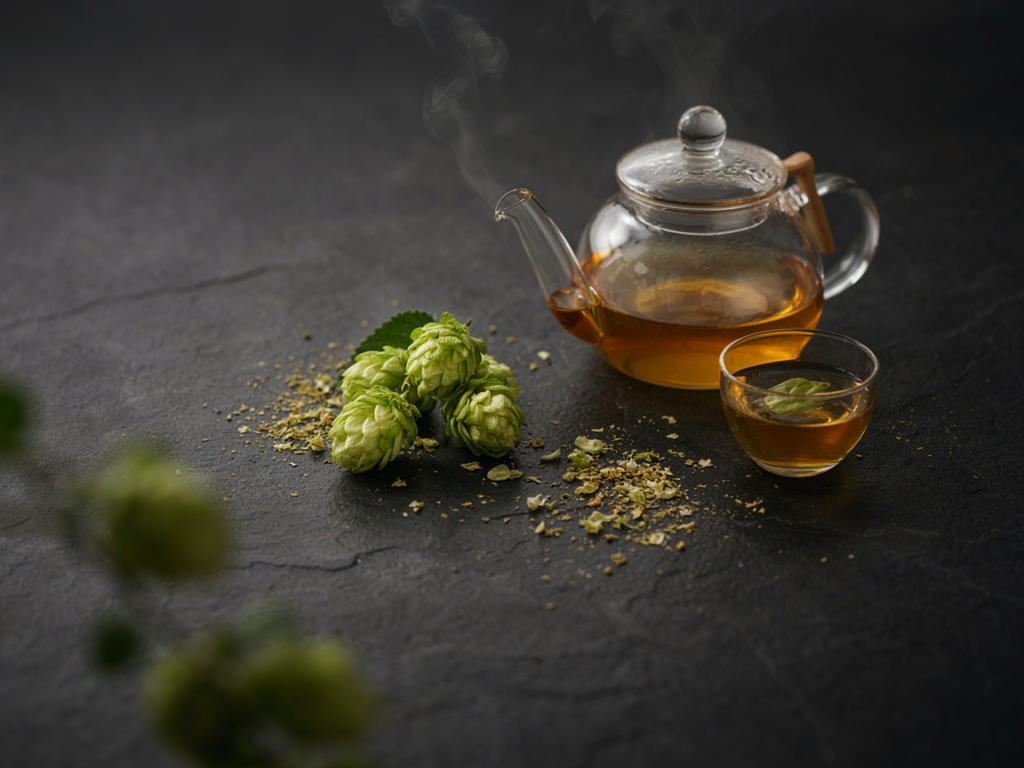
What are hops?
The hop is a perennial climbing plant of the Cannabaceae family, whose twining stems can grow longer than 10 metres. It is a dioecious plant: the female flowers form cone-shaped inflorescences, which are harvested at the end of summer.
At the base of the bracts of these cones is lupulin, a fragrant yellow powder that concentrates the bitter and aromatic compounds. This is the part of the plant that interests both brewers and herbalists.
Composition and active compounds of hops
Hop cones are rich in a wide variety of compounds, with more than 1,000 molecules identified. The main groups of active compounds include:
- Alpha and beta acids (humulone, lupulone): they give hops their bitterness and make up 5 to 20% of the weight of the cones.
- Essential oil (0.5 to 3% of dried hops): it mainly contains myrcene, β-caryophyllene and humulene.
- Polyphenols: flavonols (quercetin, kaempferol), ferulic acid and prenylated flavonoids such as xanthohumol and 8-prenylnaringenin.
8-prenylnaringenin is described as a highly active phytoestrogen in vitro, which explains the interest in hops for menopause, but also some of its contraindications.
The benefits of hops
Hops and sleep
This is the best-known use. Hops are traditionally used to promote sleep and relieve mild difficulties falling asleep. The European Medicines Agency (EMA) recognises a traditional use as a sleep aid. A hops-valerian combination has shown an effect on mild sleep disorders, but the evidence in humans remains limited.
Hops for nervousness and stress
Hops are also used for nervousness, restlessness and moderate forms of psychological stress. Their calming effects are well demonstrated in animals; in humans, their use rests mainly on tradition and a few small studies.
Hops and menopausal hot flushes
Because of their presumed oestrogenic activity, hops are sometimes suggested to ease hot flushes. Two studies suggest an effect, but the data are still insufficient to draw conclusions. Medical advice is essential before any use in this context.
Hops and digestion
Their bitterness traditionally stimulates the appetite and digestion. Hops are therefore listed among the plants used for loss of appetite.
How to use hops: directions and dosage
Hops are mainly taken as an herbal tea, but they are also available as capsules, extracts and tinctures. For tea, here are the traditional guidelines:
- Preparation: 10 g of dried cones per litre of boiling water, as an infusion.
- For nervousness: 2 to 3 cups a day.
- For sleep: one cup within the hour before bedtime.
- In the bath: one litre of tea can be added to a warm bath before bedtime.
For capsules and extracts, always follow the dosage stated on the product packaging and ask a healthcare professional for advice.
Precautions and contraindications for hops
Despite their natural origin, hops are not harmless:
- Avoid if you have a history of breast or cervical cancer, or a family predisposition, because of their presumed oestrogenic activity.
- Avoid during pregnancy and breastfeeding.
- Not recommended for children under 12.
- Their sedative effect can increase that of benzodiazepines, antidepressants, antiepileptics, antipsychotics, opioids and antihistamines: ask your doctor for advice if you are on treatment.
- Avoid alcohol and take care when driving or operating machinery, as hops can cause drowsiness.
Side effects are rare, especially with prolonged use: dizziness, digestive upset or allergy are possible. If in doubt, consult a doctor or pharmacist.
Hops FAQ
Do hops help you sleep?
Hops are traditionally used to promote sleep and calm nervousness. Their effect is moderate and varies from person to person.
Can you drink hop tea every day?
Occasional use is generally well tolerated. For prolonged use, it is best to ask a healthcare professional for advice.
Does beer offer the same benefits as hops?
No. Beer contains alcohol, which disrupts sleep, and the hop compounds in it are altered by boiling. It is no substitute for an herbal tea or a supplement.
Conclusion
Hops are a valuable traditional plant for supporting relaxation, sleep and nervous balance. Used wisely, respecting the doses and contraindications, they have a rightful place in a natural wellness routine.
Further reading
- External source: Humulus lupulus on Wikipedia
- Valerian: benefits, dosage and precautions
- Passionflower: benefits, dosage and precautions
- Linden: benefits, dosage and precautions
This article is for information only and does not replace the advice of a doctor or healthcare professional.